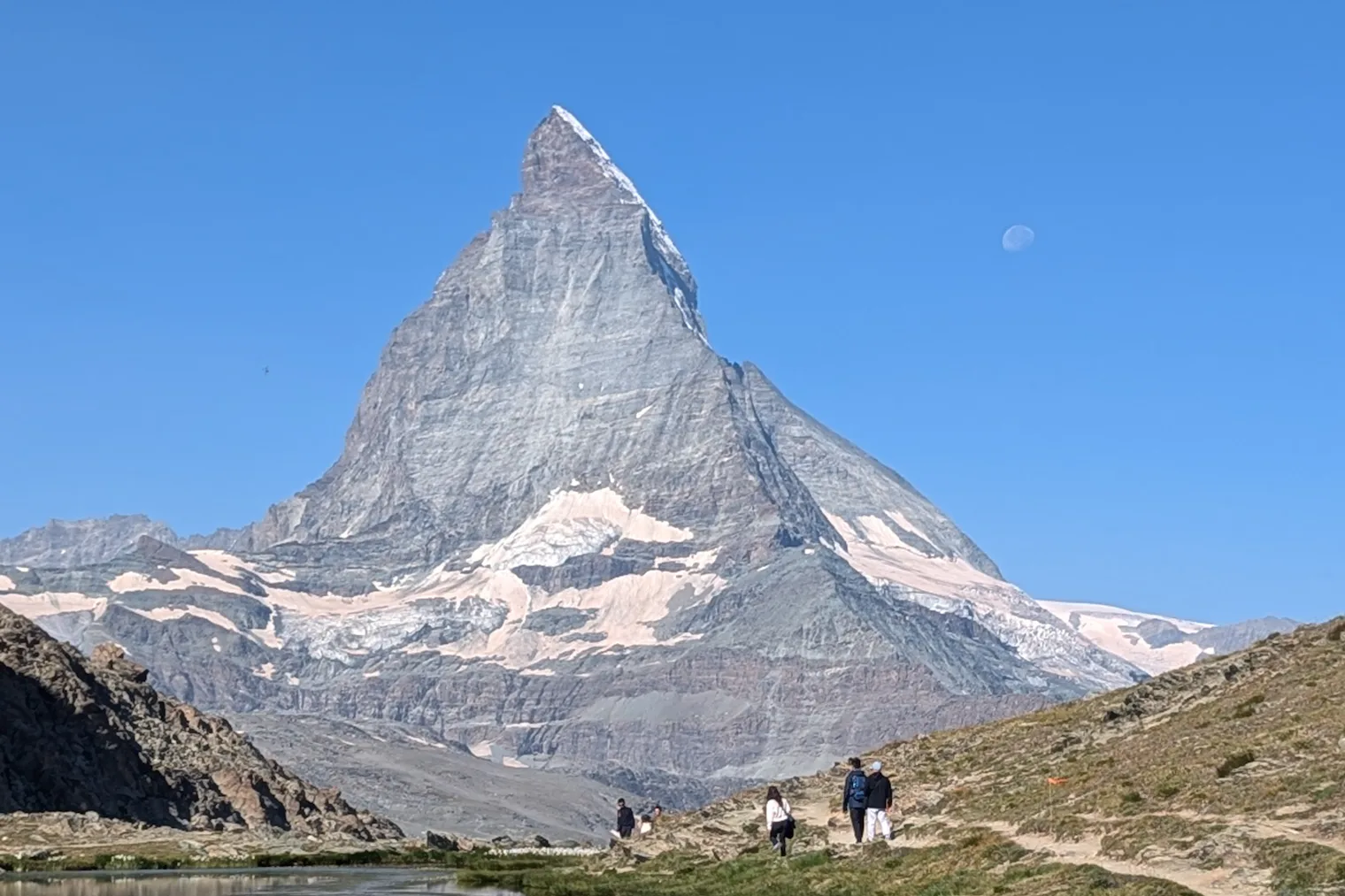
Switzerland packs glaciers, lake towns and three language regions into a country you can cross by train in an afternoon — and the trains actually leave on the minute. Its catch is price: almost everything costs more than next door, so the trip that works is the one planned around a rail pass, a couple of good bases and as much free mountain air as you can fit in. Here's how to do that, plus the entry rules and the connectivity detail most visitors get wrong.
En bref
- Currency
- Swiss franc (CHF) — Switzerland doesn't use the euro
- Languages
- German, French, Italian and Romansh, depending on the region
- Plugs
- Type J (Type C fits too), 230V
- Time zone
- CET (UTC+1), CEST in summer
- Best time
- June–September for hiking, December–March for snow
- Recommended trip
- 7–10 days
- Entry
- Schengen area — 90 days in any 180 for visa-free visitorssusceptible de changer
Why visit
Most countries make you choose between cities and mountains. Switzerland puts them an hour apart and connects them with some of the most reliable public transport in Europe, so a day can start in a medieval old town and end above the snowline without a car or a transfer desk.
It suits people who like their scenery with logistics that just work: hikers, rail fans, slow travellers who'd rather sit on a lake boat than in traffic. It's also more varied than its postcard suggests. The German-speaking north feels different from French-speaking Geneva and Lausanne, and Italian-speaking Ticino, with its palm trees and piazzas, feels like another country again.
What it isn't is cheap or spontaneous at peak times. Summer weekends in the Jungfrau region and Zermatt book up, mountain lifts cost real money, and a casual restaurant dinner can cost what a hotel night does elsewhere. Go in with a plan and the value is there.
Best places to visit
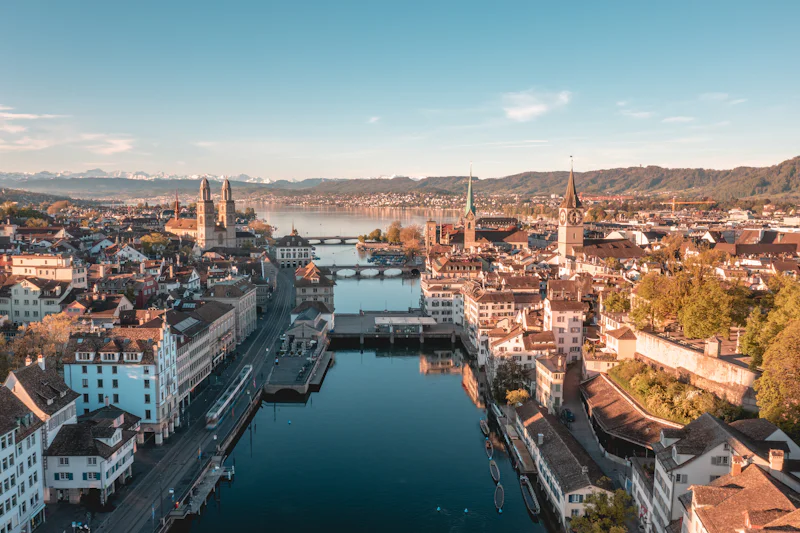
Zurich
Switzerland's biggest city and main airport: lakeside swims in summer, a compact old town on both banks of the Limmat, and the country's best museums and restaurants.
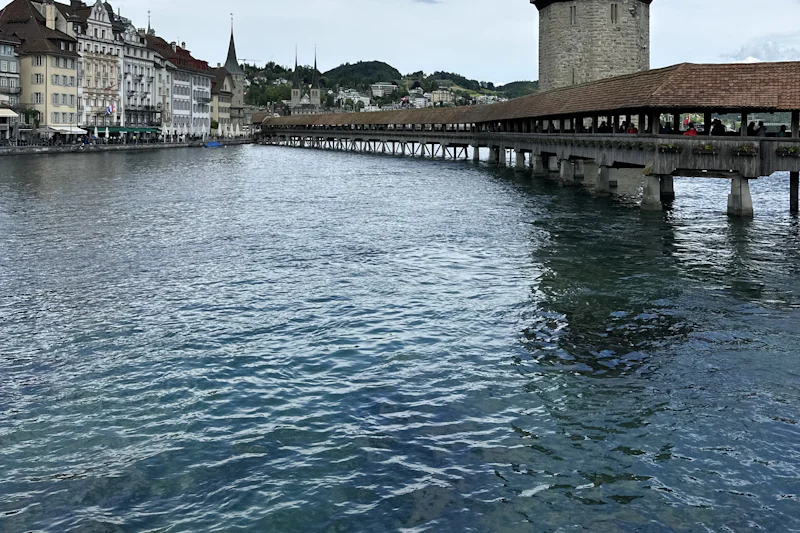
Lucerne
The wooden Chapel Bridge, a lake ringed by mountains, and easy day trips up Rigi or Pilatus. The most convenient base in central Switzerland.
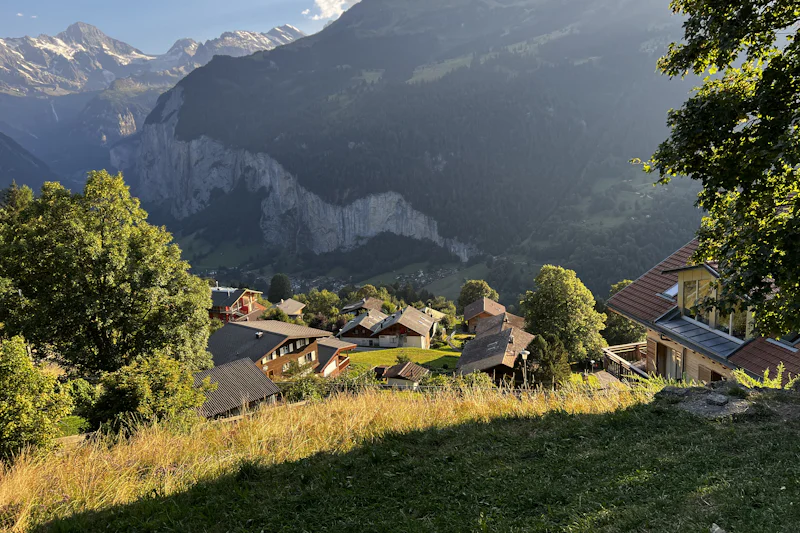
Interlaken and the Lauterbrunnen valley
The Jungfrau region: a glacier-carved valley of waterfalls and cliffs, car-free villages like Wengen and Mürren, and one of the densest networks of hiking trails and mountain railways in the Alps.
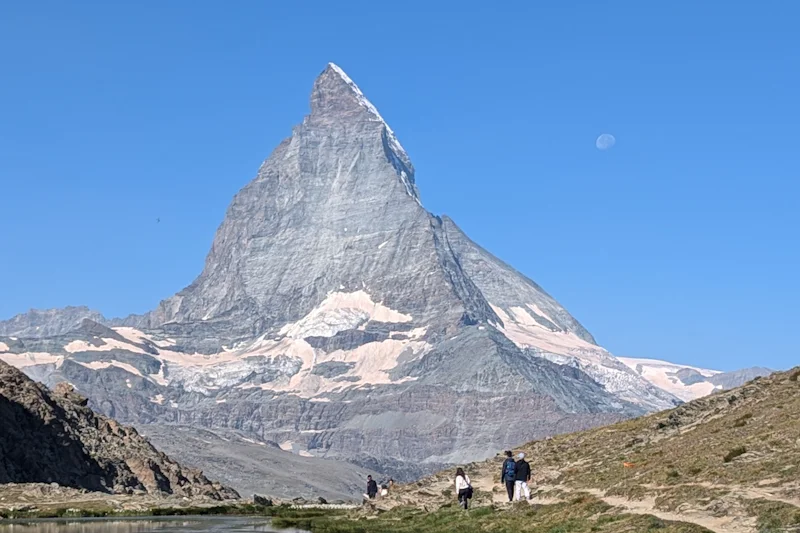
Zermatt
A car-free resort under the Matterhorn, with high-altitude trails in summer and skiing most of the year. Worth the long train ride on a clear day.
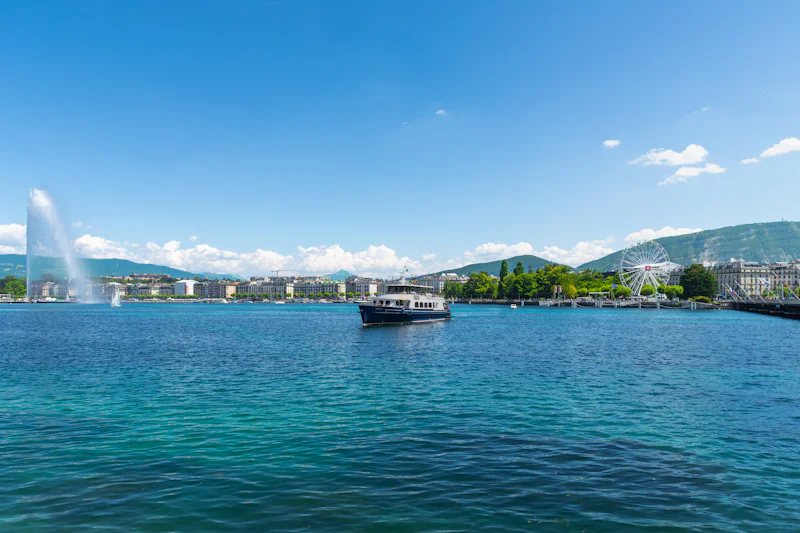
Geneva and Lake Geneva
French-speaking Switzerland: Geneva's lakefront and the Jet d'Eau, then the terraced Lavaux vineyards, Lausanne and Montreux along the same shore.
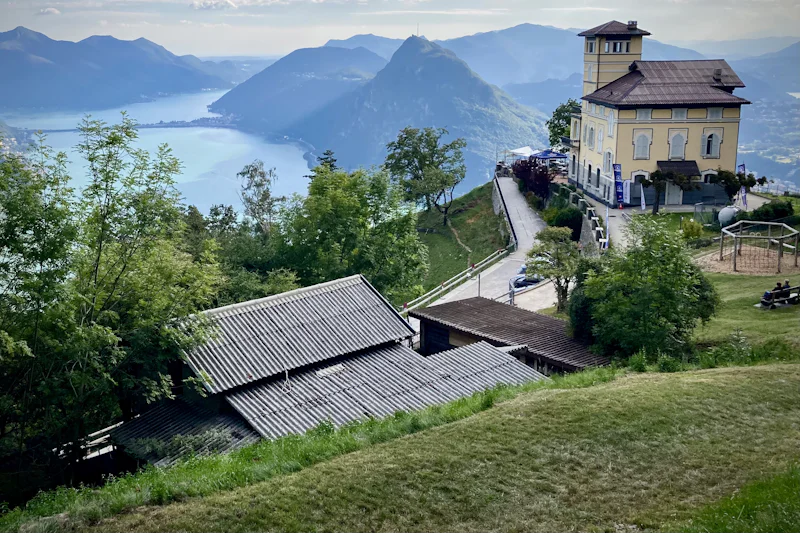
Lugano and Ticino
Italian-speaking Switzerland south of the Alps: lakeside promenades, stone villages and some of the warmest weather in the country.
If you can only fit in some of these, decide by what you want from the mountains. For walking among them, prioritise the Jungfrau region. For one unforgettable peak, Zermatt. For lakes with mountains as the backdrop and the easiest logistics, Lucerne. The cities are the easiest to cut: one night in Zurich or Geneva, timed around your flights, is usually enough.
Getting there
Zurich and Geneva are the main international airports, and both have a railway station inside the terminal, so you can step off a plane and onto a train to almost anywhere in the country. Basel is served by EuroAirport, which sits just across the border in France. Arriving overland is just as easy: international trains run into Zurich, Basel, Geneva and Lugano from the neighbouring countries, and on many routes the train beats flying once you count the airport time.
Pick your arrival and departure cities to fit the route. Flying into Zurich and out of Geneva — or the reverse — saves a day of backtracking on most loops.
When to go
- Best overall
- September
- Best for hiking
- July to mid-September
- Best on a budget
- Late spring or late autumn, in the lake towns
| Saison | Météo | Affluence | Prix | Idéal pour |
|---|---|---|---|---|
| Spring (April–May) | Mild in the valleys, snow lingering higher up | Faible | Moyens | Lake towns, cities, blossom in Ticino |
| Summer (June–August) | Warm, with afternoon storms in the mountains | Forte | Élevés | Hiking, lake swimming, high-altitude trains |
| Autumn (September–October) | Clear, crisp days and early snow up high | Moyenne | Moyens | Hiking with fewer people, vineyards, larch colours |
| Winter (December–March) | Cold, reliable snow in the resorts | Forte | Élevés | Skiing, Christmas markets, snowy rail journeys |
Summer is the season most visitors picture, and for good reason: high trails open, lake swimming is warm enough, and every mountain railway runs. It's also when the famous spots are busiest, so book beds in Zermatt and the Lauterbrunnen valley early and start popular hikes in the morning, before the afternoon storms build. September is the sweet spot — summer infrastructure is still running, the crowds thin out after the school holidays, and the light is clearer. Winter is a different trip rather than a worse one: ski resorts, snowy rail journeys and Christmas markets in the cities, with shorter days and some high passes closed.
The awkward weeks are the gaps between seasons. Many mountain resorts wind down in late spring and again in November, and some lifts and hotels close for maintenance, so a trip built around the high Alps works best from late June to mid-October or in the heart of the ski season.
How many days do you need?
3–4 days
One base in central Switzerland. Lucerne for the lake and an easy mountain, plus a day trip to Interlaken or Zurich.
7 days
The classic loop: Zurich, Lucerne, the Jungfrau region and Zermatt, with a night or two in each.
10 days
The classic loop plus Lake Geneva or Lugano — French- or Italian-speaking Switzerland changes the trip more than another mountain does.
2 weeks
Slow down: more nights in fewer bases, a panorama train or two, and spare days for weather.
How much does Switzerland cost?
Per person, per day — 2026 estimates
Budget
100–150 CHF
par personne et par jour
- Hébergement
- 45 CHF
- Repas
- 32 CHF
- Transports
- 25 CHF
- Activités
- 0–15 CHF
Hostel dorms, supermarket meals, a Half Fare Card and free hiking.
Mid-range
200–350 CHF
par personne et par jour
- Hébergement
- 150 CHF
- Repas
- 92 CHF
- Transports
- 45 CHF
- Activités
- 30 CHF
A 3-star hotel (per-person share), one sit-down meal a day, a Swiss Travel Pass and a paid excursion or two.
Comfort
400 CHF
par personne et par jour
- Hébergement
- 200 CHF
- Repas
- 150 CHF
- Transports
- 55 CHF
- Activités
- 70 CHF
From CHF 400: 4-star hotels, restaurant meals and premium mountain excursions.
For a sense of everyday prices: a meal at an inexpensive restaurant runs about CHF 18–40, and a single local transport ticket CHF 2.60–5.
Estimations indicatives en CHF, pas des prix en temps réel. Les données mobiles ne sont pas incluses : voir les forfaits eSIM actuels
The biggest lever on that number is food. Swiss supermarkets — Coop and Migros are everywhere — sell good ready-made meals, and station bakeries are a fraction of restaurant prices. Picnicking at lunch and eating out once a day changes the total more than any discount card.
Itineraries
Both routes below use the train for every leg and change base every two or three nights at most. Swap Zermatt and the Jungfrau region around freely — they're the two highlights, and the weather forecast is the best guide to which to do first.
7 days — the classic loop7 jours
Cities, lakes and high mountains in one week, using the train between every stop. Works with a Swiss Travel Pass for consecutive days.
Jour 1Zurich
- Après-midi
- Old town on both banks of the Limmat
- Soir
- Dinner and a walk along the lake
- Hébergement
- Zurich
Jour 2Lucerne
- Matin
- Train to Lucerne (under an hour)
- Après-midi
- Chapel Bridge and the old town
- Soir
- Lake promenade at sunset
- Hébergement
- Lucerne
Jour 3Rigi or Pilatus
- Matin
- Boat across Lake Lucerne, then up the mountain
- Après-midi
- Ridge walk and the way down
- Hébergement
- Lucerne
- À ne pas manquer
- The view over the lakes from the top
Jour 4–5Lauterbrunnen valley
- Matin
- Scenic train from Lucerne to Interlaken, then on to Lauterbrunnen
- Après-midi
- Waterfalls, then a cable car up to Mürren or a train up to Wengen
- Hébergement
- Lauterbrunnen, Wengen or Mürren
- À ne pas manquer
- A ridge or valley hike on the second day, weather permitting
Jour 6Zermatt
- Matin
- Train to Zermatt via Visp
- Après-midi
- Gornergrat or a lakes walk under the Matterhorn
- Hébergement
- Zermatt
Jour 7Geneva or back to Zurich
- Matin
- Train out — Geneva for an onward flight, Zurich for the other airport
- Après-midi
- Lakefront and the Jet d'Eau, if you're in Geneva
10 days — add Lake Geneva and Ticino10 jours
The classic loop at an easier pace, plus the French- and Italian-speaking south.
Jour 1–2Zurich and Lucerne
- Après-midi
- Zurich old town on day 1, then on to Lucerne
- Hébergement
- Lucerne
Jour 3Lake Lucerne
- Matin
- Boat and a mountain — Rigi, Pilatus or Stanserhorn
- Hébergement
- Lucerne
Jour 4–5Jungfrau region
- Après-midi
- Lauterbrunnen, Wengen or Mürren
- Hébergement
- Lauterbrunnen valley
- À ne pas manquer
- A full hiking day
Jour 6–7Zermatt
- Matin
- Train via Visp
- Après-midi
- Matterhorn viewpoints and a high trail on day 7
- Hébergement
- Zermatt
Jour 8Lake Geneva
- Matin
- Train to Montreux or Lausanne
- Après-midi
- Lavaux vineyard terraces
- Hébergement
- Lausanne or Montreux
Jour 9–10Lugano
- Matin
- Train south through the Gotthard Base Tunnel
- Après-midi
- Lakeside promenade and a boat to a lake village
- Hébergement
- Lugano
- À ne pas manquer
- Swiss scenery with Italian food
Getting around
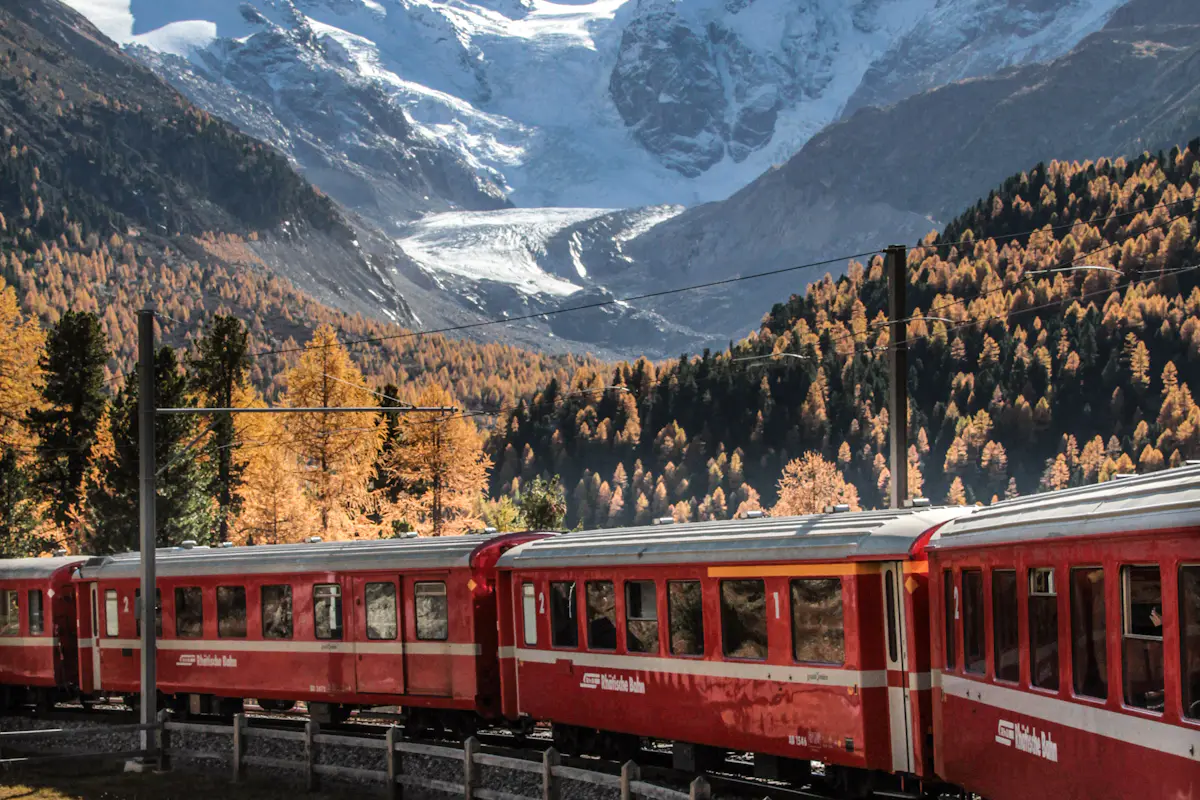
Trains are the answer to almost every Swiss transport question. The network is dense, timetables connect, and even remote valleys are served by a train, a postbus or a cable car. A car is useful only for the most rural corners — and Zermatt, Wengen and Mürren are car-free anyway.
| Trajet | Meilleure option |
|---|---|
| Between the main cities | SBB trains — frequent and direct; check times in the SBB app |
| Lucerne → Interlaken | The scenic Luzern–Interlaken line |
| Interlaken → Lauterbrunnen, Wengen, Mürren | Regional trains, then mountain railways and cable cars |
| To Zermatt | Train via Visp — the village is car-free |
| Across the Alps, slowly | Panorama trains (Glacier or Bernina Express) — seat reservations cost extra |
| On the lakes | Lake boats on Lucerne, Geneva and Lugano |
- Buy point-to-point tickets in the SBB app if you only take a few long journeys.
The real decision is which ticket to buy:
Swiss Travel Pass
Unlimited trains, buses and boats on consecutive days, panorama trains (seat reservations extra), public transport in over 90 towns, free trips up Rigi, Stanserhorn and Stoos, and 50% off most other mountain excursions. A Flex version lets you pick the days within a month, for a little more.
Swiss Half Fare Card
Half price on trains, buses, boats and most mountain railways for a month. Usually the better deal if you'll stay in one or two bases and make only a few long journeys.
Point-to-point tickets
Best for a short trip with only two or three train journeys.
Mountain excursions worth paying for
Mountain railways and cable cars are where a Swiss budget disappears, so choose with the weather in mind: a clear morning on a lower peak beats a cloud-covered top on an expensive one. With a Swiss Travel Pass, Rigi, Stanserhorn and Stoos are included, and most others are half price.
Rigi
The easy classic above Lake Lucerne, reached by cogwheel railway, with wide views over the lakes. Combine it with a boat for a perfect half day.
Pilatus
Lucerne's own mountain, with a steep cogwheel railway on one side and a cable car on the other — go up one way and down the other.
Stoos
A car-free village reached by a remarkably steep funicular, with a ridge walk between two summits.
Jungfraujoch
The famous one: a railway through the Eiger to a glacier saddle. Spectacular in clear weather and the most expensive trip in the region, so check the summit webcam before you buy.
Schilthorn
Above Mürren, with a revolving summit restaurant and a direct view of the Eiger, Mönch and Jungfrau.
Gornergrat
A cogwheel railway from Zermatt to a viewpoint facing the Matterhorn and a ring of glaciers.
Where to stay
Accommodation is the other big cost. Stay longer in fewer places — two or three bases for a week — and use day trips: Swiss trains make that easy, and it saves both money and packing time.
Lucerne
The most central base: day trips to Zurich, the lake mountains and even Interlaken are all easy.
Interlaken or the Lauterbrunnen valley
Interlaken has the most choice and the train connections; Lauterbrunnen, Wengen and Mürren put you inside the scenery.
Zermatt
Stay at least one night — the mountain is often clearest early in the morning.
Lausanne or Montreux
Cheaper and calmer than Geneva, with the Lavaux vineyards on the doorstep.
Things to know before you go
Sundays are quiet
Most shops close on Sundays. Supermarkets in large railway stations and airports are the usual exception — handy for picnic supplies.
Mountain weather turns fast
Check the forecast and lift status the evening before a high-mountain day, and keep a plan B in the valley.
Book the famous trains
Panorama trains need seat reservations on top of a pass, and summer departures fill up.
Cards work almost everywhere
Contactless payment is the norm, even for small amounts; a few francs in cash still helps at mountain huts and markets.
Water is free
Tap water is excellent, so carry a refillable bottle rather than paying for bottled water.
Pack for two climates
Even in summer it can be cold and wet at altitude: bring layers, a waterproof jacket and shoes you can hike in, plus sun protection for the snow and the lakes.
Bring the right adapter
Swiss sockets are Type J. Slim two-pin Europlugs (Type C) fit, but bulkier Schuko plugs from Germany and France usually don't — a Swiss adapter is cheap insurance.
Visa and entry
Switzerland is part of the Schengen area, so the usual short-stay rules apply: visa-exempt travellers can stay up to 90 days in any 180-day period, and days spent in other Schengen countries count towards that total. Whether you need a visa depends on your passport.
- The EU's Entry/Exit System (EES) is in use at Swiss borders: you may have your fingerprints and photo taken on your first entry. Registration is free.
- ETIAS, the EU's planned travel authorisation, is not required yet — the Swiss authorities say no applications are being collected.
- Passport rules vary by nationality; UK citizens, for example, need a passport issued within the last 10 years and valid for at least 3 months after leaving the Schengen area.
Sources officielles: State Secretariat for Migration (SEM) — entry · SEM — ETIAS · UK FCDO — Switzerland entry requirements
Données mobiles et eSIM
1. Internet et connectivité
Forfaits eSIM : disponibles
Voir les forfaits eSIM VamosData →
Également inclus dans : Europe
- Switzerland isn't part of the EU's roam-like-at-home rules, so a mobile plan from an EU country doesn't automatically roam there at domestic prices. Check your operator's terms before you rely on it.
- Hotel and café Wi-Fi is common in towns, but much of a Swiss trip happens on trains, trails and lake boats — timetables, weather forecasts and lift status are all things you'll check on the move.
- Signal can drop in long tunnels and deep, narrow valleys, so download offline maps before a hiking day.
- A VamosData eSIM installed at home over your own Wi-Fi is online when you land, and most plans only start counting once it first connects in Switzerland.
2. SIM ou eSIM
| eSIM VamosData | Carte SIM locale | |
|---|---|---|
| Quand l'installer | Chez vous, avant de partir : connecté dès l'atterrissage | À l'arrivée, à un comptoir de l'aéroport ou en boutique |
| Identité et enregistrement | Aucun : une simple adresse e-mail | Souvent un passeport et un enregistrement, selon le pays |
| Votre numéro habituel | Votre SIM habituelle reste dans le téléphone : WhatsApp garde votre numéro | Remplace généralement votre SIM habituelle, sauf si votre téléphone en accepte deux |
| Appels et SMS | Données uniquement : appelez via WhatsApp, FaceTime ou équivalent | Un numéro local avec appels et SMS |
| Recharges | En ligne, où que vous soyez | En boutique ou dans l'application de l'opérateur |
| Téléphone requis | Un téléphone débloqué et compatible eSIM : vérifiez le vôtre | Tout téléphone débloqué avec un emplacement SIM |
3. Comparatif des fournisseurs d'eSIM
| Fournisseur | Par rapport à VamosData |
|---|---|
| Nomad | environ 10 % plus cher en moyennesur 5 forfaits aux données et à la validité identiques |
Comparaison avec les fournisseurs indiqués, sur des forfaits aux données et à la validité identiques, d'après le site de chaque fournisseur le 9 octobre 2026. Les pourcentages sont indicatifs et les prix changent souvent. Sources: Nomad
4. Quantité de données recommandée
| Votre usage du téléphone | 7 jours | 14 jours | 21 jours |
|---|---|---|---|
| LégerCartes et messagerie, moins d'une heure par jour | ≈ 1 Go | ≈ 2 Go | ≈ 3 Go |
| StandardPlus les réseaux sociaux, 1 à 3 heures par jour | ≈ 6 Go | ≈ 15 Go | ≈ 20 Go |
| IntensifPlus la vidéo en streaming, 3 à 5 heures par jour | ≈ 25 Go | ≈ 50 Go | ≈ 70 Go |
Estimations issues du même modèle que notre outil de choix de forfait, marge de sécurité comprise. Le partage de connexion et les appels vidéo consomment davantage. Trouver le bon forfait →
What to eat
Fondue
Melted cheese, usually Gruyère and Vacherin, with bread for dipping — a winter and mountain-hut classic.
Raclette
A wheel of cheese melted and scraped over potatoes, with pickles and onions.
Rösti
Crisp grated potato cake, served on its own or under eggs, cheese or sausage.
Zürcher Geschnetzeltes
Sliced veal in a cream and mushroom sauce, usually with rösti — Zurich's signature dish.
Älplermagronen
Alpine macaroni with potatoes, cheese, cream and fried onions, often with apple sauce on the side.
Chocolate
Supermarket bars are excellent and cheap; specialist chocolatiers are worth one splurge.
Culture and etiquette
Punctuality matters, on the trains and socially: arriving on time is the default, not a courtesy. Greetings are a handshake in business settings; among friends, three kisses on the cheek are common in many regions.
Service is included in Swiss restaurant prices, so tipping is optional. Rounding up or leaving a little extra for good service is appreciated rather than expected.
Language is regional rather than national. German dominates the north and centre, with Swiss German dialects in everyday speech; French is spoken in the west around Geneva and Lausanne; Italian in Ticino; and Romansh in parts of Graubünden. Signs, menus and train announcements switch with the region, and English is common in tourist areas.
Switzerland is quiet by design. Sundays are for rest, apartment buildings often have house rules about noise after 10 p.m., and recycling is taken seriously. Using the right bin and keeping your voice down on trains goes a long way. And when in doubt about language, start in the local one — "Grüezi" in the German-speaking regions, "Bonjour" around Geneva, "Buongiorno" in Ticino — before switching to English, which is widely spoken.