The standup is at nine. At 9:04 the riad's Wi-Fi drops you, and the other seven faces on the call watch you reconnect, apologise, and reconnect again. Morocco is one of the easiest countries in the world to spend a working winter in — cheap flights from Europe, a three-hour time difference at most, Atlantic surf on one coast and a serious business city on the other — and the only part that consistently bites remote workers is the five minutes either side of a scheduled call.

Morocco's mobile network is better than its reputation
The country had a genuinely good year for connectivity. Its three national operators switched on 5G nationwide on 7 November 2025, starting with the big cities, and Ookla's Speedtest Global Index for 2025 put Morocco top of Africa for mobile download speeds and 39th in the world — a jump of 22 places, which Ookla credited to the 5G launch and ongoing network investment. It also warned that the ranking could slip as more people actually load those networks, which is the honest caveat on every speed chart.
What matters for your calendar is narrower: a national median says nothing about the street you are standing on. Mobile data in Morocco is usually the more reliable of your two options, not the fallback — and that inverts the habit most people arrive with.
Why riad and cafe Wi-Fi fails at exactly the wrong moment
Guesthouse Wi-Fi tends to be one consumer line shared by every room, with repeaters pushing it through walls a metre thick. Three things follow:
- Evenings are the worst time, because that is when every other guest is streaming.
- Upload is what breaks, not download. A speed test showing a healthy download can still be sitting on an upload too thin to carry your camera — and video calls are an upload problem.
- Thick walls and courtyards mean the signal in your room may be a fraction of what reaches the lobby.
None of this is unique to Morocco. It is just more visible in a country where much of the accommodation is in beautiful old buildings.
Taghazout: surf in the morning, calls in the afternoon
Taghazout, north of Agadir, is the closest thing Morocco has to a nomad village, and it has a small, dedicated coworking scene — Sundesk is the long-running name there, usually bundled with coliving and surf. Check current opening hours and desk availability before you plan a week around any one space; this is a scene that changes shape between seasons.
The connectivity trade-off in a coastal village is capacity rather than coverage. There are fewer masts and fewer fixed lines, so the squeeze comes at busy hours. Book calls for the morning when you can, and have a second route to the internet that does not depend on the building you are in.
Essaouira: quieter, windier, thinner on desks
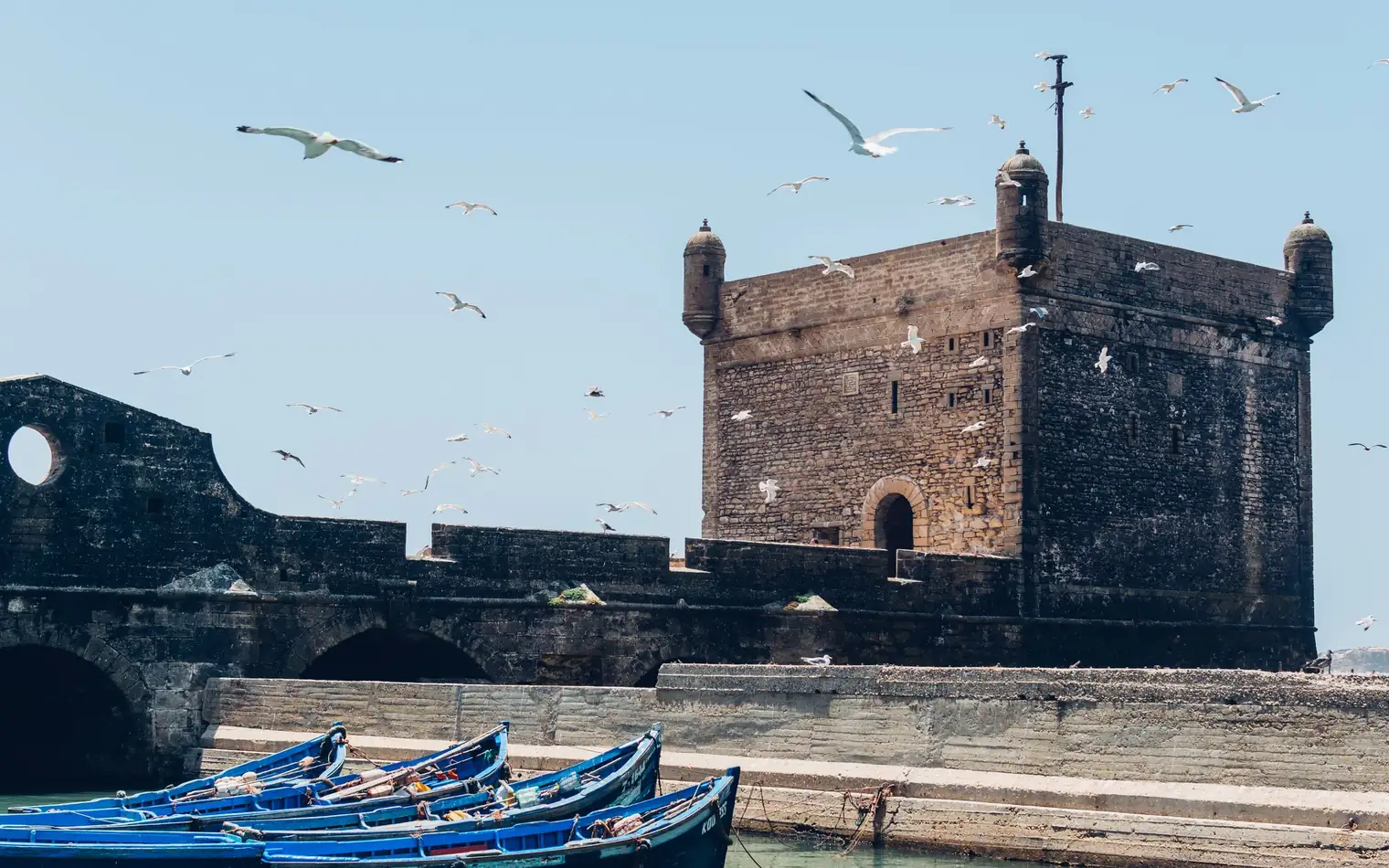
Essaouira trades Taghazout's surf-camp energy for a walled medina, a fishing port and a wind that never really stops. Its coworking scene is smaller, and plenty of people here work from riad roof terraces and cafes instead of a dedicated desk — which puts even more weight on your own connection, because you are relying on whatever the cafe happens to have. The medina's lanes are narrow and the walls are stone, so signal varies noticeably over a few hundred metres.
Casablanca: the most infrastructure, the most meetings
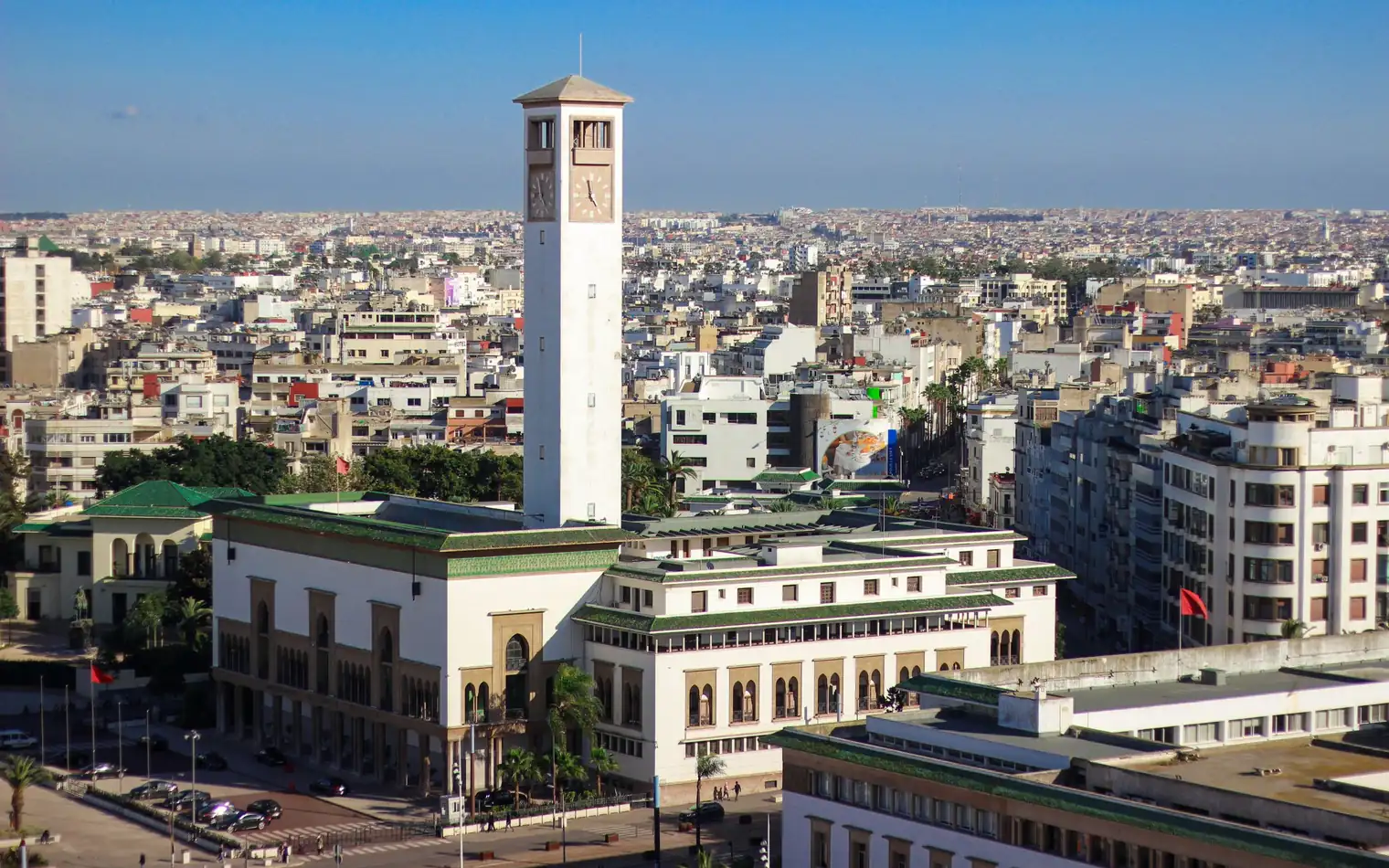
Casablanca is where Morocco's business day actually happens, and it has the deepest coworking and office market in the country along with the best fixed-line coverage. If your work involves client meetings in local time, it is the obvious base. It is also a big, loud, working city rather than a postcard — which some people find a relief after a month of blue doors.
The two-route setup
The fix is not finding better Wi-Fi. It is never depending on one connection:
| Route | Good for | Weak spot |
|---|---|---|
| Riad or cafe Wi-Fi | Big downloads, long working sessions | Shared, unpredictable, worst in the evening |
| Your phone as a hotspot | Calls, standups, anything with a deadline | Uses your data allowance and your battery |
| A local SIM card | Long stays, local calls | A shop, a passport and a registration form |
Most people end up on Wi-Fi by default with a VamosData eSIM for Morocco sitting in the phone, ready to become a hotspot the second a call wobbles. Because it is a second profile rather than a swapped card, your usual number stays in the phone for banking codes and messages — and switching takes two taps, not a trip to a shop. Work out roughly what you need first: how much data you actually need breaks it down by day, and video calls sit at the heavy end of it.
One practical note on calling apps: Morocco restricted app-based voice calls back in 2016 and lifted the restriction the same year, so test your usual tools on your first day rather than discovering a quirk ten minutes before a client call. Browser-based meeting tools are the least fussy option.
Before you fly
- Confirm your handset supports eSIM on the device checker, and that it is carrier-unlocked.
- Pick a Morocco plan from destinations sized for a working stay, not a holiday, and install it over your home Wi-Fi with the iOS or Android guide.
- Turn data roaming on for your travel eSIM — data-only profiles need it — and off for your home SIM.
- Practise turning your personal hotspot on before you need it, and pack the charger you will be running the phone from.
- Read the Morocco travel guide for seasons, regions and entry basics, and check the stay rules for your own passport against official sources.
Morocco is a good place to work from. Just arrive assuming the building's Wi-Fi will let you down once, and have the other route already in your pocket when it does.