There is a two-month window on the Silk Road when everything lines up. The lowland cities have stopped being an oven, the mountain passes are still open, and the markets in Samarkand, Bukhara and the Fergana Valley are stacked with the year's melons, grapes and pomegranates. September and October are when Central Asia is at its best — and when the region's most awkward practical detail catches people out.

That detail is not visas, roads or money. It's that this is one trip across five separate countries, and your phone treats every border as a fresh start.
Why the harvest window is the one to take
Summer in the desert lowlands — Bukhara, Khiva, the Karakum — regularly pushes past 40°C, which turns a day of walking between tiled monuments into an endurance event. By late September the heat has broken but the light is still good, and the high country hasn't closed yet. It is also harvest season in a region that takes fruit seriously, which is a better reason to travel than most.
The trade-off is that autumn is short here. By November the passes start shutting and the same route becomes a winter expedition.
The visa position is unusually open — and it moves
By historical standards, getting into most of Central Asia has never been easier. Uzbekistan, Kazakhstan and Kyrgyzstan have all built broad visa-free lists over the past decade, and a traveller who last looked at this region ten years ago will be surprised.
Two honest caveats. First, the specifics depend entirely on which passport you hold — allowances differ by nationality and there is no single answer. Second, the rules genuinely move: Kyrgyzstan shortened its visa-free stay for a long list of countries in 2026, so anything you read in an older guide may already be wrong. Turkmenistan remains the outlier, still built around visas arranged well in advance. Check each country's official source for your own passport before you book, and again close to your departure date. None of this is legal or immigration advice.
Five countries, five separate network relationships
Here is the structural thing that makes this route different from, say, a summer across Europe. Central Asia has no shared roaming zone. There is no equivalent of the EU's "roam like at home" arrangement stitching these five countries together. Each has its own operators, its own tariffs, its own rules.
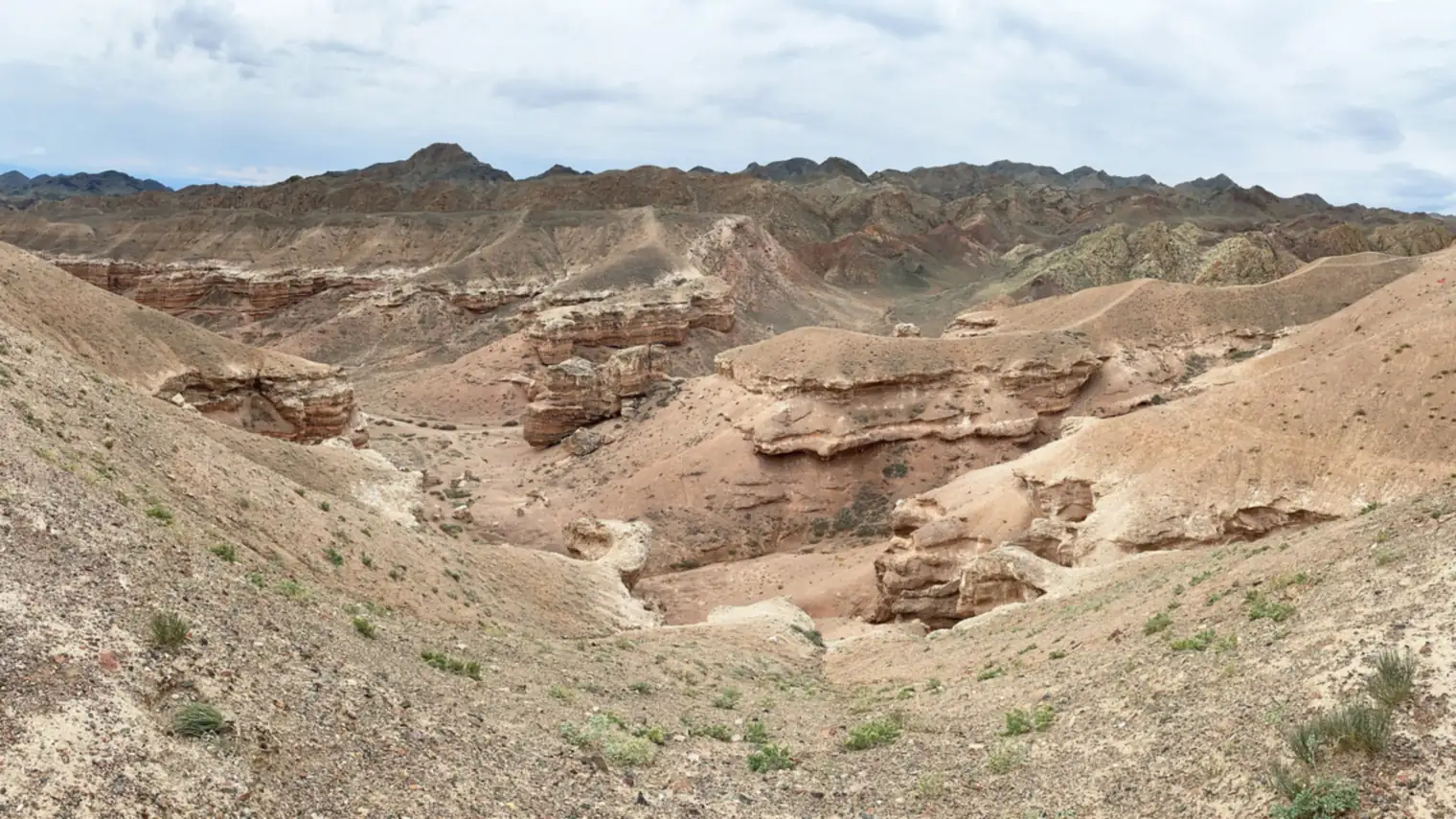
So the local-SIM strategy that works fine for a single-country trip falls apart here. A prepaid card bought in Tashkent is an Uzbek card: cross into Kyrgyzstan and it either stops or starts charging roaming rates the shop never mentioned. Repeat that four times and you have bought four SIMs, queued at four counters, and handed over your passport at most of them — the region is one of the places where buying a local SIM means showing your documents.
A VamosData eSIM is a better fit for exactly this shape of trip: you sort out coverage before you leave, and crossing a border becomes a thing your phone handles rather than an errand in an unfamiliar town. Check which countries your route needs on our destinations page — some plans are single-country and some cover a wider region, so match it to where you're actually going.
The empty stretches are part of the itinerary
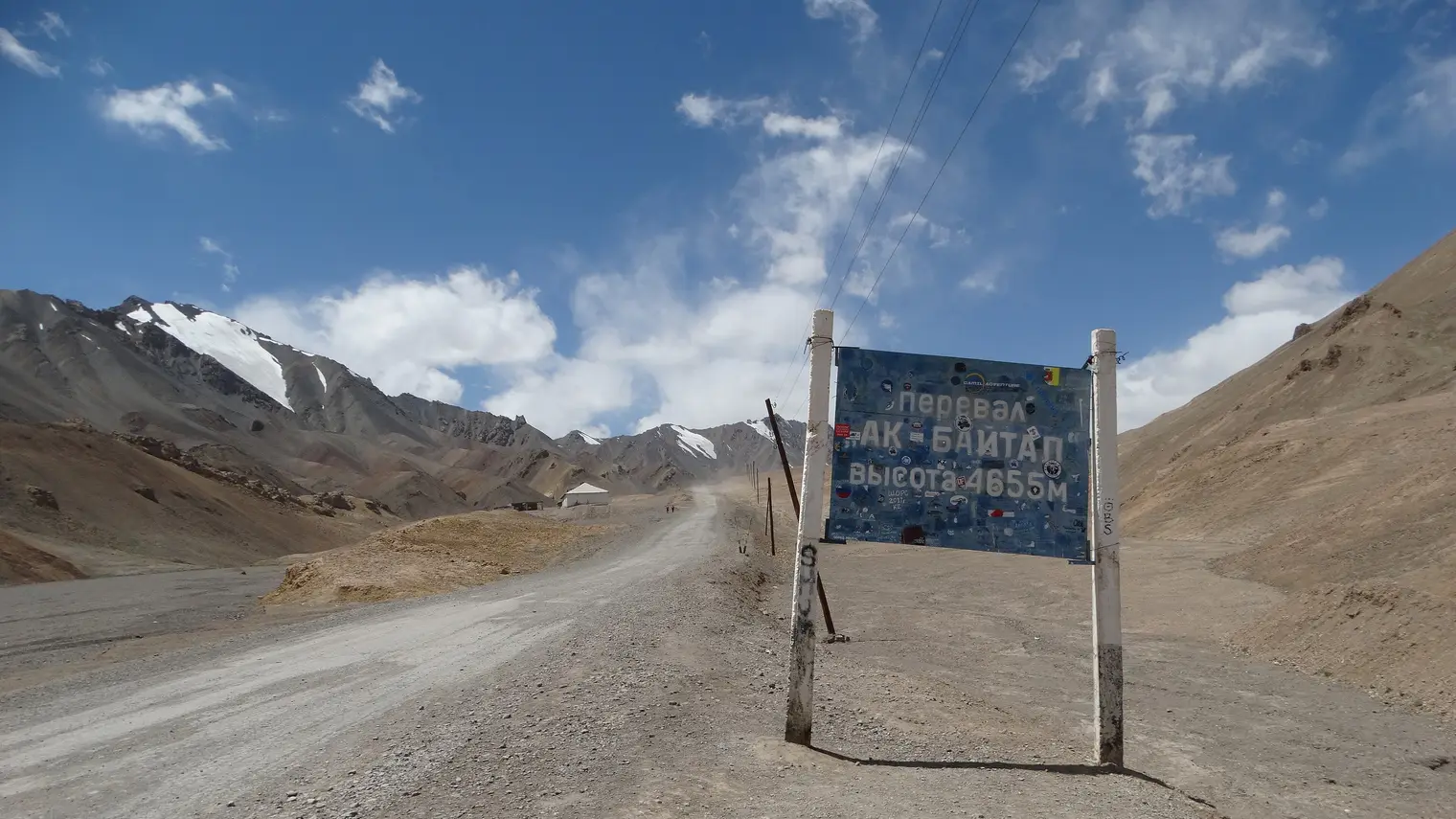
The other half of the problem is geography. Between the cities there is a great deal of nothing: the Kyzylkum and Karakum deserts, the steppe north of Almaty, and the Pamir Highway climbing to passes above 4,000 metres with a day's driving between settlements.
Mobile networks here follow the towns and the main roads, which is reasonable of them and unhelpful for you. Assume you will be offline for hours at a stretch, and prepare for it rather than being surprised by it:
- Download offline maps for the whole route, not the next leg.
- Save your accommodation addresses, booking references and border-crossing notes as offline text or screenshots.
- Download translation packs — Russian is still the regional lingua franca, alongside the national languages.
- Carry a power bank. Cold high-altitude nights flatten a phone battery fast.
What actually works on this route
- Confirm your phone supports eSIM with our device checker — do it now, not at the airport.
- Plan coverage country by country on destinations, following your actual border sequence.
- Install your VamosData eSIM at home on Wi-Fi, using the iOS or Android guide.
- Leave data roaming switched on for the travel line — a data-only profile needs it on to work abroad, while your home SIM's roaming stays off.
- Do the first-30-minutes routine at every border, not just the first airport.
Get that done and the Silk Road gives you what it's supposed to: long empty road, a mountain pass at altitude, and a market full of melons at the other end — with the logistics quietly handled in your pocket.