A surf trip runs on a timetable nobody publishes. The swell fills in overnight, the offshore wind holds until mid-morning, and the reef you came for wants a particular stage of tide. Line those three up and you are the only one out. Miss them and you are on the sand at 10:30 watching the wind swing onshore, refreshing a forecast you cached yesterday over somebody's cafe Wi-Fi.
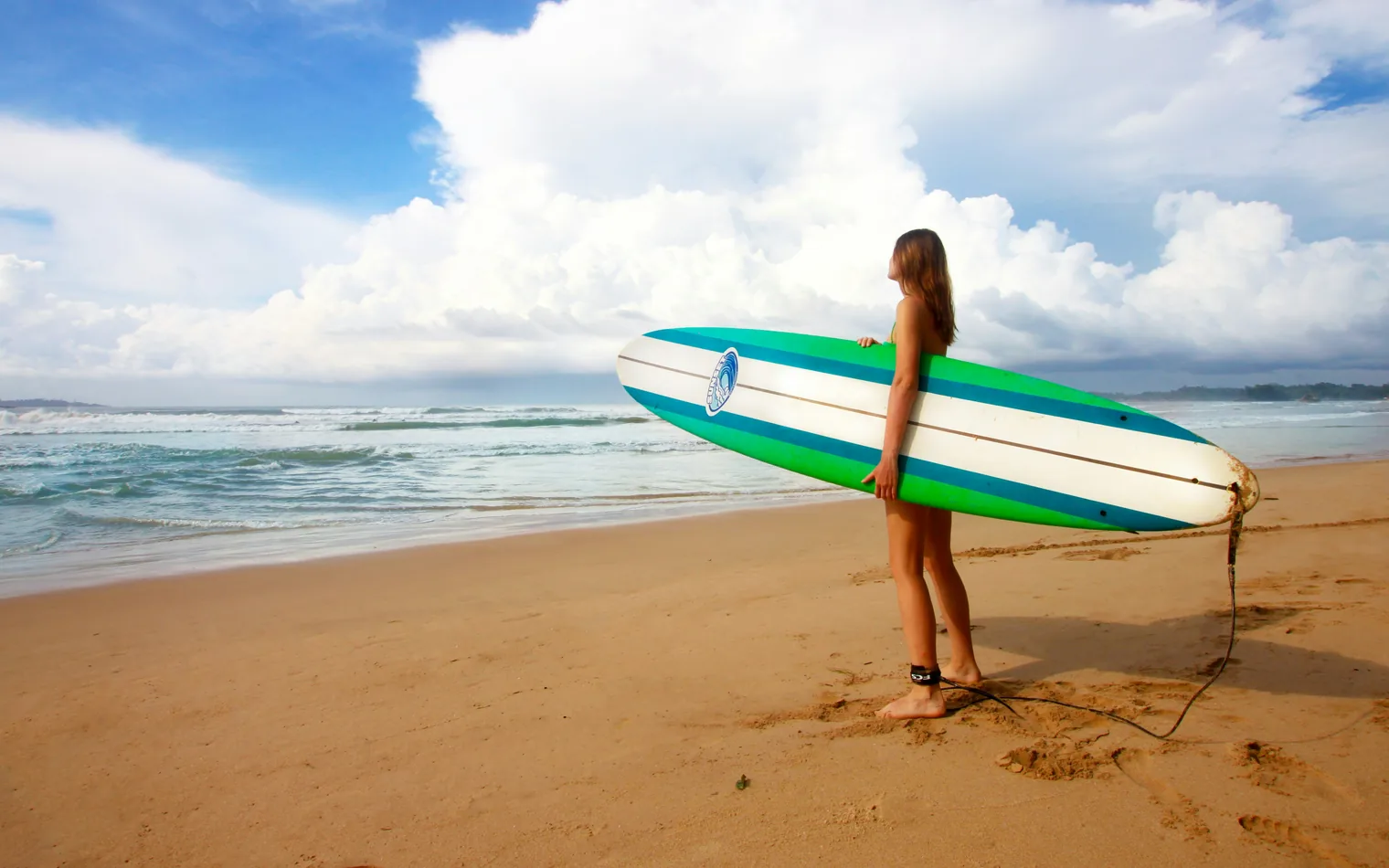
A cached forecast is a snapshot. The ocean is not.
The chart you loaded at breakfast is a model run — a prediction made hours ago, superseded since. The wind at 08:40 is a fact. Those two disagree often enough that the information worth having is precisely the information you cannot get without a connection:
- Wind direction right now, not at 06:00 when the guesthouse router was still awake.
- The tide clock. Sri Lanka's tidal range is small — far less than a metre in most places — but on a shallow reef a few tens of centimetres decide whether you get a clean face or a dry rock.
- Swell period, which is the difference between a tidy 4ft and a mushy 4ft.
- The group chat, because the person who checked the next bay along is faster than any model.
Your bookmarks may also be stale: Magicseaweed was folded into Surfline in 2023, and old links now redirect there. Most travelling surfers cross-check a surf-specific forecast against a raw wind model such as Windy or Windguru — two sources, because models disagree and reef breaks are local.
None of that is heavy data. It is just data you need outdoors, repeatedly, nowhere near a router — which is the whole argument for a VamosData Sri Lanka eSIM living in the board bag.
Two coasts, two seasons
Sri Lanka's monsoons mean the island is almost always working somewhere — just not everywhere at once.
| Coast | Rough season | What you are paddling into |
|---|---|---|
| South: Weligama, Midigama, Ahangama | About November to April, best December to March | Forgiving beach break at Weligama; reefs and points a short ride east |
| East: Arugam Bay | About May to September, peak June to August | Long right-hand points and the year's busiest line-ups in July and August |
| Shoulder: April and October | Either coast, on its day | Less predictable; local wind decides, often that morning |
Treat those months as a booking guide, not a guarantee: published seasons vary by a few weeks between sources, and the monsoon has never read a calendar — which is exactly why the live check beats the season chart.
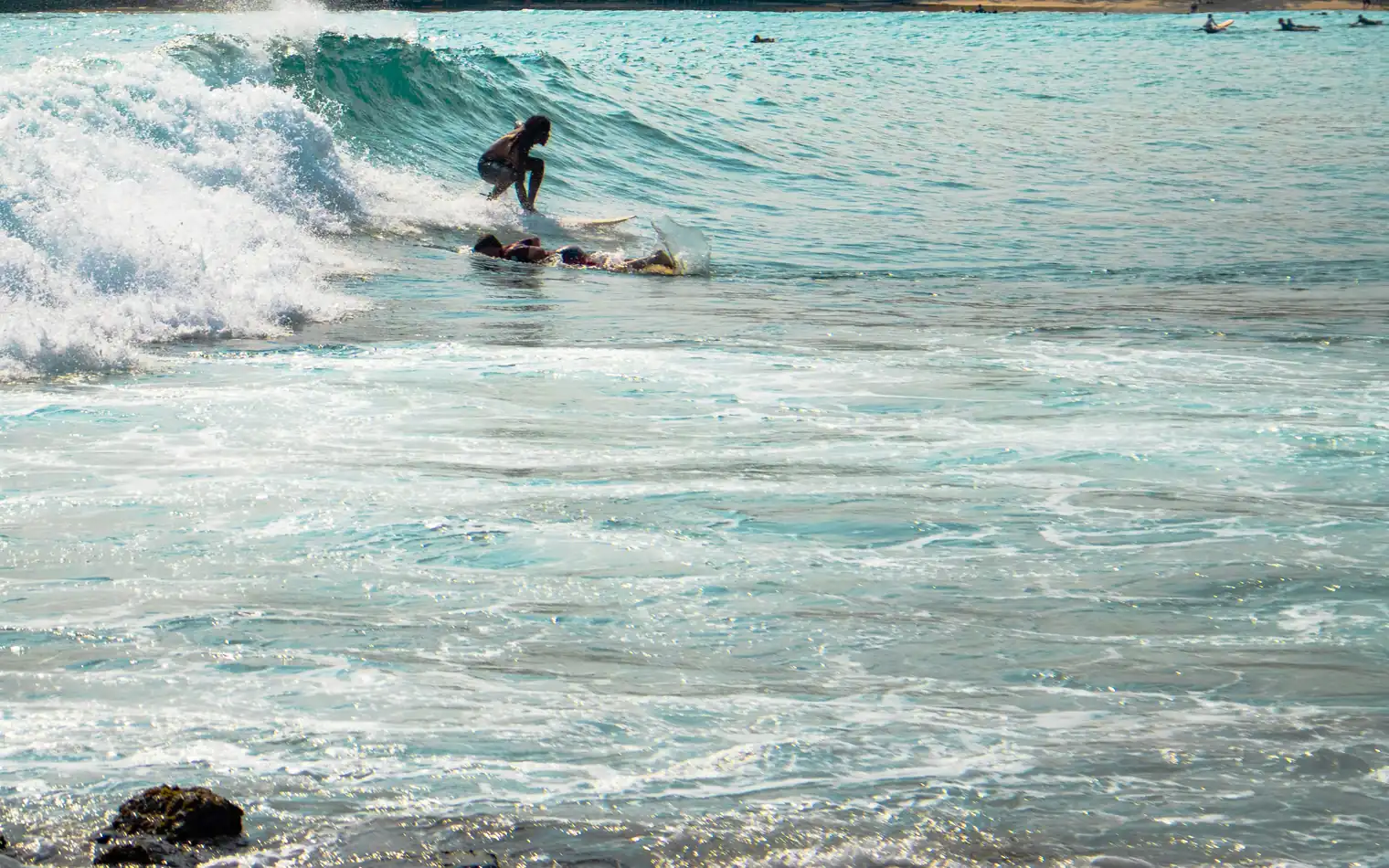
What a surf day actually asks of your phone
- 05:40 — wind and tide check from bed, before committing to a break.
- 06:30 — map a reef you have not surfed, find the access path, show a driver the pin.
- Mid-morning — someone posts that it is better three bays down.
- Afternoon — the heavy part: clips off the water camera, the biggest upload most surfers do all trip.
- Evening — tomorrow's swell, and a message home.
Almost all of that is kilobytes. Only the afternoon is big, and that is the one job a shared guesthouse line is genuinely fine for. Our day-by-day data breakdown beats guesswork for sizing a plan.
Three routes onto a Sri Lankan network
| Route | Good for | Weak spot |
|---|---|---|
| Guesthouse, cafe or surf-camp Wi-Fi | Uploads, backups, calls home | Shared, slow at peak, indoors — never where you decide |
| An eSIM installed before you fly | Arrival, dawn checks, maps, tuk-tuks, group chats | Uses your allowance; signal varies by bay and inland |
| A local SIM bought on arrival | Long stays, local calls, top-up apps | Passport, a form and a counter after a long-haul flight |
You want two of them, not one. Village infrastructure fails in ordinary ways — the power goes, the router sulks, the squall that ruined the wind also took out the thing on the pole — so the useful question is which two do not fail together. We covered why local SIM counters want your passport elsewhere, and the same logic plays out on island dive trips.
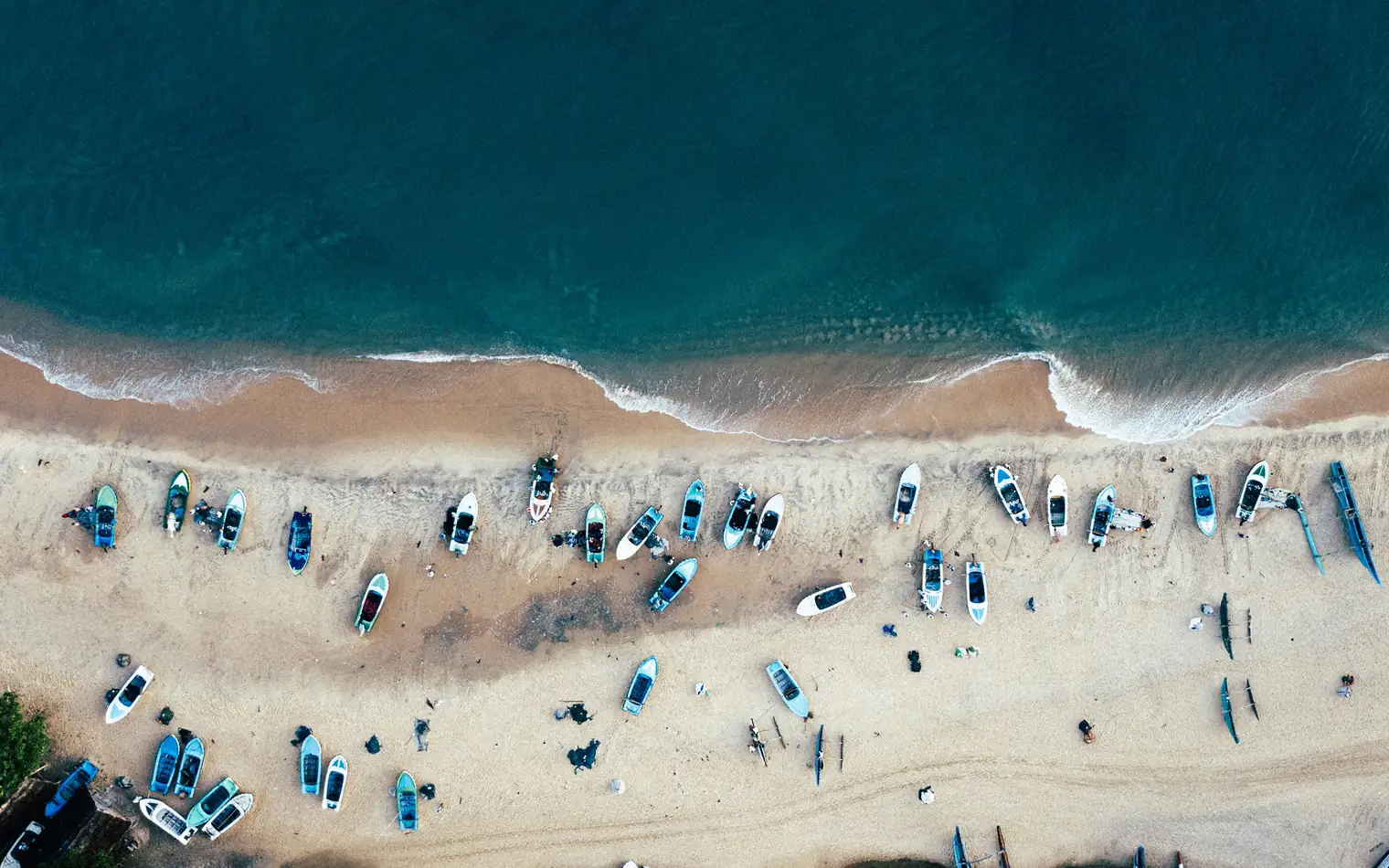
Arugam Bay is a long way from the plane
The south coast is the easy run: the expressway carries you most of the way towards Matara, with Weligama and Ahangama just beyond. Arugam Bay is the far end of the island, and crossing to it eats most of a day by road.
That drive is where navigation matters more than forecasts. PickMe is the local ride-hailing app, strongest in Colombo and the bigger towns; in surf villages you are mostly negotiating with a driver at the top of the lane, which goes better with a map on screen and a pin to show them. Download offline maps of both coasts before you leave home, screenshot your accommodation's name in Sinhala or Tamil if your host sends it, and note that an offline translation pack weighs nothing until you need it.
Pack the connection with the board bag
- Confirm your handset supports eSIM on the device checker, and that it is carrier-unlocked.
- Choose a Sri Lanka plan from destinations and install your VamosData eSIM at home over Wi-Fi, following the iOS or Android guide.
- Turn data roaming on for your travel eSIM and off for your home SIM, so no home network quietly bills you.
- Download offline maps of the south coast and the east coast, and save the tide table for your dates.
- Put the phone in a dry bag with a power bank — salt, sand and a hotspot running all morning are three separate ways to lose it for the trip.
Sort it at home and the trip stops being a logistics problem. The forecast goes back to being just a forecast, and the only thing left to argue with is the wind. Our notes on the first 30 minutes in a new country cover the rest of arrival day.