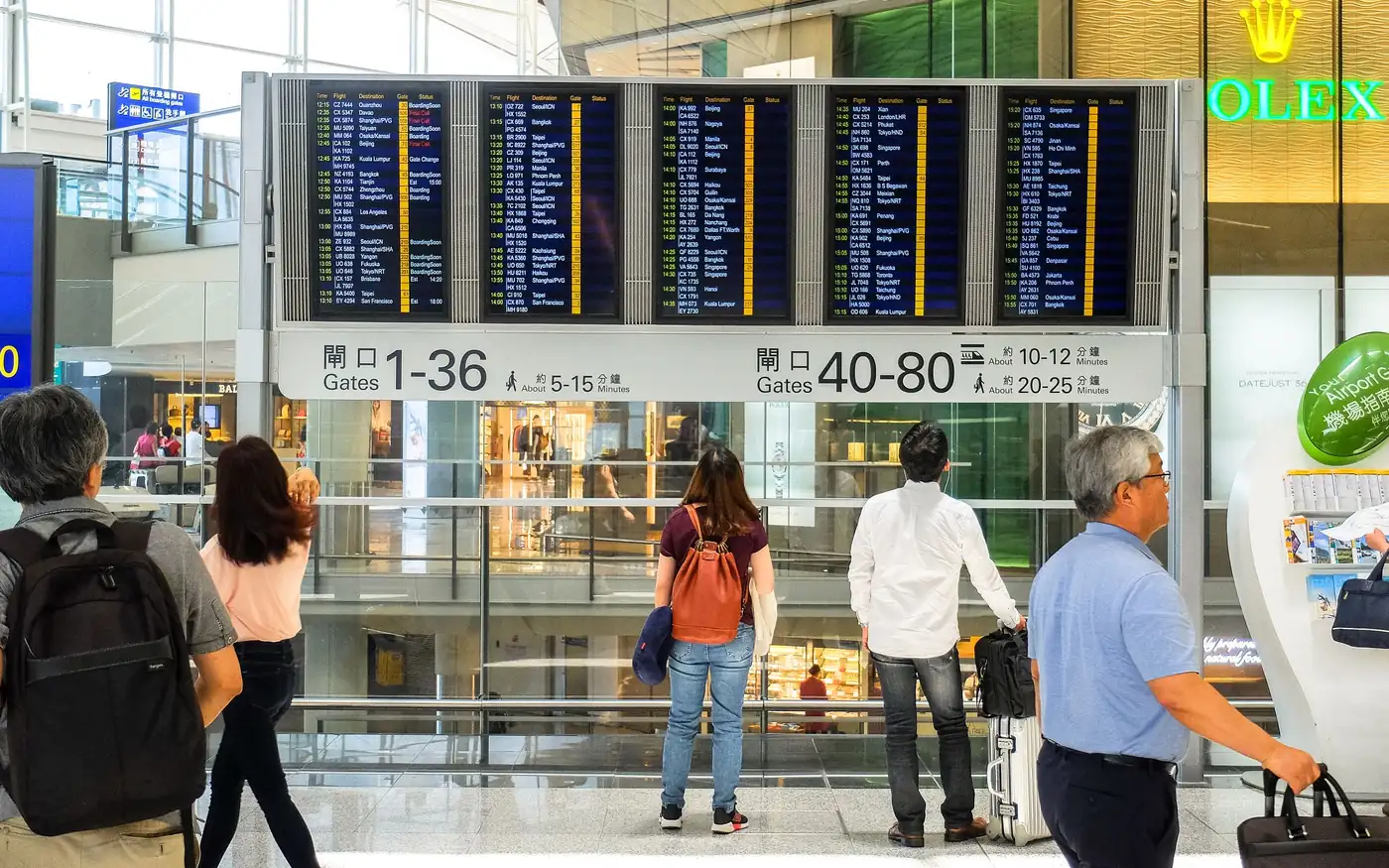
The service desk still exists. It is just no longer where the seats are. Over the course of 2026 the larger carriers finished moving disruption handling into their own apps, and the practical effect at a gate is this: the passenger refreshing a screen next to you is ahead of you in a queue you cannot see.
What actually changed this year
Three announcements, deliberately picked from three different places, because this is not one airline's idea:
- American Airlines, 20 January 2026. An app update built around disruption: a guided self-service rebooking flow; hotel, meal and ground-transport vouchers issued in the app and on the website where eligible; bag tracking while a trip falls apart; and an explanation of why the flight was delayed or cancelled. The airline said self-service standby would follow later in the year.
- United, 1 September 2026. Passengers who have been rebooked onto a later flight after a cancellation or long delay can now add themselves, from the app, to the standby list for up to three earlier flights to the same destination, keeping the confirmed booking until they take one. It sits on top of in-app rebooking and voucher tools the carrier has run since 2023.
- FlyArystan, Kazakhstan, 2026. An online self-service flow for delayed and cancelled flights: instead of a call centre, the passenger gets a personal link through the contact details on the booking and picks an alternative, with refunds routed back to wherever the ticket was bought.
Different markets, different rules, same direction of travel. The airline tells your phone first, and increasingly the phone is the only channel that answers immediately.
Why late October is when this starts to bite
The northern-hemisphere winter timetable begins on 25 October 2026 and runs to late March. Two things tend to follow the changeover. Schedules get reshuffled — routes pause for the season, frequencies change, and a flight booked in July can quietly move. And the weather that produces de-icing delays, closed runways and knock-on cancellations arrives shortly after.
None of that guarantees a bad trip. It is simply when the odds shift, which makes it a sensible moment to look at how you would actually handle a cancellation.
The assumption buried in every one of these flows
They all assume a phone with working data.
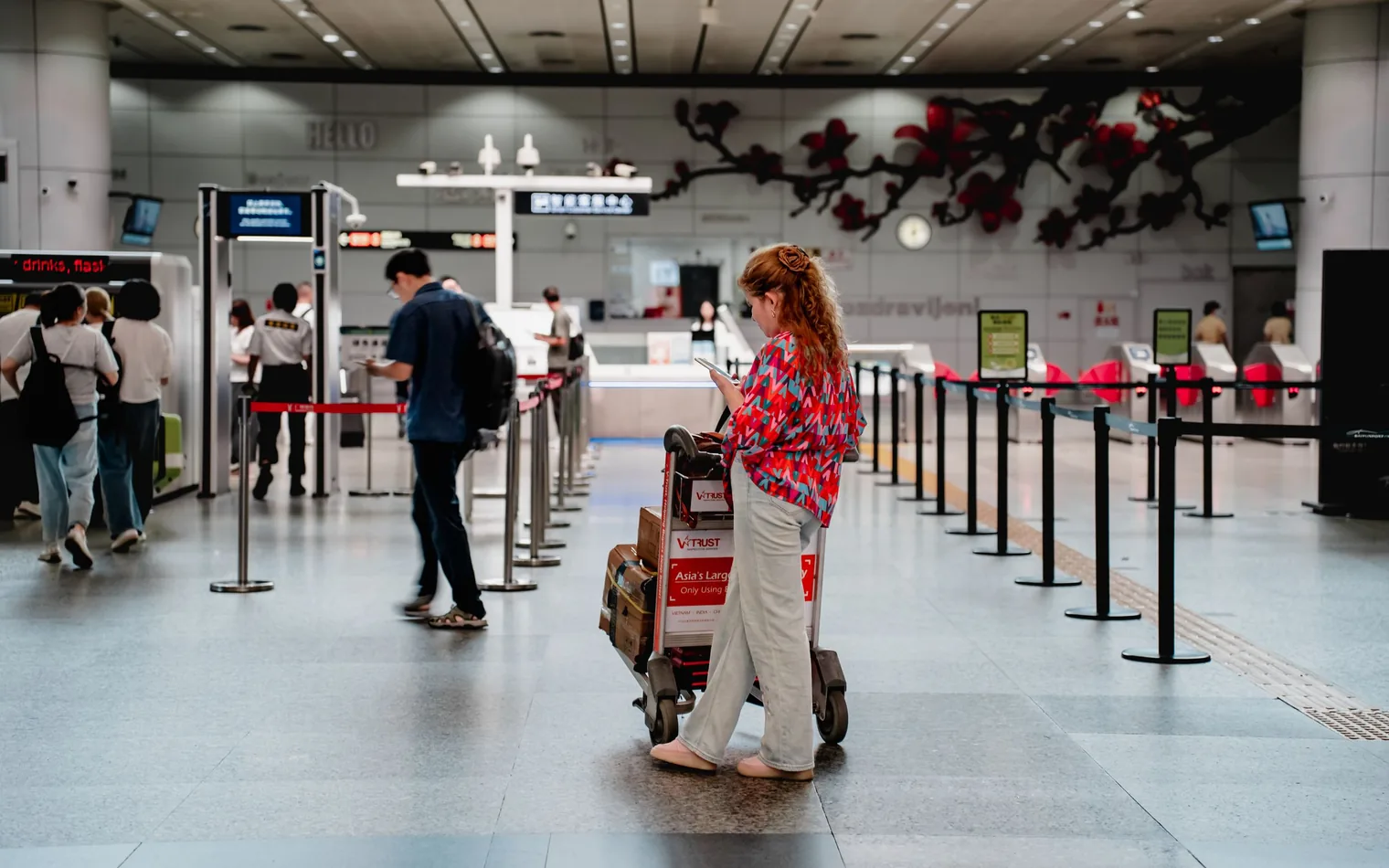
That assumption is invisible until it fails, and then it fails in a specific place: not at your home airport, where your usual line works perfectly, but at the connecting hub in a third country, or on the leg home. That is exactly where a cancellation hurts most and where most travellers have the least connectivity.
Three ways it goes wrong:
- Airport Wi-Fi is a login, not a connection. Captive portals frequently want an SMS code or an email confirmation before they let you through — which assumes the very connection you are trying to get. Add a crowd of several hundred stranded passengers to one access point and the honest description is "eventually".
- The notification has to reach you. A push alert, an email, or a link sent to the contact details on the booking all travel over data. If nothing arrives, you find out at the gate with everyone else.
- It is first-come. Alternative flights, standby places and hotel vouchers are finite, and the app hands them out in the order people claim them.
What you are owed is a separate question
Worth saying plainly: what an airline owes you after a cancellation depends on where you are flying from, where to and with whom. European, UK and United States frameworks differ from each other and from the conditions of carriage that apply elsewhere, and the thresholds move. Nothing here is legal advice.
Two generalities survive the variation, though. Accepting a rebooking offered in an app is the airline's own process, not a signature on anything. And whatever you end up claiming afterwards is easier with evidence — screenshots of the cancellation notice, the option you accepted and the time you accepted it, plus receipts for anything you paid out of pocket.
Arrive with the data already live
The fix is unglamorous and takes ten minutes at home:
- Confirm your phone supports eSIM with the device checker.
- Pick a plan for where you are going on destinations — or, if the itinerary crosses borders, see how to choose a regional plan.
- Install it over your own Wi-Fi before you leave, with the iOS or Android guide. Installing does not start the plan.
- On arrival, switch data to your travel eSIM and turn its data roaming on, leaving your home line's data roaming off.
Most plans only begin counting when your VamosData eSIM first connects at the destination, so doing this days early costs nothing — and we walked through the rest of that landing routine in your first 30 minutes in a new country.
The short version
The queue moved into the app, the app needs data, and the winter schedule starts on 25 October. Land with a VamosData eSIM already installed and the rebooking screen is one tap away rather than one captive portal, one SMS code and twenty minutes away.