The Holy Door of the cathedral in Santiago is due to open on 31 December 2026, which makes 2027 a Xacobeo — a Holy Year, the first since 2021 — and next year's Camino the busiest in a long while. Even an ordinary year is big: the Pilgrim Office recorded more than 530,000 compostelas in 2025, and over half of those pilgrims came from outside Spain.
So "which eSIM for the Camino" is a fair question. The honest answer starts somewhere else: which countries your route actually touches, and what you need the phone for between one albergue and the next.
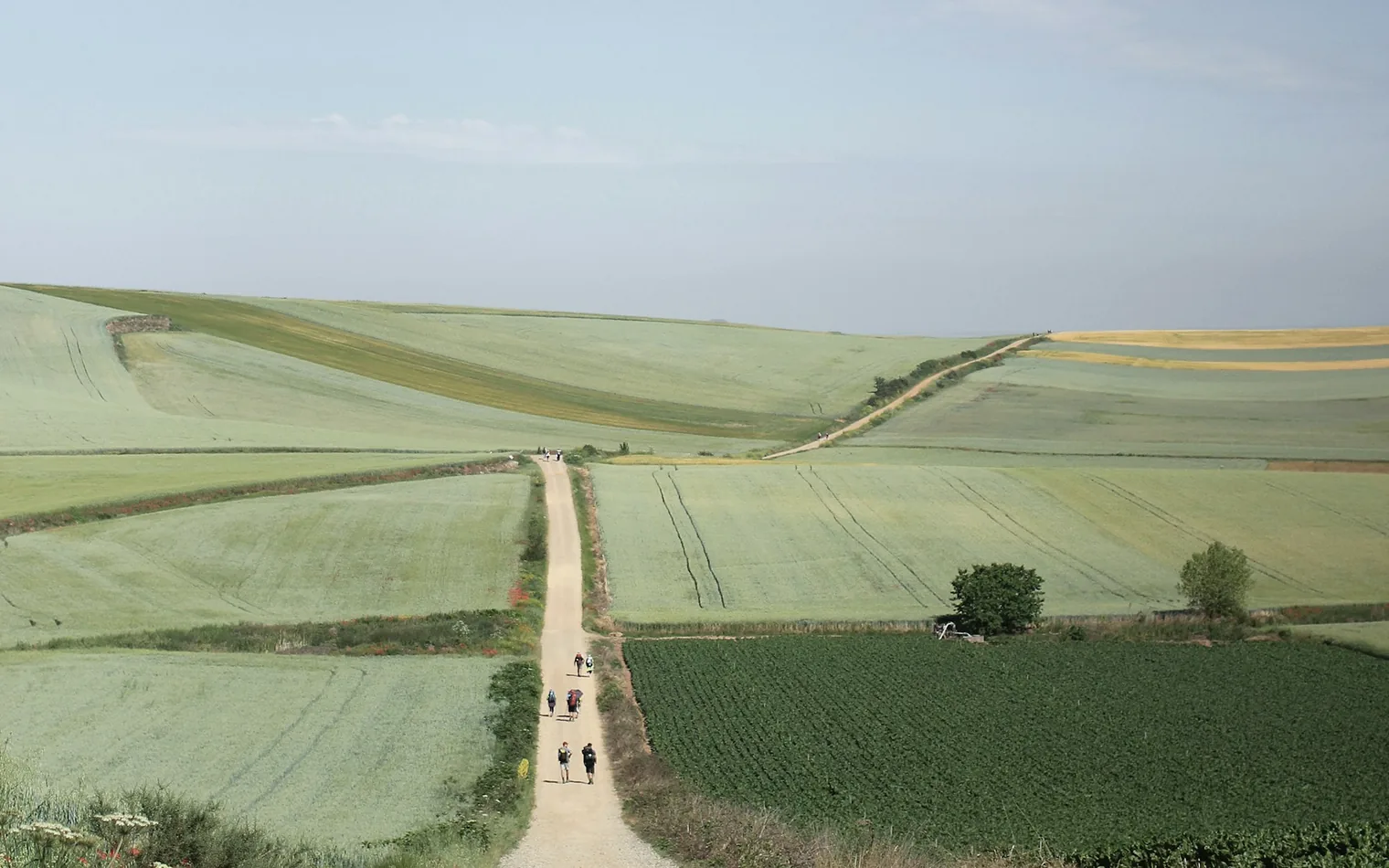
Your Camino probably crosses a border
The Camino is a network of routes, not a path, and they do not all start in the same country.
- Camino Francés — 46% of pilgrims in 2025. It officially begins in Saint-Jean-Pied-de-Port, on the French side of the Pyrenees, and crosses into Navarre on day one.
- Camino Portugués, central and coastal — roughly a third of pilgrims between them. They start in Lisbon or Porto and cross the Minho into Galicia at Tui or Caminha, so most of the walking is in Portugal.
- Norte, Primitivo, Inglés, Vía de la Plata, Invierno — these stay inside Spain.
If your line is from an EU or EEA country, "roam like at home" already covers all three countries at your domestic rates, subject to your operator's fair-use cap — worth reading before a five-week walk, and we covered where that rule stops working. UK lines have been outside it since Brexit, and the largest foreign contingent, the roughly 44,000 pilgrims who came from the United States in 2025, is on international roaming from the moment the plane lands.
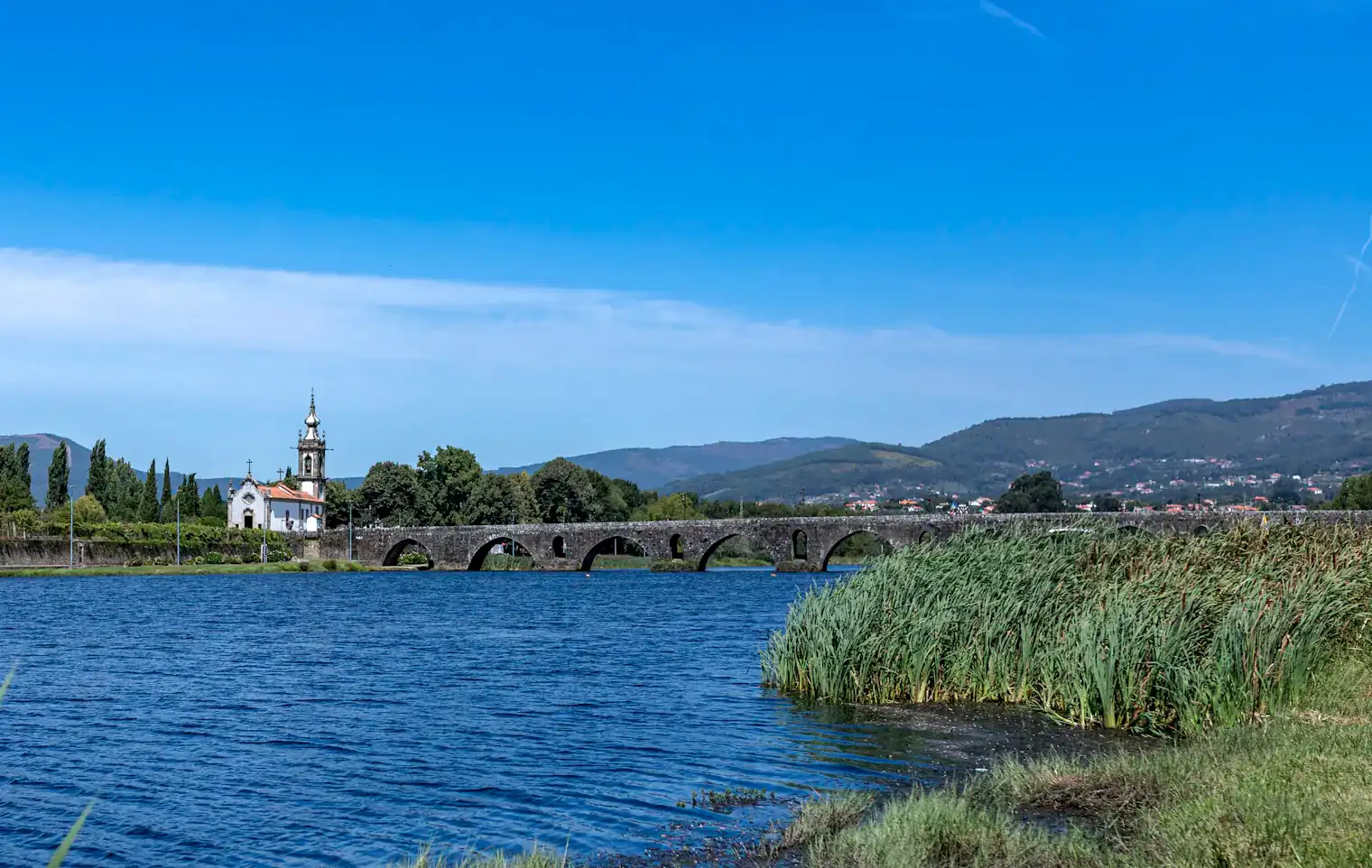
The border day is the one that catches people out
Phones do not respect frontiers. On the Pyrenees crossing, or along the Minho with Portugal on one bank and Galicia on the other, a handset registers on the strongest mast it can hear — which for a while may be the one across the border. A plan bought for a single country has nothing to connect to while that is happening; a plan that covers both does.
Which countries a plan includes is a property of that plan, not something to assume. The list is published on each plan's page under destinations, and regional plans exist precisely for routes that cross borders — we wrote a whole piece on choosing between a single-country and a regional plan. If your Camino starts in Porto or Saint-Jean, read the list before you pay.
What the trail does to your signal
Rural coverage in Spain and Portugal is better than the old pilgrim stories suggest, and on the busy stretches of the Francés you pass through villages often enough. It still varies stage by stage, and the pattern is geographic rather than mysterious: the meseta and the towns are fine; the Pyrenees crossing, the climb to O Cebreiro and the wooded valleys of Galicia and Asturias are not. Where there is no mast, there is no network to join, whichever SIM is in the phone.
Two more trail realities worth planning around. Albergue Wi-Fi is one contended line shared by everyone in the building, and at eight in the evening it behaves like it. And a data-only travel line does not place voice calls, so keep your usual SIM in the phone for calls and bank texts; 112 is the emergency number in Spain, Portugal and France and is free from any mobile.
How much data a walking day actually needs
Less than a city break. You are walking, not scrolling, and maps should be downloaded the night before anyway. Where the data does go: booking tomorrow's bed, increasingly by message; backpack transfers and their confirmations, which Correos and the private operators handle online; the weather, which decides whether you leave at six or at eight; and the call home. If you have never counted, our day-by-day breakdown by traveller type beats guessing.

Why buying this one from a Spanish company helps
Declaring the bias first: we sell eSIMs, so of course we think you should consider ours. Three things, though, are structural rather than promotional.
First, VamosData is a small independent business registered in Spain, in the Canary Islands — the same clock as Portugal, an hour behind the Spanish mainland — so support answers during your walking day, not from a time zone where your evening is someone else's night. By WhatsApp or email, in Spanish or English, and every message the system sends you arrives in one of five languages. It also means the Camino is not an abstraction to us: Spain, Portugal and France are all live destinations, exactly the set this route needs.
Second, your VamosData eSIM tells you when it is running low. There is an alert at around 80% of your data, and a link that shows what is left without logging in — which matters on a trail, because signing in needs email and email needs the data you are trying to measure.
Third, the refund policy is written down instead of implied: a plan never installed or activated, still inside its validity period, is refunded in full (terms, section 10).
Before you set off
- Confirm your handset supports eSIM on the device checker — that is a property of your phone, not of any plan.
- Install at home on your own Wi-Fi, following the iOS or Android guide. An albergue at 9pm is a poor place to troubleshoot.
- Switch data roaming on for the travel line. It is the single most common reason a perfectly good eSIM looks broken.
- Download offline maps and your accommodation list before each stage.
- Carry a power bank, and check the airline rules before you fly with it.
Live plans for the countries your route touches are on the Spain, Portugal and France pages, with the multi-country options on destinations. Buen Camino.