Morocco can feel like three or four countries stacked into one: blue-washed mountain towns, a red imperial city, Atlantic surf beaches, and dunes that roll to the horizon, all within a day's drive of each other. That range is the draw and the challenge — what you pack, when you go, and how you get around change a lot depending on which Morocco you're chasing. Here's a practical rundown, plus the entry and connectivity details worth sorting out before you fly.
Where to go: Morocco's essential regions
| Region | Known for |
|---|---|
| Marrakech | The red medina, Jemaa el-Fnaa square, souks, riads |
| Fes | The world's oldest walkable medina, tanneries, medersas |
| Chefchaouen | Blue-painted alleys in the Rif mountains |
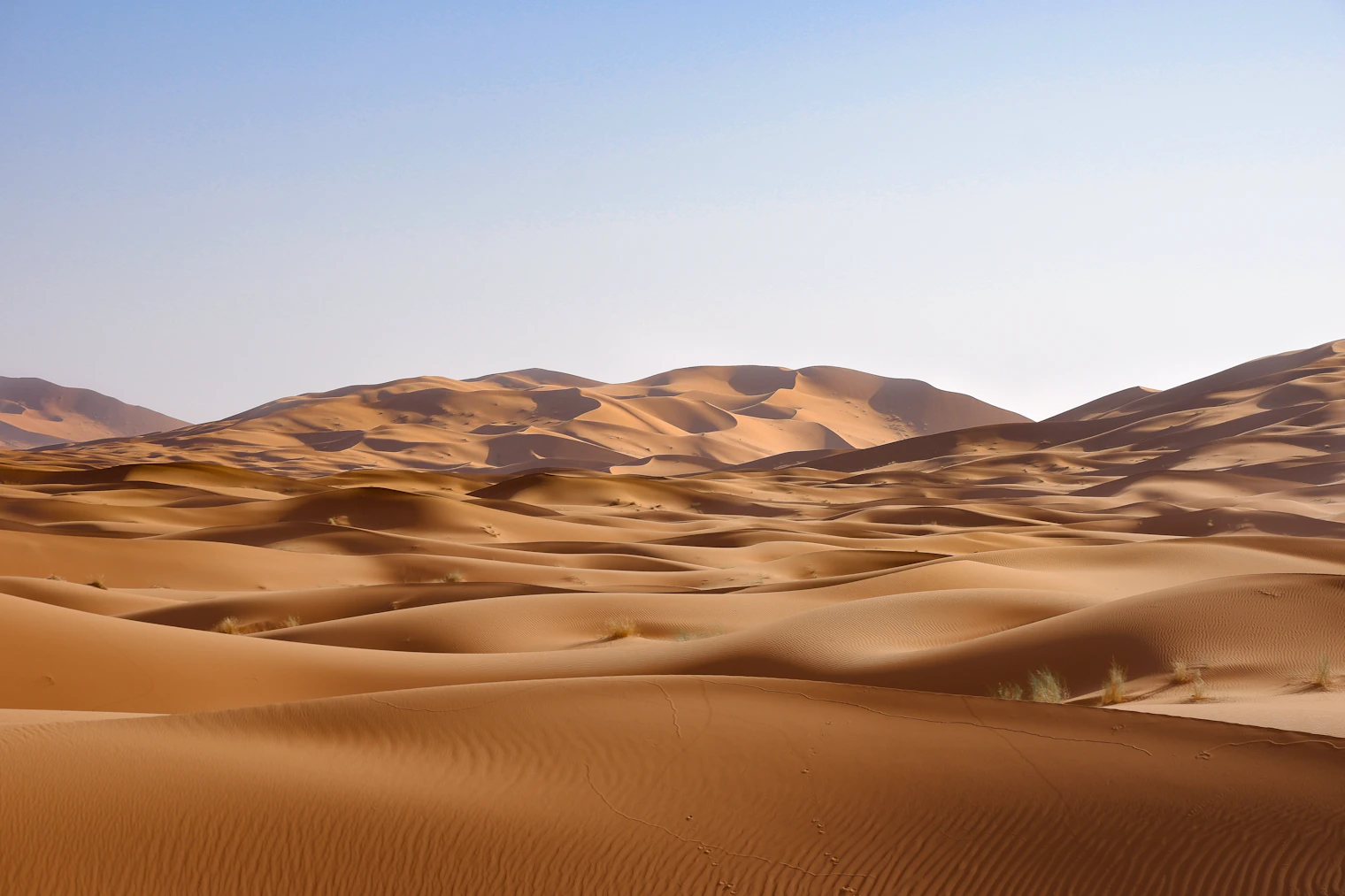
| Sahara Desert (Merzouga / Zagora) | Dunes, camel treks, overnight desert camps |
| Essaouira | Atlantic coast, surf, a working fishing port, cooler air |
| Atlas Mountains | Hiking, Berber villages, Mount Toubkal |
Most itineraries link two or three of these rather than chasing all six. Marrakech, a desert night, and one mountain or coastal stop is a common week-long route that avoids constant backtracking.
When to go: Morocco's seasons
- Spring (March–May) and autumn (September–November): mild temperatures nationwide — the widely recommended shoulder seasons.
- Summer (June–August): interior cities like Marrakech and Fes routinely pass 38°C (100°F), and the desert runs hotter still. Essaouira's coast and the Atlas Mountains stay noticeably cooler if summer is your only window.
- Winter (December–February): pleasant days but genuinely cold nights, including in the desert, with snow common on the higher Atlas passes.
What to pack
- Modest, breathable clothing — shoulders and knees covered outside resort pools and beach towns is the norm, and it earns a warmer welcome in medinas.
- Layers, regardless of season — desert and mountain day-to-night temperature swings are large even in summer.
- Comfortable, closed shoes — medina streets are cobbled, sloped, and occasionally slick.
- Sun protection — sunscreen, a hat, sunglasses, year-round and doubly so in the desert.
- A plug adapter — details below.
Visa and entry requirements
Requirements vary by nationality, so treat this as a starting point, not the final word. Passport holders from many countries — including the EU, UK, US, and Canada — can typically enter Morocco visa-free for short tourist stays, though the exact allowed duration and conditions differ by nationality and can change. Passports generally need to remain valid well beyond your travel dates. Confirm the current rules for your own passport with Morocco's nearest consulate or your government's travel advisory before booking.
Electricity: Morocco's plugs and voltage
Morocco runs on 230V, 50Hz — the same standard as most of continental Europe — using two-pin Type C and Type E sockets. If your chargers are dual-voltage, which most phone, laptop, and camera chargers are (check the fine print on the brick), you only need a plug adapter, not a voltage converter. Travelers coming from North America, the UK, or other 110–120V regions should pack an adapter, ideally more than one, since riads don't always keep spares at the desk.
Staying connected: why Wi-Fi alone isn't a plan
Medina hotel Wi-Fi is famously inconsistent — thick stone walls, a maze of alleys, and a router two floors down all conspire against it. A lot of what makes Morocco easy to navigate depends on mobile data: translation apps in the souks, maps for the winding medina, ride-hailing or taxi apps in the newer parts of cities, and a way to confirm an address that street signage in Arabic, French, and sometimes Amazigh won't always spell out for you.
A VamosData eSIM installed before you fly sidesteps the riad-Wi-Fi lottery entirely. Check your phone on the device checker, pick a Morocco plan on destinations, and install it at home over your own Wi-Fi following the iOS or Android guide. Most plans only start counting once your VamosData eSIM first connects to a network at your destination, so there's no downside to setting it up days early and landing already online.
A few more things to keep in mind
- Currency: the Moroccan dirham (MAD) is a closed currency — you generally can't buy it before arrival, so plan to withdraw cash at an ATM once you've landed.
- Cash in the medina: many souks, small riads, and rural transport still run on cash; card acceptance thins out fast once you leave the main tourist streets.
- Bargaining is expected in souks, though not in fixed-price shops, malls, or supermarkets — a quoted opening price is a starting point, not the price.
- Friday prayer times: some shops and services pause briefly around Friday midday; it's rarely a full closure, but worth building slack into a tight schedule.
- Ramadan shifts the rhythm of daily life if your trip overlaps with it — many cafés and restaurants open later in the day, and it's respectful to avoid eating or drinking in public during fasting hours even if you're not fasting. The dates move each year on the Islamic calendar, so check them before you book if timing matters to your trip.
None of that needs to complicate the trip — it just rewards a little planning, the same way a VamosData eSIM installed before departure means one less thing to sort out once you land.