Bali runs on two apps. Between them, Grab and Gojek handle the scooter that gets you across Canggu in ten minutes, the car to the airport at 4am, the nasi campur delivered to a villa with no street number, and the parcel someone forgot at a surf shop. Learn them in your first hour and the island opens up; skip them and you negotiate every ride from the kerb.

The apps are close cousins in function, so most people end up with both installed, and open whichever one has a driver nearby.
Which app does what
Both are super-apps: rides, food, parcels, groceries and a wallet behind one icon. The names differ, the idea doesn't.
| What you want | Grab | Gojek |
|---|---|---|
| Scooter ride, one passenger | GrabBike | GoRide |
| Car, up to four people and bags | GrabCar | GoCar |
| Restaurant delivery | GrabFood | GoFood |
| Sending a package across town | GrabExpress | GoSend |
A scooter ride is the cheapest and by far the fastest option on Bali's clogged south-coast roads, and the driver brings a spare helmet. It is a poor choice with luggage, in heavy rain, or if you are not comfortable in traffic — book a car for the airport run and the hour-long transfers.
Set both apps up before you fly
This is the part that goes wrong at the airport. Registration sends a one-time code by SMS, and a data-only travel plan has no phone number of its own, so the code cannot arrive there. Do it at home, on your own Wi-Fi, with your usual SIM in the phone: install both apps, verify with your home number, and add a payment method while you still have your bank's app and your own network for the verification step.
Payment is the other thing to settle in advance. Cash to the driver is widely accepted for rides. Cards and the in-app wallets (GoPay with Gojek, the Grab wallet with Grab) are the smoother route, but foreign cards are accepted inconsistently and the rules have changed more than once — so add a card, see whether it sticks, and carry some rupiah as the floor under all of it.
The pickup problem in Canggu, Seminyak and Ubud
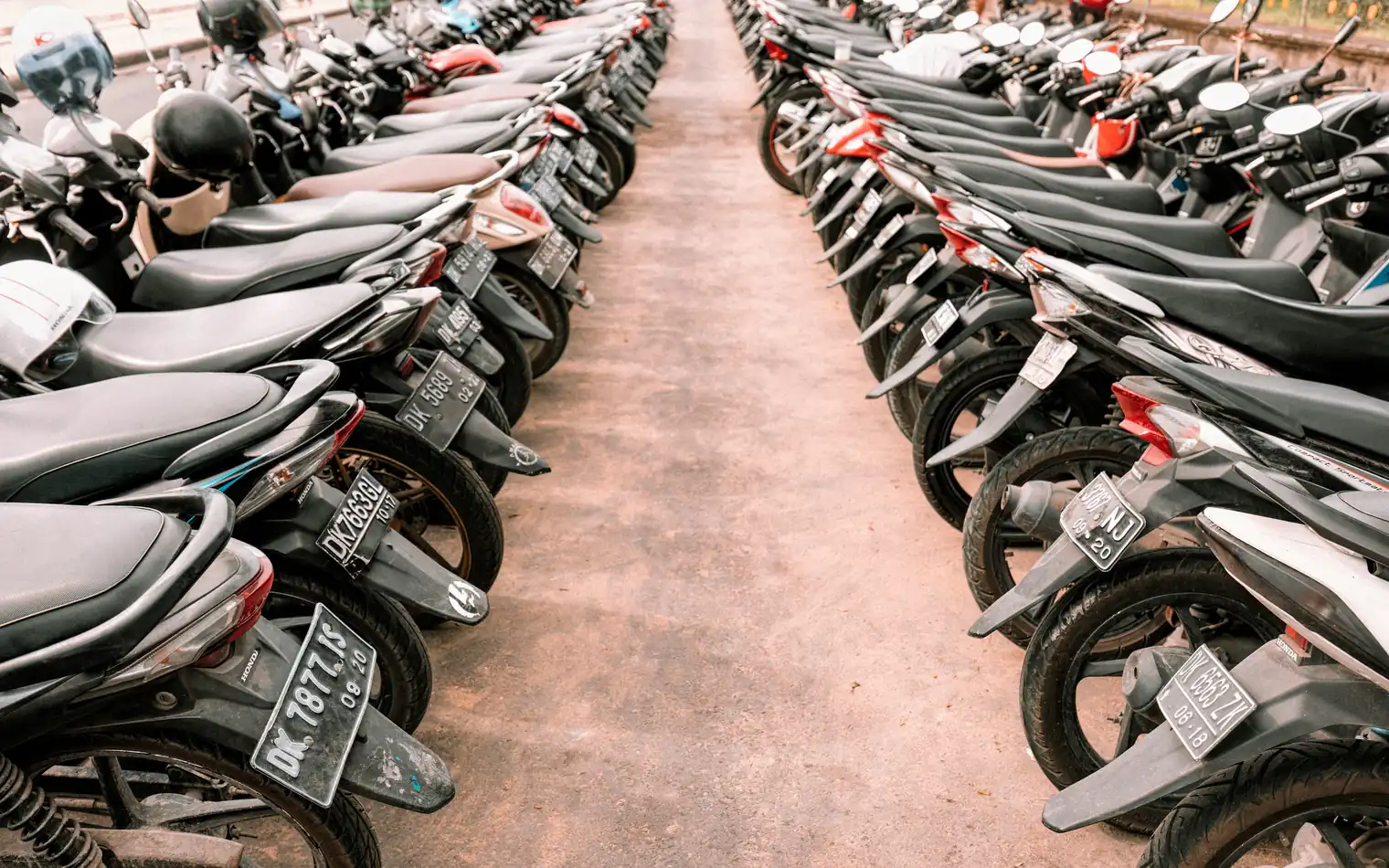
Ride-hailing is legal in Bali, but it is not welcome everywhere. In parts of the island, local community associations — the banjar — have agreements that keep app drivers out of certain streets in favour of local transport, and drivers respect them. For the traveller it looks like a driver who accepts, then messages "sorry, I can't go there", then cancels.
What it looks like in practice, with the caveat that boundaries are informal and change:
- Drop-offs are almost always fine. The restriction is on picking up.
- Central Ubud is the strictest. Expect to walk five or ten minutes out of the market area before a request is accepted.
- Canggu and Seminyak are patchy, street by street rather than district by district. Some areas funnel app pickups to a fixed collection point.
- The airport has designated ride-hailing bays, signposted, usually a short walk from arrivals.
- Pin the kerb, not the lobby. Dragging the pickup pin to a main road a minute away solves most cancellations.
Don't argue the politics of it with a driver; it is their livelihood, not their policy. And at busy times a metered Bluebird taxi is a perfectly good plan B.
Food delivery, where the apps really earn their place
GoFood and GrabFood cover an absurd range in the tourist corridors — warungs, the vegan places in Canggu, the Ubud cafés, 24-hour convenience stores. Two Bali-specific habits help. First, addresses here are often approximate, so drop the pin precisely and add a landmark note ("green gate, opposite the laundry"). Second, watch the chat: the rider will message when they can't find the villa, and an unanswered message is a cold order.
All of it is a live connection
Here is the thread running through every section above. The map that shows your driver crawling toward you, the chat where you explain which gate, the re-pin when the pickup fails, the call to a rider standing outside the wrong villa — none of it is stored on your phone. It is a continuous request to a server, from a moving scooter, on a road where you will not find Wi-Fi.
A VamosData eSIM for Indonesia covers exactly that: ordinary mobile data from the moment you land, bought and installed before you fly, with no queue at an airport kiosk and no local SIM registration to sit through. Your home SIM stays in the phone for the SMS codes the apps occasionally ask for, while your VamosData eSIM carries the data — which is the setup these apps quietly assume.
Check your handset with the device checker first, then follow the iOS or Android guide at home. See the destinations we cover for what's available, and the first 30 minutes in a new country for the rest of the landing routine.