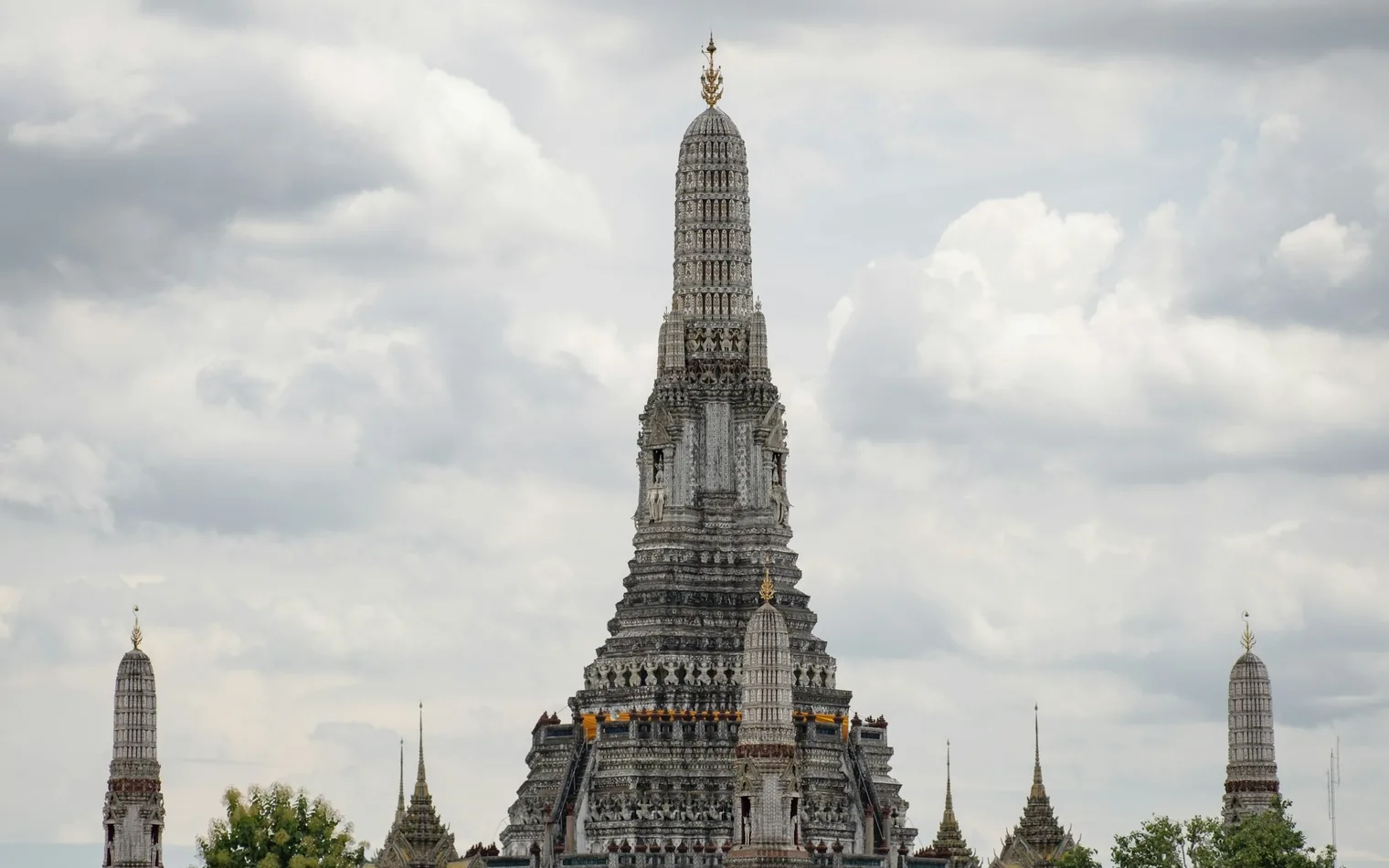
Thailand does a lot of things very well at once: a capital that runs on street food and river boats, a cooler, slower north full of temples, and two coastlines of limestone cliffs and white sand. It is easy to travel and good value at every budget. The decisions that make or break a trip are which coast to pick for your dates and how much to fit in, so this guide spends its time there, plus the entry rules that changed in September 2026.
Quick facts
- Currency
- Thai baht (THB)
- Language
- Thai; English is widely used in tourist areas
- Plugs
- Types A, B, C and O, 230V
- Time zone
- ICT (UTC+7) all year, no daylight saving
- Best time
- November–February for most of the country; late January–August for the Gulf islands
- Recommended trip
- 10–14 days
- Entry
- Visa-free for many passports, up to 30 days for tourismmay change
Why visit
Few countries pack this much variety into one easy loop. Bangkok alone is worth several days: gilded temples on the river, the night markets of Chinatown, rooftop bars and some of the best cheap food anywhere. A short flight or a night train north, Chiang Mai swaps the traffic for a walled old town, mountain temples and cooking classes. The old capitals of Ayutthaya and Sukhothai fill in the history.
Then there is the coast. The Andaman side, around Krabi, Phuket and Phi Phi, is the postcard: green limestone towers rising out of turquoise water. The Gulf of Thailand has Koh Samui, Koh Phangan and Koh Tao, softer and more spread out, with some of the region's best-value diving. Thailand suits first-timers in Asia, families, backpackers and couples alike, because the infrastructure is good and there is something at every price.
Best places to visit
Bangkok
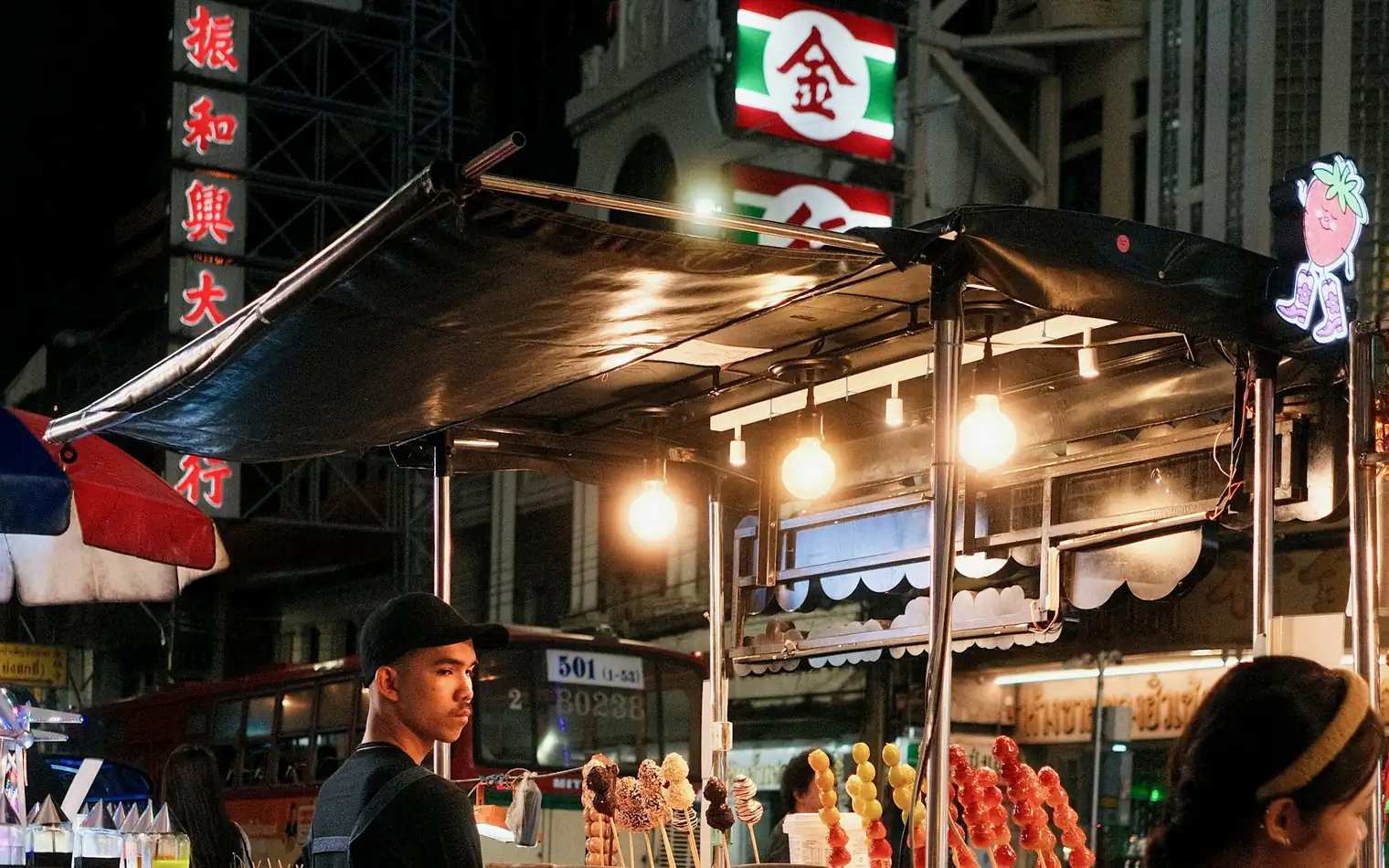
The Grand Palace and Wat Pho, Wat Arun across the river, the street food of Yaowarat (Chinatown), the weekend market at Chatuchak and a long-tail boat through the canals of Thonburi.
Chiang Mai
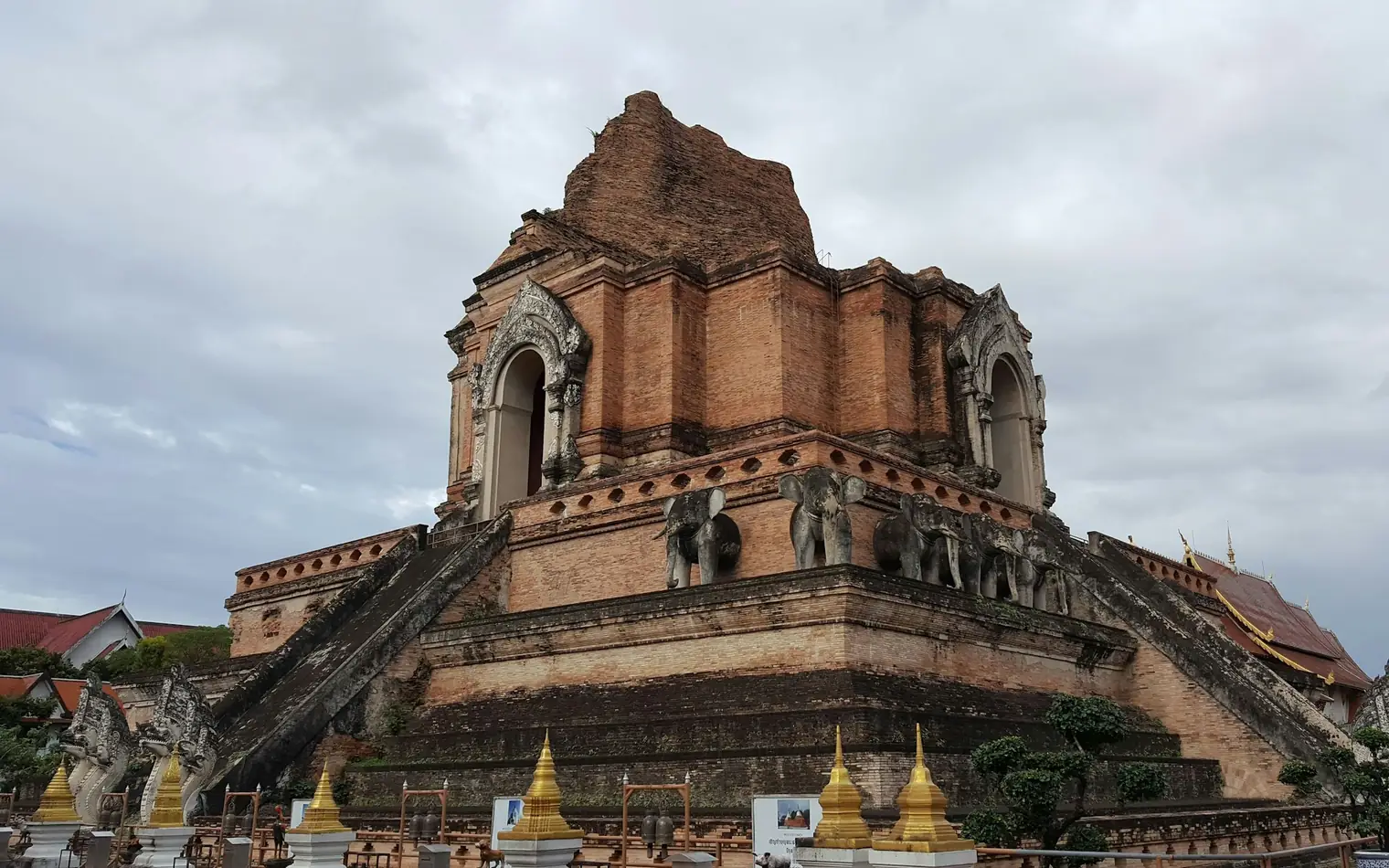
Over a hundred temples inside and around the old city moat, Doi Suthep on the mountain above town, night markets, cooking schools and ethical elephant sanctuaries in the hills.
Ayutthaya
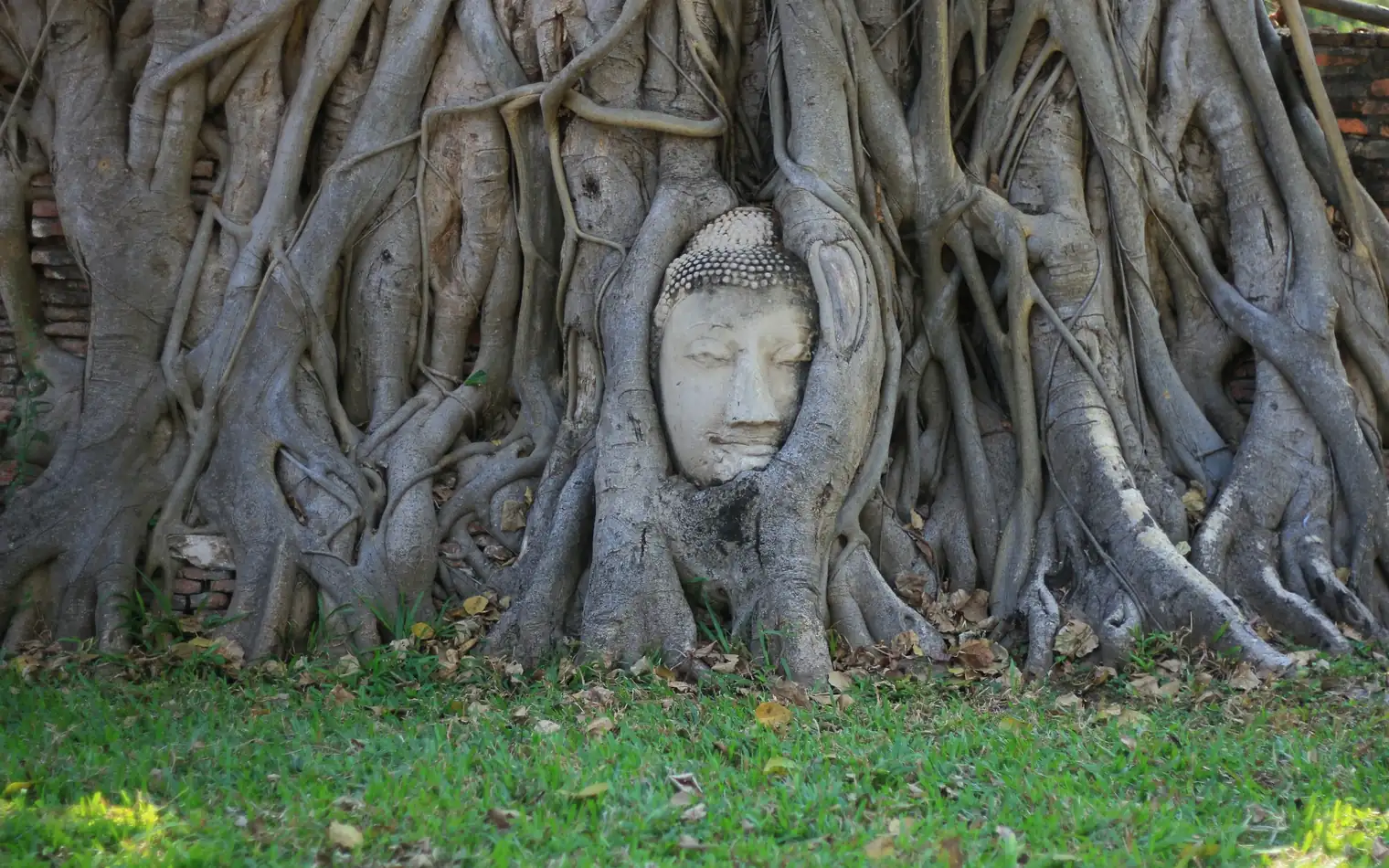
The ruins of the old Siamese capital, a UNESCO World Heritage site, best seen by bicycle. The famous Buddha head in the tree roots is at Wat Mahathat.
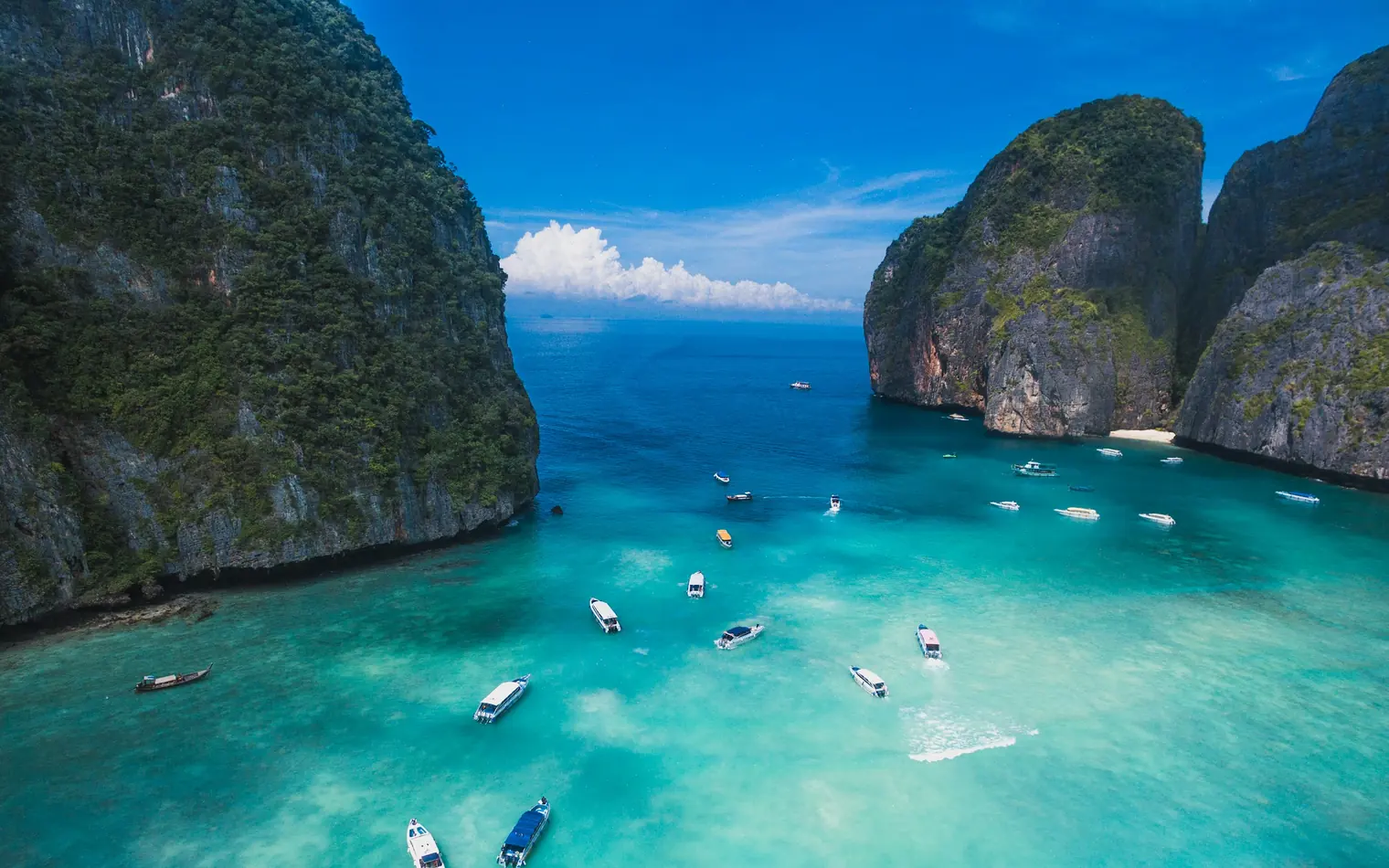
Krabi, Railay and Phi Phi
The Andaman coast at its most dramatic: Railay's cliff-backed beaches, island-hopping by long-tail boat from Ao Nang, and the Phi Phi islands, including Maya Bay, now with visitor limits to protect the reef.
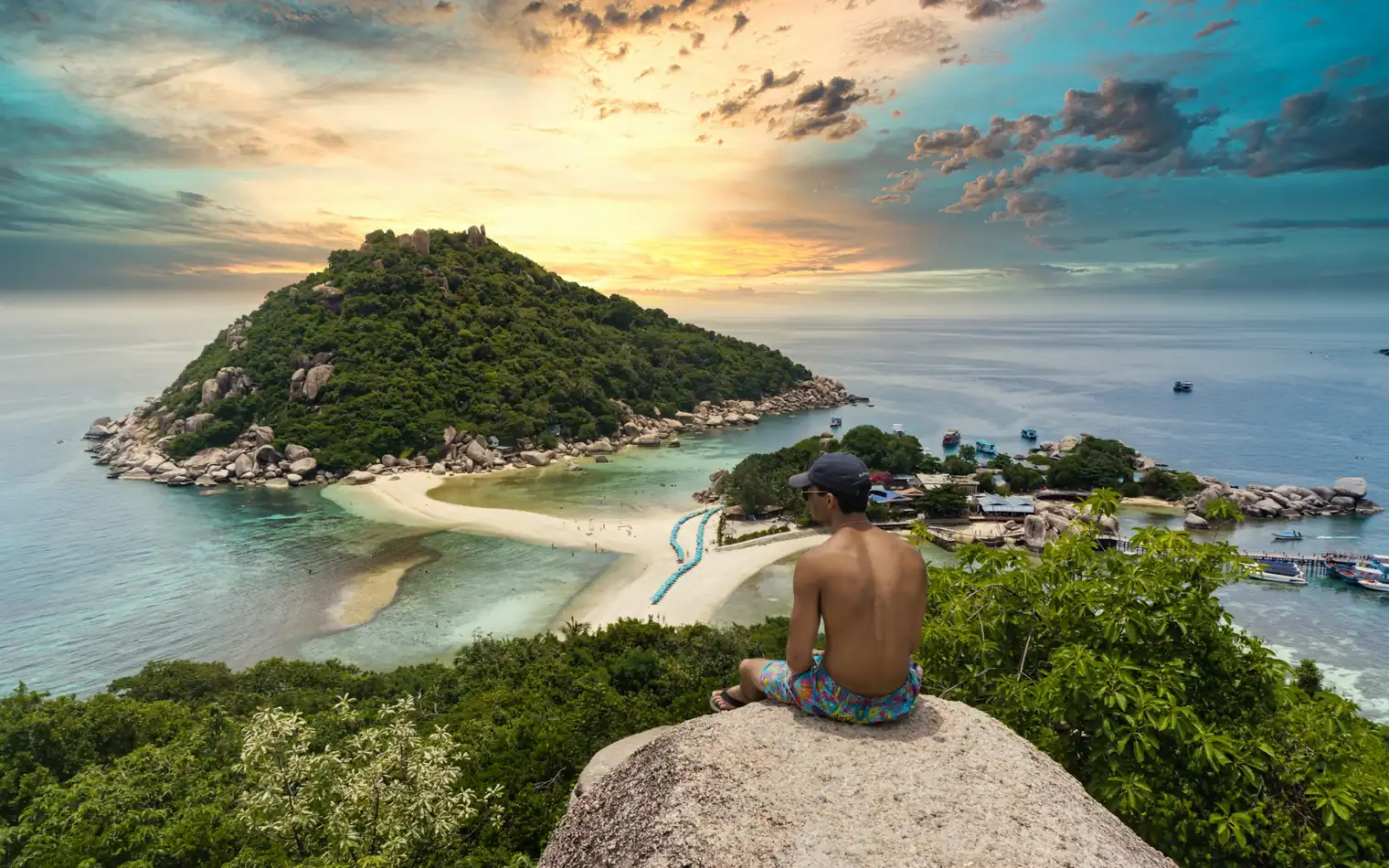
Koh Samui, Koh Phangan and Koh Tao
Three Gulf islands linked by ferry: Samui for resorts and an airport, Phangan for yoga retreats, quiet northern bays and the Full Moon Party, and Tao for learning to dive.
Phuket
Thailand's biggest island and its busiest beach area, with the most flights and hotels. Patong is loud; the west-coast beaches further south and Phuket Old Town are calmer. A practical base for Phang Nga Bay and Phi Phi.
Chiang Rai
Three hours north of Chiang Mai: the White Temple (Wat Rong Khun), the Blue Temple and the Golden Triangle where Thailand, Laos and Myanmar meet. Doable as a long day trip, better with a night.
For a first trip, Bangkok is a given and the real choice is how to split the rest between the north and the beach. Chiang Mai and Ayutthaya give you the culture; one coast gives you the rest. Trying to do both coasts in two weeks usually means spending the beach days on ferries.
When to go
- Best overall
- Late November to February
- Best on a budget
- June to September, based in Bangkok, the north or the Gulf islands
- Best for the Gulf islands
- Late January to August
| Season | Weather | Crowds | Prices | Best for |
|---|---|---|---|---|
| Cool season (November–February) | Dry and warm in Bangkok, cooler nights in the north, calm seas on the Andaman coast; the Gulf islands are still wet into December | High | High | Bangkok, Chiang Mai, Krabi, Phuket and Phi Phi |
| Hot season (March–May) | Very hot, often above 35°C in Bangkok and the plains; smoky haze in the north until the rains arrive | Medium | Medium | The Gulf islands, diving off Koh Tao, Songkran in mid-April |
| Rainy season (June–October) | Heavy, usually short afternoon downpours inland; rough seas and some boat cancellations on the Andaman coast | Low | Low | Green landscapes, lower prices, the Gulf islands until about September |
The Christmas and New Year weeks are the most expensive and most booked of the year, especially on the islands, so book early if you're travelling then. In the north, the burning season (roughly January to April, peaking in March) brings smoke from crop fires that can make the air quality poor around Chiang Mai. The rainy season is better than its name suggests inland, with mornings often clear and storms that pass in an hour, but it's the wrong time for the Andaman islands.
How many days do you need?
5 days
Bangkok with a day trip to Ayutthaya, or three days in Bangkok and two on a nearby beach.
7 days
Bangkok and Chiang Mai, or Bangkok and one island area. Not both.
10–12 days
Bangkok, Ayutthaya, Chiang Mai and four or five days on one coast.
2 weeks
All of the above at an easier pace, with Chiang Rai or a second island added.
3 weeks or more
Room for both coasts in the right season, Sukhothai on the way north, or slow weeks in Chiang Mai.
How much does Thailand cost?
Per person, per day, excluding domestic flights — estimates from 2026 sources
Budget
THB 1,000–1,800
per person, per day
- Accommodation
- THB 300–550
- Food
- THB 150–300
- Transport
- THB 100–200
- Activities
- THB 100–300
Hostel dorms or simple guesthouses, street food and markets, local buses, songthaews and free temples.
Mid-range
THB 2,200–4,000
per person, per day
- Accommodation
- THB 900–2,000
- Food
- THB 300–700
- Transport
- THB 150–300
- Activities
- THB 300–800
Private air-conditioned rooms, a mix of street food and restaurants, Grab rides, a cooking class or a boat tour.
Comfort
THB 4,500–10,000
per person, per day
- Accommodation
- THB 2,000–5,000
- Food
- THB 600–1,500
- Transport
- THB 300–800
- Activities
- THB 500–2,000
Boutique hotels and resorts with a pool, restaurant dining, private transfers, guided tours and spa time.
Islands typically run 20–30% higher than the mainland, and peak-season room rates (Christmas to New Year especially) can be around a third higher again.
Rough estimates in THB, not live prices. Mobile data isn't included — see current eSIM plans
Food is where Thailand is generous: a plate of noodles or rice from a street stall usually costs well under 100 baht, and it's often the best meal of the day. The room is what moves the total, followed by how often you fly and how many island tours you book. Big sights add up too: the Grand Palace alone is 500 baht for foreign visitors. Chiang Mai and the north are noticeably cheaper than Bangkok, Phuket or the islands.
Itineraries
Both routes start in Bangkok. The two-week route takes the Andaman coast, so it suits November to April; from about February to August, swap the last five days for the Gulf islands (fly to Koh Samui, or take the night train to Surat Thani and the ferry).
7 days — Bangkok, Ayutthaya and Chiang Mai7 days
Temples, food and the north: the culture-first first trip.
Day 1Bangkok — the old city
- Morning
- The Grand Palace and Wat Phra Kaew, as soon as they open
- Afternoon
- Wat Pho and its reclining Buddha, then the ferry across to Wat Arun
- Evening
- Street food in Yaowarat (Chinatown)
- Stay
- Bangkok
Day 2Bangkok — markets and canals
- Morning
- A long-tail boat through the Thonburi canals
- Afternoon
- Jim Thompson House and the malls around Siam
- Evening
- A rooftop bar or the night market at Jodd Fairs
- Stay
- Bangkok
Day 3Ayutthaya
- Morning
- Train to Ayutthaya, about two hours
- Afternoon
- Cycle between Wat Mahathat, Wat Phra Si Sanphet and Wat Chaiwatthanaram
- Evening
- Back to Bangkok
- Stay
- Bangkok
- Don't miss
- Sunset at Wat Chaiwatthanaram by the river
Day 4Chiang Mai — old city
- Morning
- Fly north, about an hour and a quarter
- Afternoon
- Wat Chedi Luang and Wat Phra Singh inside the moat
- Evening
- Sunday or Saturday walking street market, or the Night Bazaar
- Stay
- Chiang Mai
Day 5Chiang Mai — Doi Suthep
- Morning
- Wat Phra That Doi Suthep on the mountain above town
- Afternoon
- Coffee and boutiques in Nimman
- Evening
- A Thai cooking class
- Stay
- Chiang Mai
Day 6Chiang Mai — into the hills
- Morning
- An ethical elephant sanctuary or a hike in Doi Inthanon National Park
- Stay
- Chiang Mai
Day 7Departure
- Morning
- Fly back to Bangkok for your international flight
14 days — Bangkok, the north and the Andaman coast14 days
City, mountains and islands, with one long journey by night train.
Day 1–3Bangkok
- Afternoon
- The Grand Palace, Wat Pho and Wat Arun, the canals, Chinatown and a market day
- Stay
- Bangkok
Day 4Ayutthaya
- Morning
- Train to Ayutthaya, ruins by bicycle
- Evening
- Back to Bangkok and the overnight sleeper train north
- Stay
- Night train
Day 5–7Chiang Mai
- Afternoon
- The old city, Doi Suthep, a cooking class and a day in the hills
- Stay
- Chiang Mai
Day 8Chiang Rai
- Morning
- Early bus or day tour to the White Temple and the Blue Temple
- Evening
- Back to Chiang Mai, or stay the night in Chiang Rai
- Stay
- Chiang Mai or Chiang Rai
Day 9–11Krabi — Ao Nang and Railay
- Morning
- Fly to Krabi, directly or via Bangkok
- Afternoon
- Long-tail boat to Railay, a four-islands tour, kayaking among the cliffs
- Stay
- Ao Nang or Railay
- Don't miss
- Sunset on Railay West
Day 12–13Koh Phi Phi or Koh Lanta
- Morning
- Ferry from Krabi
- Afternoon
- Phi Phi for viewpoints and snorkelling trips to Maya Bay, Lanta for quieter beaches
- Stay
- On the island
Day 14Phuket and departure
- Morning
- Ferry to Phuket
- Afternoon
- Phuket Old Town if you have time, then the airport
Getting around
| Route | Best option | Time | Approx. cost |
|---|---|---|---|
| Suvarnabhumi Airport → central Bangkok (Phaya Thai) | Airport Rail Link | About 30 min | THB 45 |
| Bangkok → Ayutthaya | Local train, third class | About 1 h 45 min | THB 20 |
| Bangkok → Chiang Mai | Overnight sleeper train, second-class berth | About 11–15 h | THB 938–1,646 |
| Bangkok → Surat Thani (for Samui, Phangan and Tao) | Overnight sleeper train, second-class berth | About 12 h | THB 894–994 |
| Bangkok → Chiang Mai, Krabi, Phuket or Koh Samui | Domestic flight | About 1–1.5 h | — |
| Between islands and the mainland | Ferry, speedboat or long-tail boat | — | — |
| Within Bangkok | BTS Skytrain, MRT subway, river boats, Grab or a metered taxi | — | — |
- Train fares are State Railway of Thailand fares as listed by Seat61; berth prices vary by train and by upper or lower bunk. Book on the SRT's own D-Ticket site or at the station.
- Domestic flight and ferry prices change with the date and the operator, so compare them when you book.
Thailand is easy to get around. For long distances, domestic flights are frequent and cheap if booked ahead, and they save whole days. The overnight sleeper to Chiang Mai is the exception worth making: a proper bed, a meal, and you wake up in the north having saved a night's hotel. Between the islands, ferries and speedboats are the backbone; book the bigger operators through official or well-reviewed sites, and expect schedules to thin out and seas to get rough in each coast's rainy season.
In Bangkok, the BTS Skytrain and MRT dodge the traffic, and the Chao Phraya Express boats are both the cheapest and the nicest way to reach the riverside temples. For everything else, use Grab or insist on the meter in a taxi. Tuk-tuks are fun once; agree the price before you get in. Renting a scooter is common on the islands, but it's also where many travellers get hurt; see Safety below.
Where to stay
Sukhumvit (Bangkok)
Hotels at every price around the Asok and Phrom Phong Skytrain stations, with restaurants and nightlife on the doorstep.
Riverside and Silom (Bangkok)
Riverside hotels with boat access to the old city, and Silom's business district for mid-range rooms near the Skytrain and MRT.
Banglamphu and Khao San (Bangkok)
Walking distance to the Grand Palace, with cheap guesthouses and a loud, backpacker-heavy scene on Khao San Road itself. Quieter streets are a block or two away.
Old City or Nimman (Chiang Mai)
Inside the moat for temples on foot and guesthouses with gardens; Nimman for cafés, modern hotels and a younger crowd.
Ao Nang, Railay or Koh Lanta (Andaman)
Ao Nang is the practical base with the most boat departures. Railay, reachable only by boat, is the dramatic one. Koh Lanta is long, quiet and good for families.
Koh Samui, Koh Phangan or Koh Tao (Gulf)
Samui for resorts and the easiest access, with Bophut and Fisherman's Village quieter than Chaweng. Phangan's north coast for calm, Haad Rin for parties. Tao for dive schools and simple bungalows.
Things to know before you go
Fill in the TDAC before you fly
Every foreign visitor needs the Thailand Digital Arrival Card, completed online within the three days before arrival. It's free on the official immigration site, so ignore lookalike sites that charge a fee. More on arrival cards across the region in our guide.
Vapes are illegal
Possessing or using any vape, e-cigarette or heat-not-burn device is illegal, with no exceptions for tourists. The UK FCDO reports fines typically of 5,000–30,000 baht, plus possible detention. Leave them at home.
Cannabis is medical-only again
After a period of looser rules, cannabis now requires a medical prescription. Taking any out of Thailand is illegal.
Don't leave your passport as a deposit
Scooter and jet-ski renters often ask to keep your passport. The FCDO advises against it; offer a copy and a cash deposit instead. Police may ask to see your passport, so carry it or a copy.
Cover up for temples
Shoulders and knees covered at temples and the Grand Palace, shoes off before entering a temple building. A light scarf or sarong solves most of it.
Respect the monarchy
Criticising the Thai royal family is a serious criminal offence, and the law is applied broadly, including to social media posts. Stand for the royal anthem played before films in cinemas.
Visa and entry
Whether you need a visa depends on your passport. Since 15 September 2026, Thailand's visa exemption for tourism allows stays of up to 30 days, down from 60, for nationals of a shortened list of countries and territories. A few nationalities get 15 days, some can get a visa on arrival, and everyone else needs a visa in advance, applied for through the official e-Visa portal.
- Visa-free entry is for tourism only. Check that your nationality is still on the list: it was cut back when the 30-day rule came in.
- Complete the Thailand Digital Arrival Card (TDAC) online within the three days before you arrive. It applies to all foreign nationals arriving by air, land or sea.
- The UK FCDO says a British passport must be valid for at least six months from your arrival date, with a blank page. Check your own government's advice.
- Immigration can ask for proof of onward or return travel and of funds; the FCDO cites at least 10,000 baht per person or 20,000 baht per family.
- A 300-baht tourist entry fee for air arrivals has been proposed several times but was not being collected when we checked.
Official sources: Thai Ministry of Foreign Affairs — revision of the visa exemption and visa-on-arrival schemes, 2026 (PDF) · Thai Ministry of Foreign Affairs — questions and answers on Thai visas · Thailand e-Visa (official portal) · Thailand Digital Arrival Card (Immigration Bureau) · UK FCDO — Thailand entry requirements
Mobile data & eSIM
1. Internet & connectivity
eSIM plans: available
Also included in: Asia
- Thailand isn't part of the EU's roam-like-at-home rules, so a mobile plan from an EU country usually charges roaming there. Check your operator's terms before you rely on it.
- Hotels, cafés and malls nearly all have Wi-Fi, but you'll want mobile data for Grab, maps, ferry tickets and translating menus, especially between places.
- Signal can thin out on boat trips, in national parks and on remote stretches of the islands, so download offline maps before you head out.
- A VamosData eSIM installed at home over your own Wi-Fi is online when you land, ready for your TDAC confirmation, a Grab from the airport and your hotel's address.
2. SIM vs eSIM
| VamosData eSIM | Local SIM card | |
|---|---|---|
| When you set it up | At home, before you fly — online when you land | After landing, at an airport desk or a shop |
| ID and registration | None — just an email address | Often a passport and registration, depending on the country |
| Your home number | Your home SIM stays in the phone, so WhatsApp keeps your usual number | Usually replaces your home SIM, unless your phone takes two |
| Calls and SMS | Data only — call over WhatsApp, FaceTime and similar apps | A local number with calls and SMS |
| Top-ups | Online, from anywhere | At local shops or in the operator's app |
| Phone needed | An unlocked, eSIM-compatible phone — check yours | Any unlocked phone with a SIM slot |
Local SIMs here
- A Thai tourist SIM is registered to your original passport at purchase. Foreigners are limited to three SIMs per operator, and tourist SIMs last at most 60 days without extension.
3. eSIM provider comparison
| Provider | Compared with VamosData |
|---|---|
| Nomad | about 40% more on averageacross 3 plans with the same data and validity |
| Ubigi | about 20% moreacross 1 plan with the same data and validity |
| Yesim | about 15% more on averageacross 4 plans with the same data and validity |
| Airalo | about 10% more on averageacross 4 plans with the same data and validity |
Compared with the providers listed, on plans with the same data and validity, using each provider's own website on October 15, 2026. Percentages are approximate and prices change often. Sources: Airalo, Nomad, Yesim, Ubigi
4. Recommended data amount
| How you use your phone | 7 days | 14 days | 21 days |
|---|---|---|---|
| LightMaps and messages, under an hour a day | ≈ 1 GB | ≈ 2 GB | ≈ 3 GB |
| TypicalPlus social media, 1–3 hours a day | ≈ 6 GB | ≈ 15 GB | ≈ 20 GB |
| HeavyPlus video streaming, 3–5 hours a day | ≈ 25 GB | ≈ 50 GB | ≈ 70 GB |
Estimates from the same model as our plan finder, including a safety margin. Hotspotting and video calls use more. Find the right plan →
What to eat
Pad kra pao
Stir-fried holy basil with minced pork or chicken, chillies and a fried egg on rice. The lunch most Thais actually eat, far more than pad thai.
Som tam
Green papaya salad pounded in a mortar with lime, fish sauce, chilli and peanuts, from the northeast. Ask for it 'mai phet' if you want it mild.
Khao soi
Chiang Mai's signature: egg noodles in a rich coconut curry broth, topped with crispy noodles. Reason enough to go north.
Tom yum and green curry
The hot-and-sour prawn soup and the coconut green curry that define Thai food abroad, better and more fragrant at home.
Mango sticky rice
Sweet coconut sticky rice with ripe mango, at its best in the hot season when mangoes peak.
Night markets
Grilled skewers, noodles, fresh fruit and desserts at stalls that open at dusk. Yaowarat in Bangkok and the walking-street markets in Chiang Mai are the classics.
Culture and etiquette
Thais place a lot of value on staying calm and polite, and raising your voice or losing your temper in public tends to get you less, not more. A smile goes a long way. The traditional greeting is the wai, palms together at chest height with a slight bow; you don't need to initiate it, but returning one is polite.
The head is considered the most respected part of the body and the feet the lowest. Don't touch people's heads, don't point your feet at people or at Buddha images, and don't step over someone. At temples, cover your shoulders and knees, take your shoes off before going inside, and women should avoid touching monks or handing things to them directly.
Tipping isn't expected in street stalls or simple restaurants, though rounding up or leaving small change is appreciated; many mid-range and upscale places add a service charge. A few words help: "sawasdee" (hello), "khop khun" (thank you), adding "khrap" if you're a man and "kha" if you're a woman to sound polite.
Safety
Thailand is a safe country for most visitors, and the biggest risk isn't crime but the road. Scooters cause a large share of traveller injuries: ride only if you hold a licence that covers motorbikes, wear a helmet (it's the law), and check that your travel insurance covers you, since riding without the right licence can void it. Attacks and fights are more common around Full Moon Parties and late-night bar streets, so keep an eye on your group.
Drug laws are severe, cannabis rules have tightened again, and vapes are illegal. In an emergency, call 1155 for the English-speaking Tourist Police, 191 for the police and 1669 for an ambulance.