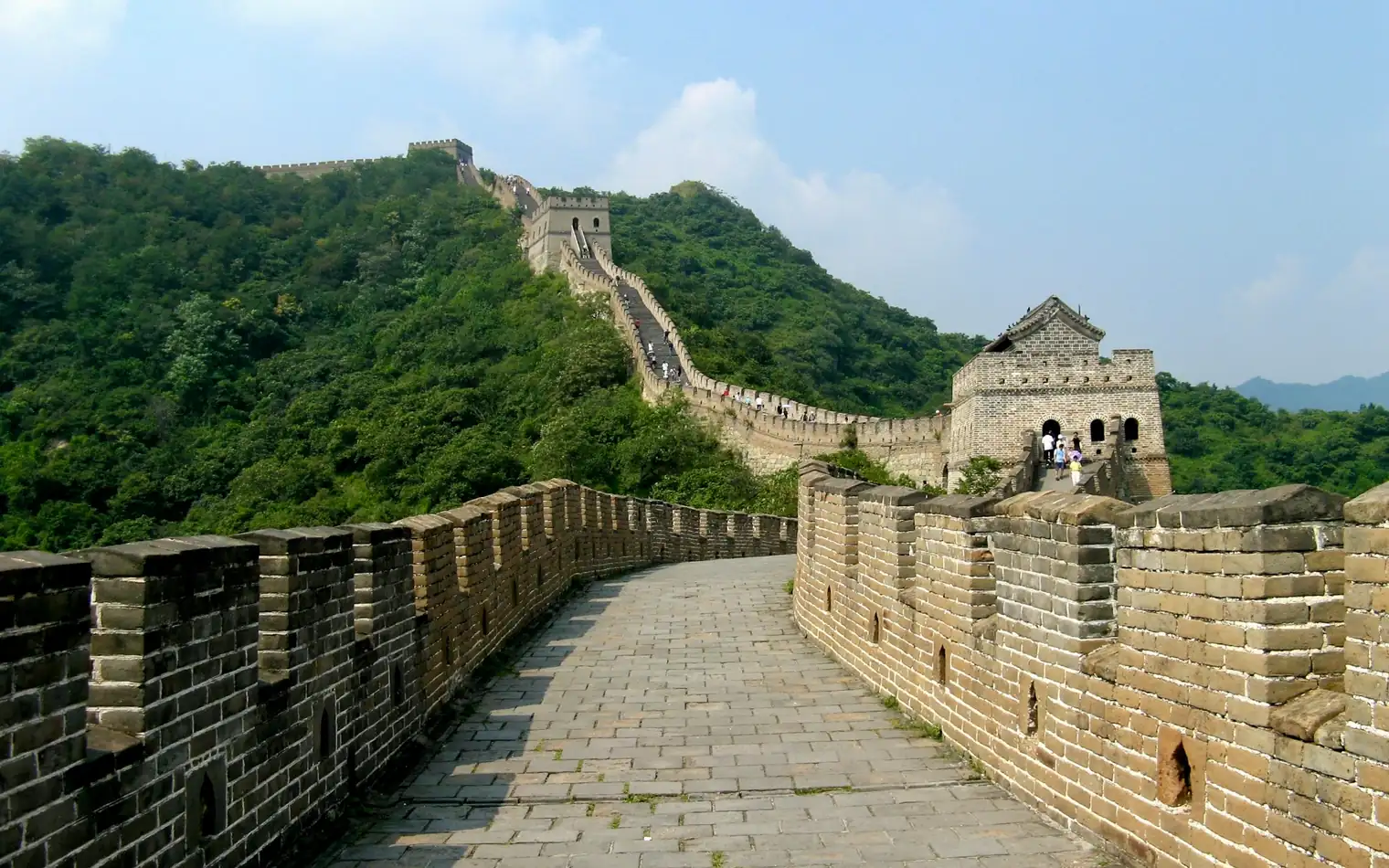
China rewards the traveller who prepares. Few countries pack as much into one trip: the Great Wall and the Forbidden City, the Terracotta Army, Shanghai's skyline across the river from its colonial waterfront, pandas in Chengdu and the limestone peaks along the Li River, all linked by the world's largest high-speed rail network. It is also a country with its own apps, its own way of paying and its own internet, so the details you sort out before you fly decide how smooth the trip feels. Here is how to plan it, plus the entry rules, the payment setup and the connectivity details worth getting right at home.
Quick facts
- Currency
- Renminbi, counted in yuan (CNY, ¥)
- Language
- Mandarin Chinese; English is limited outside big hotels and main stations
- Plugs
- Types A, C and I, 220V
- Time zone
- China Standard Time (UTC+8) nationwide, no daylight saving
- Best time
- April–May and September–October, avoiding the national holidays
- Recommended trip
- 10–14 days
- Entry
- Visa-free for up to 30 days for many passports, until 31 December 2026may change
Why visit
China is several trips in one country. Beijing is imperial history on a monumental scale, from the Forbidden City to the Great Wall an hour north of town. Xi'an adds the Terracotta Army and a complete Ming-era city wall you can cycle around. Shanghai is the country's modern face, and Chengdu its most relaxed big city, famous for pandas, teahouses and food that is properly spicy.
Then there are the landscapes: the karst peaks of Guilin and Yangshuo, the sandstone pillars of Zhangjiajie, and West Lake in Hangzhou. Getting between them is easier than most first-timers expect, because fast trains link almost every city on this list. China suits curious, organised travellers best: the reward for a little planning is a trip that feels nothing like anywhere else.
Best places to visit
Beijing
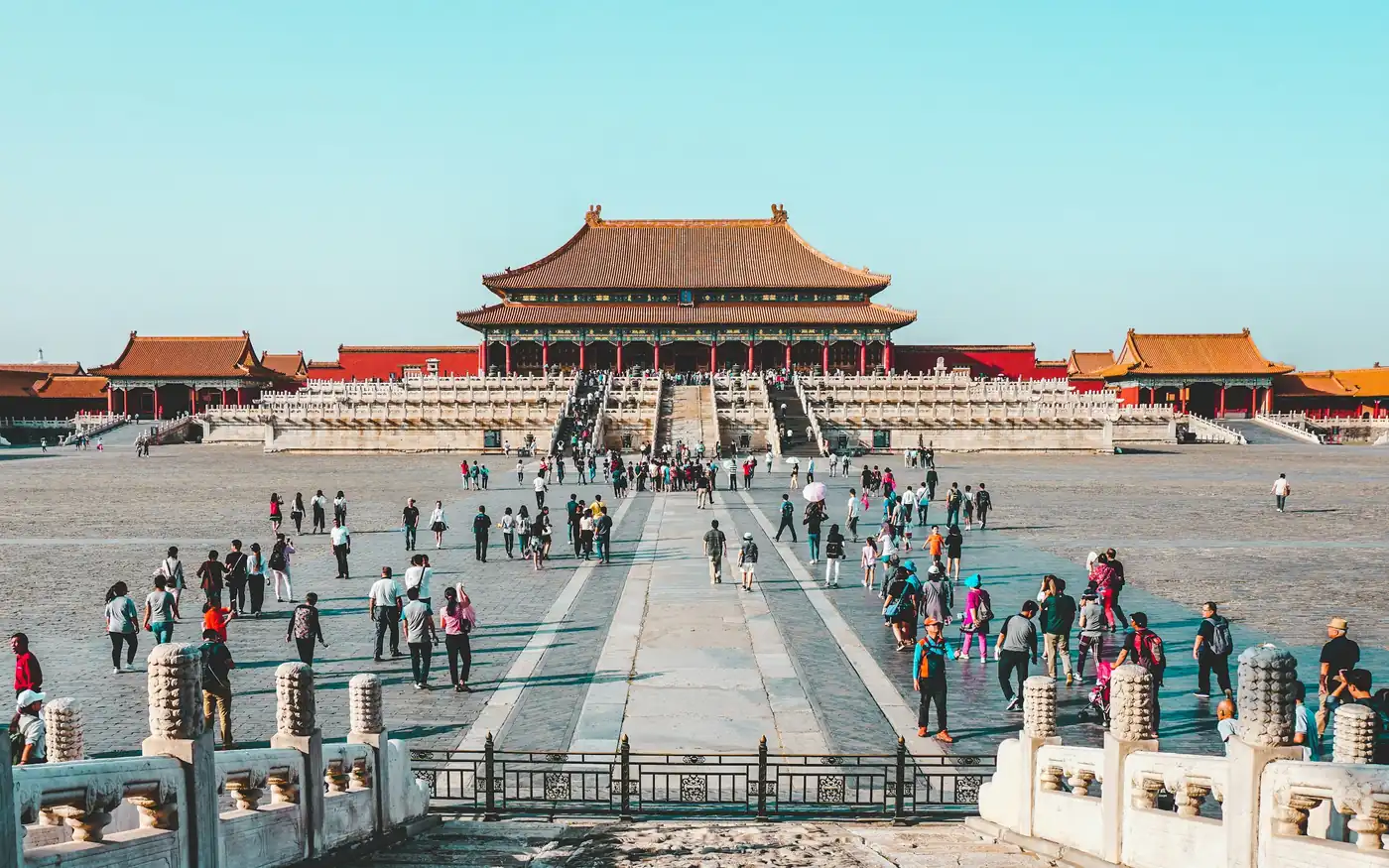
The Forbidden City, the Temple of Heaven, the Summer Palace and the hutong lanes around Houhai, with the Great Wall at Mutianyu or Badaling as a day trip.
Shanghai
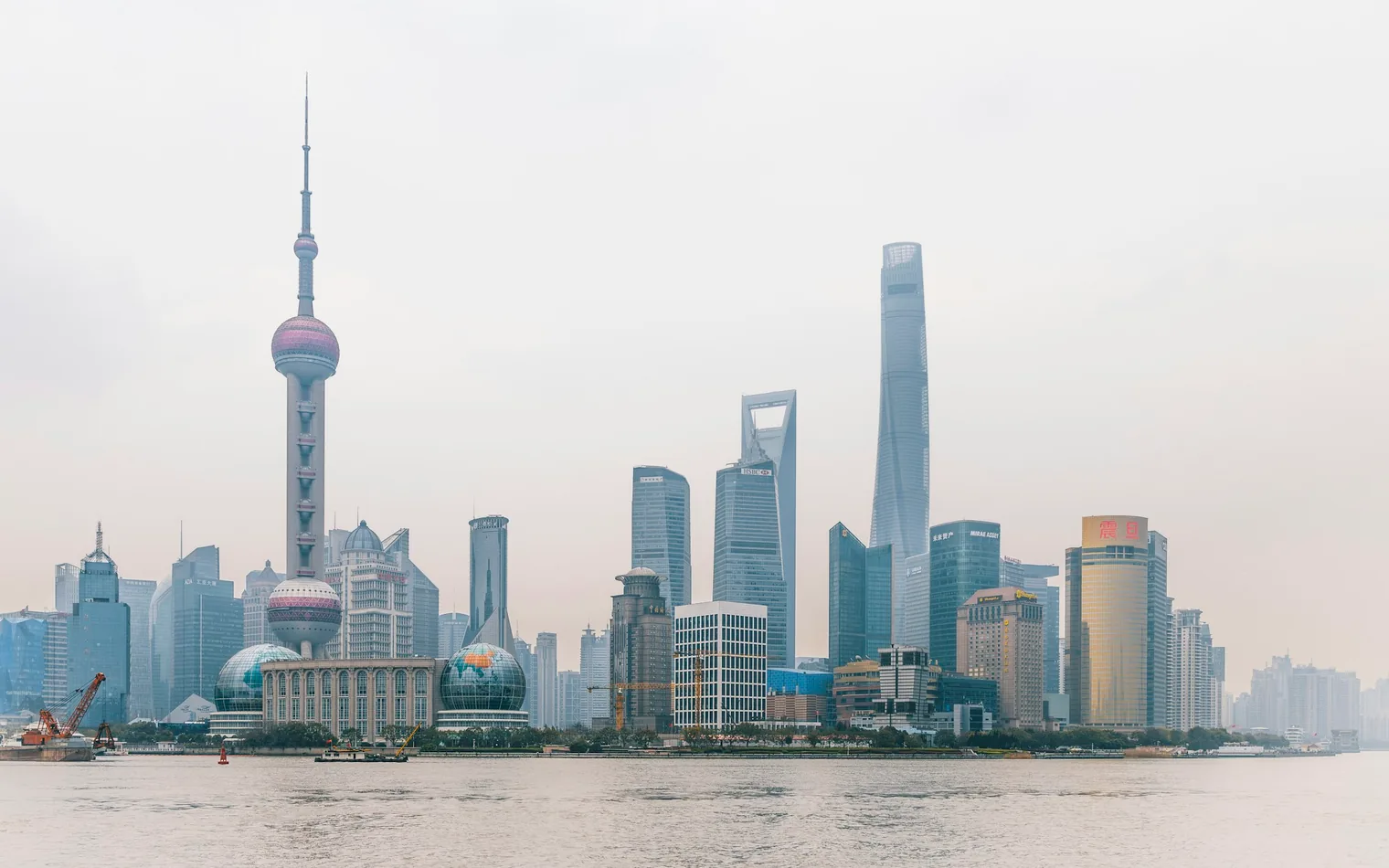
The Bund's waterfront facing Pudong's towers, Yu Garden, the plane-tree streets of the former French Concession, and some of the best eating in the country.
Xi'an
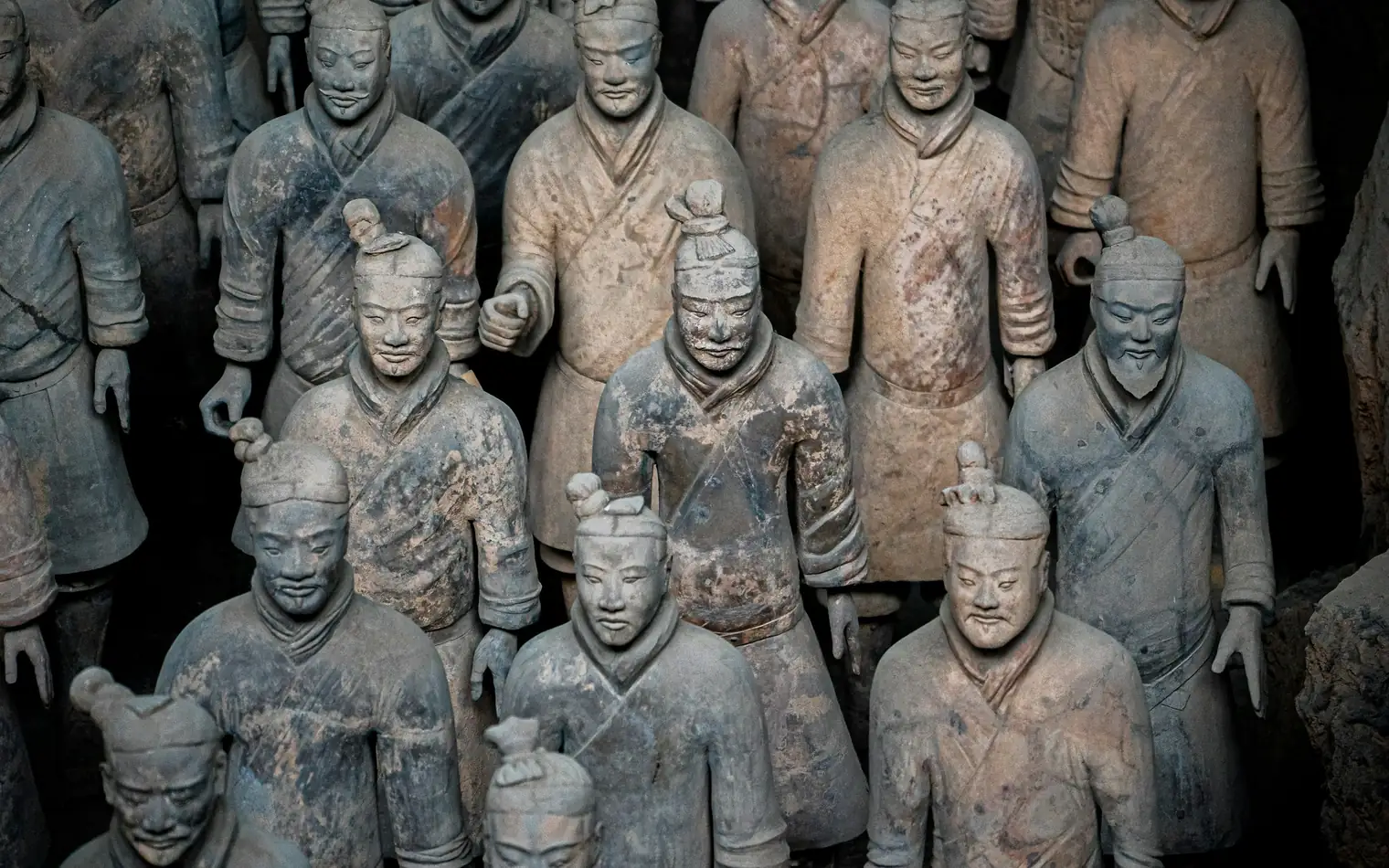
The Terracotta Army, a bike ride along the top of the city wall, and the food stalls of the Muslim Quarter after dark.

Chengdu
The giant panda base in the early morning, when the pandas are most active, then teahouses in People's Park and a Sichuan hotpot dinner.
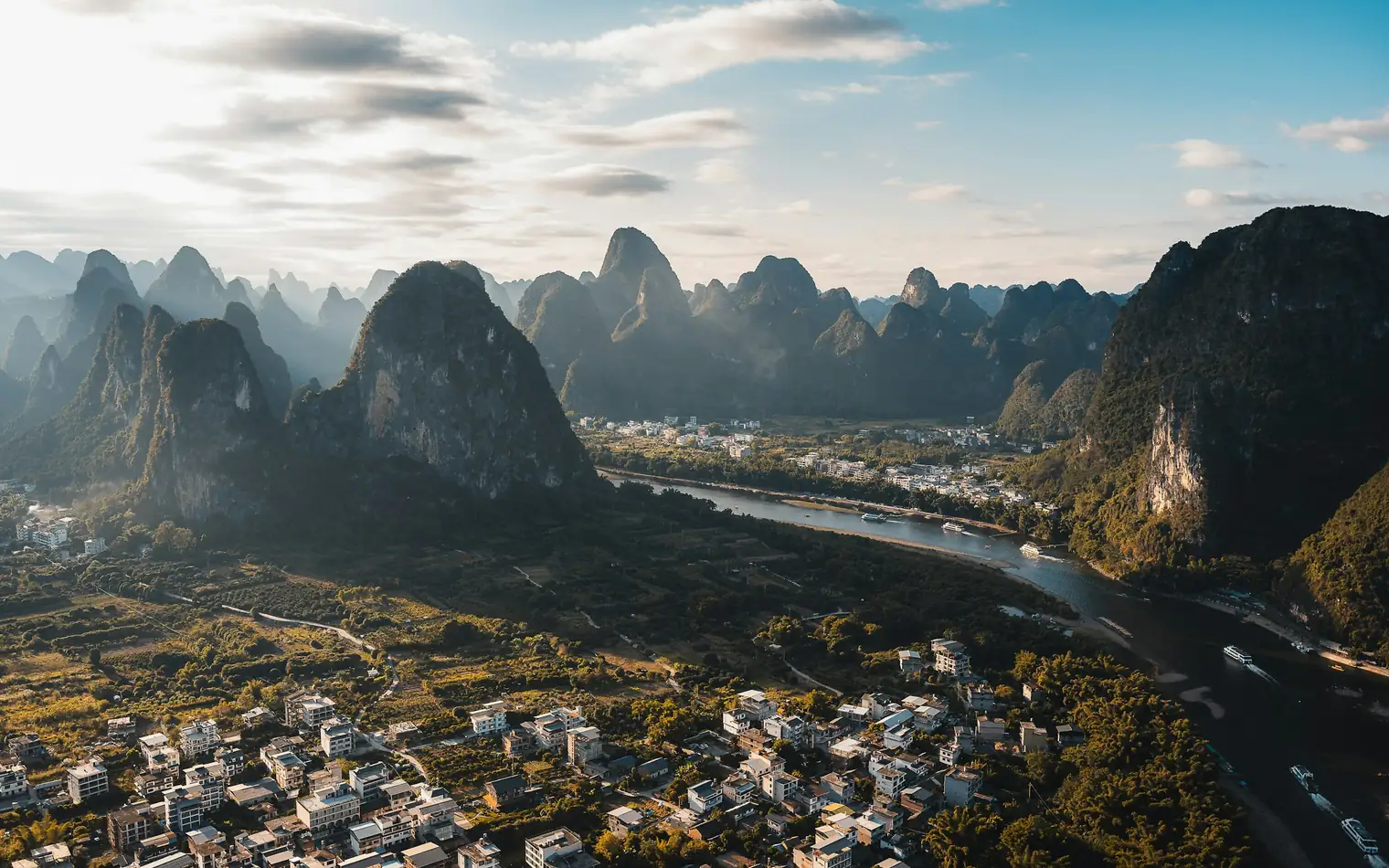
Guilin and Yangshuo
A boat or bamboo raft past the karst peaks of the Li River, then cycling the countryside around Yangshuo. Base yourself in Yangshuo rather than Guilin city.

Zhangjiajie
Thousands of sandstone pillars in Zhangjiajie National Forest Park, best walked over two days. A detour, but a memorable one.

Hangzhou
West Lake's causeways, pagodas and tea hills, under an hour from Shanghai by high-speed train. An easy day trip or a calm night away.
For a first trip, Beijing, Xi'an and Shanghai are the classic triangle. Add Chengdu for pandas and food, and Guilin and Yangshuo or Zhangjiajie for landscapes. Hong Kong and Macau are separate destinations with their own entry rules; if you add them, treat them as their own leg.
Getting there
Most long-haul flights land in Beijing (Capital or Daxing) or Shanghai (Pudong), with Guangzhou, Chengdu and Shenzhen as the other big international gateways. An open-jaw ticket, into Beijing and out of Shanghai or the other way round, avoids backtracking on the classic route. You can also arrive overland from Hong Kong on the high-speed train from West Kowloon.
Before you land, fill in China's digital arrival card online (see "Visa and entry" below). Set up your payment apps and download the apps you'll need at home too, because both are much harder once you arrive.
When to go
- Best overall
- Late April to May, or September to October
- Best on a budget
- November to early December, or March
- Avoid if you can
- Golden Week (1–7 October) and the Spring Festival travel rush
| Season | Weather | Crowds | Prices | Best for |
|---|---|---|---|---|
| Spring (March–May) | Mild in most of the country, with occasional dust in the north; green and fresh in the south | Medium | Medium | City sightseeing, Guilin's rice fields and rivers, the Great Wall |
| Summer (June–August) | Hot and humid; the rainy season in the south and along the Yangtze, typhoons possible from May | High | High | High-altitude regions, the north, long daylight hours |
| Autumn (September–November) | Dry, clear and mild in the north; still warm in the south | Medium | Medium | Almost everything, especially Beijing and the Great Wall |
| Winter (December–February) | Cold and dry in the north, mild and damp in the south | Low | Low | Quiet sights, Harbin's ice festival, low prices outside the New Year rush |
Spring and autumn are the sweet spots for weather. The catch is the national holidays: the May Day holiday at the start of May, Golden Week from 1 to 7 October, and the weeks around Spring Festival (Chinese New Year, in late January or February) put hundreds of millions of people on the move. Trains sell out, prices jump and the big sights are packed. If your dates overlap, book trains and hotels early, or read our guide to China's Golden Week.
Summer brings heat, rain in the south and school-holiday crowds, while typhoons can affect the southern and eastern coasts from May to November. Winter is the bargain season: cold in Beijing, but the Forbidden City and the Great Wall are at their quietest.
How many days do you need?
5 days
Beijing with a Great Wall day, plus Xi'an by high-speed train, or Shanghai with a day in Hangzhou.
7 days
Beijing, Xi'an and Shanghai, the classic first trip.
10–12 days
The classic three, plus Chengdu or Guilin and Yangshuo.
2 weeks
Beijing, Xi'an, Chengdu, Guilin and Yangshuo, and Shanghai with a day in Hangzhou.
How much does China cost?
Per person, per day, excluding high-speed trains and flights between cities — estimates from 2026 sources
Budget
CN¥250–450
per person, per day
- Accommodation
- CN¥50–150
- Food
- CN¥50–110
- Transport
- CN¥10–50
- Activities
- CN¥0–50
Hostel dorms or simple rooms, noodle shops and street food, metros and buses, one paid sight a day.
Mid-range
CN¥500–900
per person, per day
- Accommodation
- CN¥300–600
- Food
- CN¥80–200
- Transport
- CN¥30–90
- Activities
- CN¥50–150
Comfortable chain or boutique hotels, sit-down restaurants, metro plus the occasional ride-hail, paid sights.
Comfort
CN¥800–1,200
per person, per day
- Accommodation
- CN¥850
- Food
- CN¥320
- Transport
- CN¥150
Four- and five-star hotels, upscale dining, taxis and private transfers.
Trains between cities come on top: a second-class seat from Beijing to Shanghai runs at roughly ¥576–697, and from Beijing to Xi'an at roughly ¥480–593.
Rough estimates in CNY, not live prices. Mobile data isn't included — see current eSIM plans
Day to day, China is good value. A bowl of noodles or a plate of dumplings costs little, city metros are cheap and many parks and temples charge modest entry fees. The Forbidden City, for example, is ¥60 from April to October and ¥40 the rest of the year. Rooms in Beijing and Shanghai are what move the total, together with the high-speed trains between cities, so price your route before you settle on a budget.
Itineraries
Both routes start in Beijing and end in Shanghai, the natural open-jaw. Flip them if your flight lands in Shanghai.
7 days — Beijing, Xi'an and Shanghai7 days
The classic first trip: imperial Beijing, the Terracotta Army and modern Shanghai.
Day 1Beijing — the imperial centre
- Morning
- Tiananmen Square and the Forbidden City (booked in advance)
- Afternoon
- Jingshan Park for the view back over the palace roofs
- Evening
- Peking duck dinner
- Stay
- Beijing
Day 2The Great Wall
- Morning
- Mutianyu, with the cable car up and the toboggan or cable car down
- Afternoon
- Back to town, then the hutong lanes around Houhai
- Stay
- Beijing
- Don't miss
- The quieter stretches of wall beyond the first few watchtowers
Day 3Beijing — temples and gardens
- Morning
- Temple of Heaven, where locals exercise in the park
- Afternoon
- Summer Palace
- Stay
- Beijing
Day 4Xi'an — the city wall
- Morning
- High-speed train to Xi'an, about four and a half hours
- Afternoon
- Cycle the city wall
- Evening
- Street food in the Muslim Quarter
- Stay
- Xi'an
Day 5Terracotta Army
- Morning
- The Terracotta Army museum, an hour outside the city
- Afternoon
- Big Wild Goose Pagoda
- Stay
- Xi'an
Day 6Shanghai — the Bund
- Morning
- Fly or take the high-speed train to Shanghai
- Evening
- The Bund at dusk, looking across to Pudong
- Stay
- Shanghai
Day 7Shanghai and departure
- Morning
- Yu Garden and the old town
- Afternoon
- The former French Concession, then onward to the airport
14 days — Beijing, Xi'an, Chengdu, Guilin and Shanghai14 days
The full loop: history in the north, pandas and food in Sichuan, karst landscapes in the south, and Shanghai to finish.
Day 1–4Beijing
- Afternoon
- The Forbidden City, the Temple of Heaven, the Summer Palace and a full day on the Great Wall
- Stay
- Beijing
Day 5–6Xi'an
- Morning
- High-speed train from Beijing, about four to four and a half hours on the fastest trains
- Afternoon
- The city wall, the Muslim Quarter and the Terracotta Army
- Stay
- Xi'an
Day 7–8Chengdu
- Morning
- High-speed train through the mountains, about three and a half hours
- Afternoon
- The panda base early on day 8, then People's Park and a hotpot dinner
- Stay
- Chengdu
Day 9–11Guilin and Yangshuo
- Morning
- High-speed train to Guilin, five hours or more, or a short flight
- Afternoon
- The Li River by boat or bamboo raft, then cycling the Yulong River countryside
- Stay
- Yangshuo
- Don't miss
- Sunrise over the karst peaks from one of the hilltop viewpoints
Day 12–14Shanghai and Hangzhou
- Morning
- Fly from Guilin to Shanghai
- Afternoon
- The Bund, Yu Garden and the former French Concession, with a day trip to West Lake in Hangzhou
- Stay
- Shanghai
Swap Chengdu for Zhangjiajie if hiking matters more to you than pandas, and keep at least two full days in Beijing even on a tight schedule.
Getting around

| Route | Best option | Time | Approx. cost |
|---|---|---|---|
| Beijing → Shanghai | High-speed train (G), second class | About 4 h 30 min on the fastest trains | CN¥576–697 |
| Beijing → Xi'an | High-speed train (G), second class | About 4 h 10 min–4 h 20 min on the fastest trains | CN¥480–593 |
| Xi'an → Chengdu | High-speed train, second class | About 3–4 h 30 min | CN¥211–335 |
| Chengdu → Guilin | High-speed train, second class | About 5–8 h | CN¥420–538 |
| Shanghai → Hangzhou | High-speed train | From about 45 min | — |
| Guilin → Shanghai | Domestic flight, or one of two daily high-speed trains | 7 h 30 min–9 h 30 min by train | — |
| Within cities | Metro, buses and ride-hailing, paid by app | — | — |
- Fares are second-class seats. Prices vary by train and time of day, and first class costs more.
- You need your passport to buy a ticket and to board, and stations run airport-style security checks, so arrive early.
High-speed rail is the backbone of a China trip: fast, punctual and comfortable, and usually more convenient than flying once you count the trip to the airport. Book on China Railway's official 12306 website or app, which has an English version, or through a travel agency app. Tickets are tied to your passport, which you scan at the gate, so there's no paper ticket to lose. Busy routes sell out around holidays, so book as soon as your dates are fixed.
For the longest legs, such as Guilin to Shanghai, a domestic flight saves most of a day. In cities, metros are cheap, clean and signposted in English in the big centres. Ride-hailing apps are the easiest way to take a taxi, and you can call one from inside Alipay or WeChat without installing anything else. Avoid unmarked or unmetered taxis.
Where to stay
Dongcheng (Beijing)
The hutong lanes around Nanluoguxiang and Houhai, or Wangfujing for big hotels, all within reach of the Forbidden City.
The Bund and People's Square (Shanghai)
Central, on the main metro lines and a walk from the waterfront.
Former French Concession (Shanghai)
Leafy streets, cafés and boutique hotels, a little calmer than the centre.
Inside the city wall (Xi'an)
Stay near the Bell Tower to walk to the Muslim Quarter and the wall itself.
Central Chengdu
Around Chunxi Road or the Kuanzhai Alley area for food, shopping and metro links to the panda base.
Yangshuo countryside
A guesthouse along the Yulong River instead of the busy town centre, with bikes to borrow and karst views from the terrace.
Hotels register foreign guests with the police on arrival, so expect the front desk to scan your passport. Some small guesthouses and budget hotels aren't set up to take foreign passports, so book through a platform that says the property accepts international guests, and confirm before you pay if in doubt.
Paying in China
China runs on mobile payments. In cities, almost everything, from metro tickets and street food to museum bookings and ride-hailing, is paid by scanning a QR code with Alipay or WeChat Pay. You can still pay with cash and, in bigger hotels and shops, with an international card, but the two apps make daily life far simpler, and both now accept foreign cards.
Set up Alipay or WeChat Pay at home
Install one or both apps before you fly and link a Visa, Mastercard or other international card. Verification texts go to your home number, so keep that SIM active.
Know the fee rule
A payment of ¥200 or less is generally free of the platform's service fee. Above ¥200, a service fee of 3% of the full amount may apply, on top of anything your own bank charges for foreign transactions.
Mind the limits
Overseas visitors can pay up to US$5,000 per transaction and US$50,000 a year through these apps.
Carry some cash
Cash is legal tender and still accepted, but small vendors may not have change. ATMs showing your card network's logo dispense yuan, usually up to ¥3,000 per withdrawal.
Cards work in fewer places
Hotels, airlines and larger shops often take international cards where the network's logo is displayed. Market stalls, small restaurants and taxis generally don't.
Tell your bank you're travelling
Fraud checks sometimes block the first app payment abroad. A travel notice, or the bank's app nearby to approve it, saves a stuck moment at the till.
Splitting a large bill into payments under ¥200 avoids the platform fee, and paying by cash or card at a hotel avoids it altogether. Your mobile data matters here too: you need a working connection to show or scan a QR code, which is one more reason to land connected (see "Mobile data & eSIM" below).
Things to know before you go
Carry your passport, always
You need it for trains, hotels, museum bookings and police checks, and printed copies are not accepted.
Book the big sights ahead
The Forbidden City sells no same-day tickets: book online in advance with your passport number, and remember it's closed on Mondays except on public holidays.
Your usual apps behave differently
Google, WhatsApp, Instagram and other foreign services are blocked on local connections. Read Internet in China before you go and install everything you need at home.
Download local apps too
A Chinese maps app, a translation app with offline Chinese and the 12306 rail app make life easier, and all are simpler to install at home.
Drugs mean severe penalties
China has zero tolerance for drugs, with long prison sentences or the death penalty for possession, trafficking or manufacture.
Work trips need extra thought
If you're travelling for business, see our guide to staying productive on a China work trip.
Visa and entry
Whether you need a visa depends on your passport. Ordinary passport holders from a list of around 50 countries, including most of Europe, the UK, Australia, New Zealand, Japan and South Korea, can enter visa-free for up to 30 days for tourism, business, family visits or transit until 31 December 2026. Other nationalities, including US citizens at the time of writing, need a visa unless they qualify for visa-free transit.
- The 30-day visa-free entry does not allow work, study or reporting, which still need the right visa.
- The 240-hour visa-free transit lets nationals of 57 countries, including the US and UK, stay up to 10 days in permitted areas if they arrive through one of 65 designated ports and fly on to a third country or region, with a confirmed onward ticket.
- Fill in the digital arrival card online before you arrive, on the National Immigration Administration's website, its NIA 12367 app or the WeChat and Alipay mini programs. It is free; beware of look-alike sites that charge.
- Passport validity rules depend on your nationality. The UK FCDO, for example, asks for at least six months' validity on arrival and two blank pages.
- You must register your address with the police within 24 hours of arrival. Hotels do this for you; if you stay with friends, register at the local police station.
Official sources: National Immigration Administration — 240-hour visa-free transit (August 2026) · National Immigration Administration — online arrival card · Embassy of China in Croatia — extension of the unilateral visa-exemption policy · Gov.cn — China widens visa-free access (November 2025) · UK FCDO — China entry requirements
The 30-day policy has been extended in stages and currently runs to the end of 2026. If your trip falls after that, check the latest position with the Chinese embassy in your country before you book. Our guide to digital arrival cards in Asia covers the arrival card in more detail.
Mobile data & eSIM
1. Internet & connectivity
eSIM plans: available
Also included in: Asia
- Mainland China filters the internet on local connections. On a Chinese SIM card or on hotel, café and station Wi-Fi, Google services, WhatsApp, Instagram, Facebook, X and YouTube are blocked, which is why travellers on a local connection often rely on a VPN. The UK FCDO notes that VPNs need government licensing in China; none of this is legal advice. More in China's Great Firewall, explained and Do you need a VPN in China?.
- A VamosData eSIM for China works like international roaming: your data is routed through a gateway outside the mainland, so the apps you use at home, from Google Maps to WhatsApp, usually work as normal with no VPN to set up. Routing is set by each plan's network partner, so check the plan details if one app is critical to your trip.
- Join hotel or café Wi-Fi and you're on a local connection again, whichever SIM is in your phone, with the same filtering. Many public networks also verify you by text message to a Chinese number, so expect to lean on mobile data for maps, ride-hailing, payments and translation.
- Install your VamosData eSIM at home, before you fly, together with the apps you'll need in China: app stores and many VPN websites can be slow or unreachable once you're there. Our internet in China checklist covers the order.
- Hong Kong and Macau are separate destinations, outside the mainland's filtering, and are often sold as separate plans. If your trip crosses the border, check which places your plan covers on destinations.
2. SIM vs eSIM
| VamosData eSIM | Local SIM card | |
|---|---|---|
| When you set it up | At home, before you fly — online when you land | After landing, at an airport desk or a shop |
| ID and registration | None — just an email address | Often a passport and registration, depending on the country |
| Your home number | Your home SIM stays in the phone, so WhatsApp keeps your usual number | Usually replaces your home SIM, unless your phone takes two |
| Calls and SMS | Data only — call over WhatsApp, FaceTime and similar apps | A local number with calls and SMS |
| Top-ups | Online, from anywhere | At local shops or in the operator's app |
| Phone needed | An unlocked, eSIM-compatible phone — check yours | Any unlocked phone with a SIM slot |
Local SIMs here
- Local SIM cards need real-name registration with your passport, in person at an operator's own service hall; Beijing's city government also lists counters at both Beijing airports.
- One passport can register up to five numbers, and staff may not speak English, so a translation app helps.
- A local SIM is a local connection, so the filtering described above applies to it.
3. eSIM provider comparison
| Provider | Compared with VamosData |
|---|---|
| Airalo | about 15% more on averageacross 4 plans with the same data and validity |
Compared with the providers listed, on plans with the same data and validity, using each provider's own website on October 19, 2026. Percentages are approximate and prices change often. Sources: Airalo
4. Recommended data amount
| How you use your phone | 7 days | 14 days | 21 days |
|---|---|---|---|
| LightMaps and messages, under an hour a day | ≈ 1 GB | ≈ 2 GB | ≈ 3 GB |
| TypicalPlus social media, 1–3 hours a day | ≈ 6 GB | ≈ 15 GB | ≈ 20 GB |
| HeavyPlus video streaming, 3–5 hours a day | ≈ 25 GB | ≈ 50 GB | ≈ 70 GB |
Estimates from the same model as our plan finder, including a safety margin. Hotspotting and video calls use more. Find the right plan →
What to eat
Peking duck
Beijing's signature: lacquered roast duck carved at the table and rolled into thin pancakes with scallion and sweet bean sauce.
Xiaolongbao
Shanghai's soup dumplings. Bite a small hole, sip the broth, then eat the rest; they arrive scalding.
Sichuan hotpot
Chengdu's communal bubbling pot of chilli and numbing Sichuan pepper. Ask for a split pot with a mild broth if you're unsure.
Biangbiang noodles and roujiamo
Xi'an's belt-wide hand-pulled noodles and its 'Chinese burger' of braised meat in flatbread, best in the Muslim Quarter.
Beer fish
Yangshuo's local dish: river fish braised with beer, tomatoes and peppers.
Dumplings and breakfast stalls
Steamed buns, jianbing crêpes and dumplings from street stalls make a filling breakfast for very little.
Culture and etiquette
Tipping isn't customary in mainland China, outside some high-end hotels and tour guides. At the table, don't leave chopsticks standing upright in a bowl of rice, which recalls funeral offerings, and expect shared dishes in the middle rather than individual plates. Meals are social and often loud, and the host usually pays for the group.
Queues can be looser than you're used to, so hold your place politely at stations and sights. Keep conversations about politics low-key, and ask before photographing people, especially at religious sites. A few words in Mandarin go a long way: "nǐ hǎo" (hello), "xièxie" (thank you) and "duōshao qián?" (how much?).