The boat into Mae Haad does not give you a gentle landing. The ramp drops, two hundred people and their bags go up the pier at once, taxi drivers start calling out bay names, and somewhere in that scrum you are trying to remember whether the dive school said 11:00 or 11:30 — while the phone in your hand says No Service.
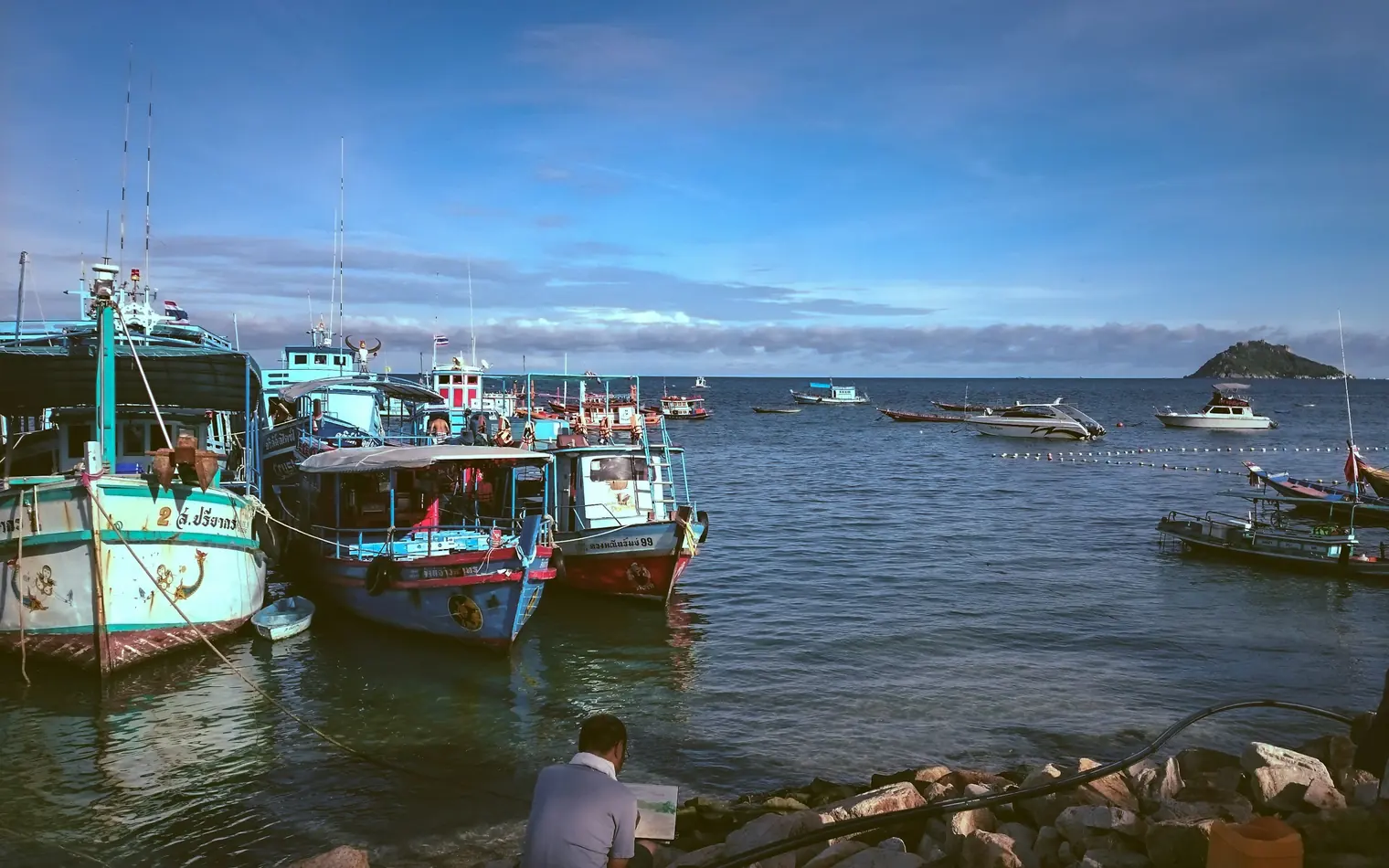
The pier is the worst place to fix your connection
Koh Tao has no airport. Everyone arrives by boat — from Chumphon on the mainland, or up from Koh Samui and Koh Phangan — and the fast catamarans from Chumphon take roughly an hour and a half to two hours, depending on the operator and the sea. Timetables shift with the season and the weather, so the schedule you screenshotted last week is an estimate, not a promise.
Which makes your first hour on the island the hour you most need data, in the one place least able to give it to you:
- Pier Wi-Fi is shared with everyone who just got off the same boat, all opening the same booking apps at the same moment.
- The SIM counter costs you the queue. Buying a Thai SIM means your passport, a form and, increasingly, an in-person check — we wrote about why local SIM counters ask for your passport and what that queue really costs you.
- Your dive school is messaging you right now, usually on WhatsApp or LINE, usually to move a pickup.
A VamosData eSIM for Thailand sidesteps all three, because the work happens at home: you install the profile over your own Wi-Fi days before you fly, and it attaches to a Thai network while the boat is still coming in. Your usual number stays in the phone for bank codes and messages; the travel line just carries data.
What a dive day actually asks of your phone
Koh Tao is routinely described as one of the busiest places in the world to learn to dive — most rankings put it just behind Cairns — and that volume shapes the day. A typical one looks like this:
- 07:00 — check whether the boat is going at all, and to which site.
- 08:30 — the shop posts a change to the group chat.
- Between dives — someone needs the surface interval, someone else needs a map.
- 16:00 — back on land, where 180 photos and a 4K clip want to go somewhere.
- Evening — log the dives, book tomorrow, send your mother a fish.
None of that is heavy except the last part of the afternoon, and that part is heavy enough to matter. Video off a dive camera is the single biggest thing most travellers upload all trip, and a guesthouse line shared with eleven other guests at 18:00 is where it goes to die.
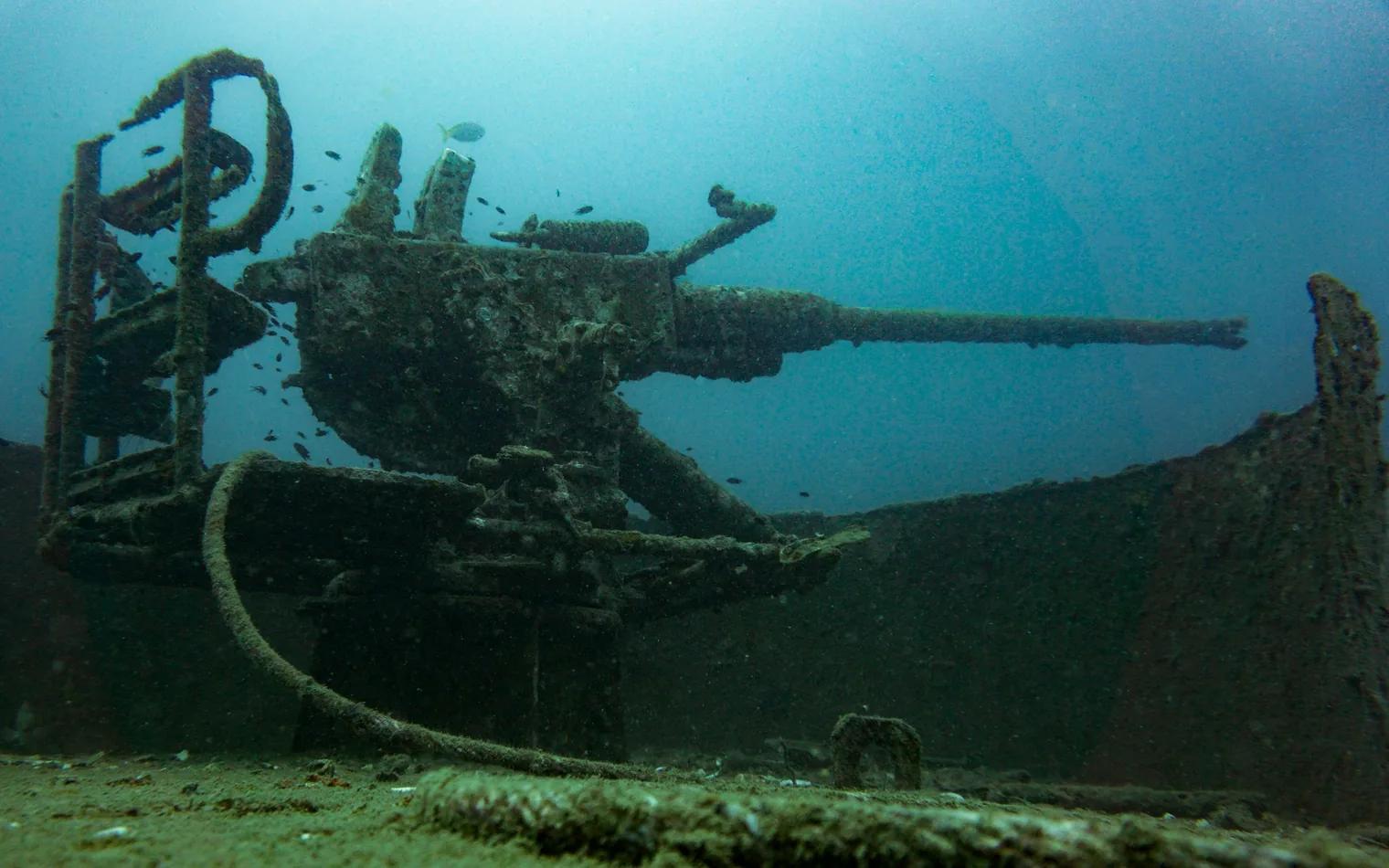
Nothing reaches you underwater, and that is fine
Radio does not travel through salt water. No phone, no SIM and no eSIM has a signal at 18 metres, and nothing you buy will change that — your dive computer is the only thing logging anything down there.
What that means practically is that everything connected is a surface job. Your computer syncs to a dive log app over Bluetooth once you are dry, the app uploads when it next sees the internet, and the gap between those two steps is where a travel line earns its place: you can sync and upload from the boat ramp instead of waiting for a cafe.
Three routes onto the island's networks
| Route | Good for | Weak spot |
|---|---|---|
| Resort, bar or dive-shop Wi-Fi | Big photo and video uploads, backups | Shared, slow at peak, dies with the building's power |
| An eSIM installed before you travel | Arrival, boat transfers, ferry changes, group chats | Uses your data allowance; coverage still varies by bay |
| A Thai SIM bought on the island | Long stays, local calls, local top-up apps | A counter, your passport, and time you came here to spend wet |
The honest version is that you want two of these, not one. Island infrastructure fails in ordinary ways — the power goes, the router sulks, the storm that cancelled the ferry also took out the thing on the pole — and the useful question is not which route is best but which two do not fail together. Our Gulf islands remote-work guide goes deeper on what island Wi-Fi does in a monsoon week.
Set it up before the ferry, not after
- Check that your handset supports eSIM on the device checker, and that it is carrier-unlocked.
- Pick a Thailand plan from destinations and install your VamosData eSIM at home over Wi-Fi, using the iOS or Android guide.
- Turn data roaming on for your travel eSIM, and off for your home SIM.
- Sort your digital arrival card before you fly, while you still have a keyboard and a calm room.
- Download offline maps of the island, and pair your dive computer with its app at home — first-time pairing is the step that wants a connection.
- Screenshot the ferry booking and the dive school address. Screenshots survive No Service.
Small habits that keep a dive trip online
Keep the phone in a dry bag with a power bank, because a dive boat is wet and a day of photos plus a hotspot will empty a battery by mid-afternoon. Upload the big files on Wi-Fi and the small ones on mobile data — a dive log entry is a few kilobytes, a 4K clip is not. And if the weather turns, check the ferry operator rather than the group chat: crossings to and from Koh Tao are suspended outright in a bad blow, usually during the northeast monsoon from around October to December.
Get the connection sorted at home and the island stops being a logistics problem. Then the only thing you are tracking is the surface interval. For arrival-day details across the rest of the country, our Thailand eSIM notes pick up where this leaves off.