Phu Quoc is an unusually easy place to say yes to. You can land there without a visa, the beaches face west where the sunsets happen, and a month of island life is cheap. What it does not have is a row of coworking spaces waiting for you. Work here happens in resort cafes, on homestay terraces and beside pools — which is fine until 20:00, when everyone comes back from the beach, opens Netflix, and your upload quietly dies.

Thirty visa-free days, island only
Vietnam has run a visa exemption for Phu Quoc since 2014: travellers arriving directly on the island — by air into PQC, or by sea — can stay up to 30 days without a visa. Three details decide whether that works for you.
- It covers the island, not the country. Hopping to Ho Chi Minh City or Hanoi on the way needs a visa or an e-visa; the exemption does not convert into mainland entry.
- It expects onward travel. Be ready to show a ticket out within the 30 days.
- It does not extend. A longer stay means an e-visa arranged before you arrive, or leaving and coming back.
Entry rules change and depend on your passport and routing, and none of this is legal advice — check the current position with Vietnamese immigration or your nearest embassy before you book a month around it.
Where people actually work
There is no single nomad district, so pick your base for the connection and the shade rather than the postcard.
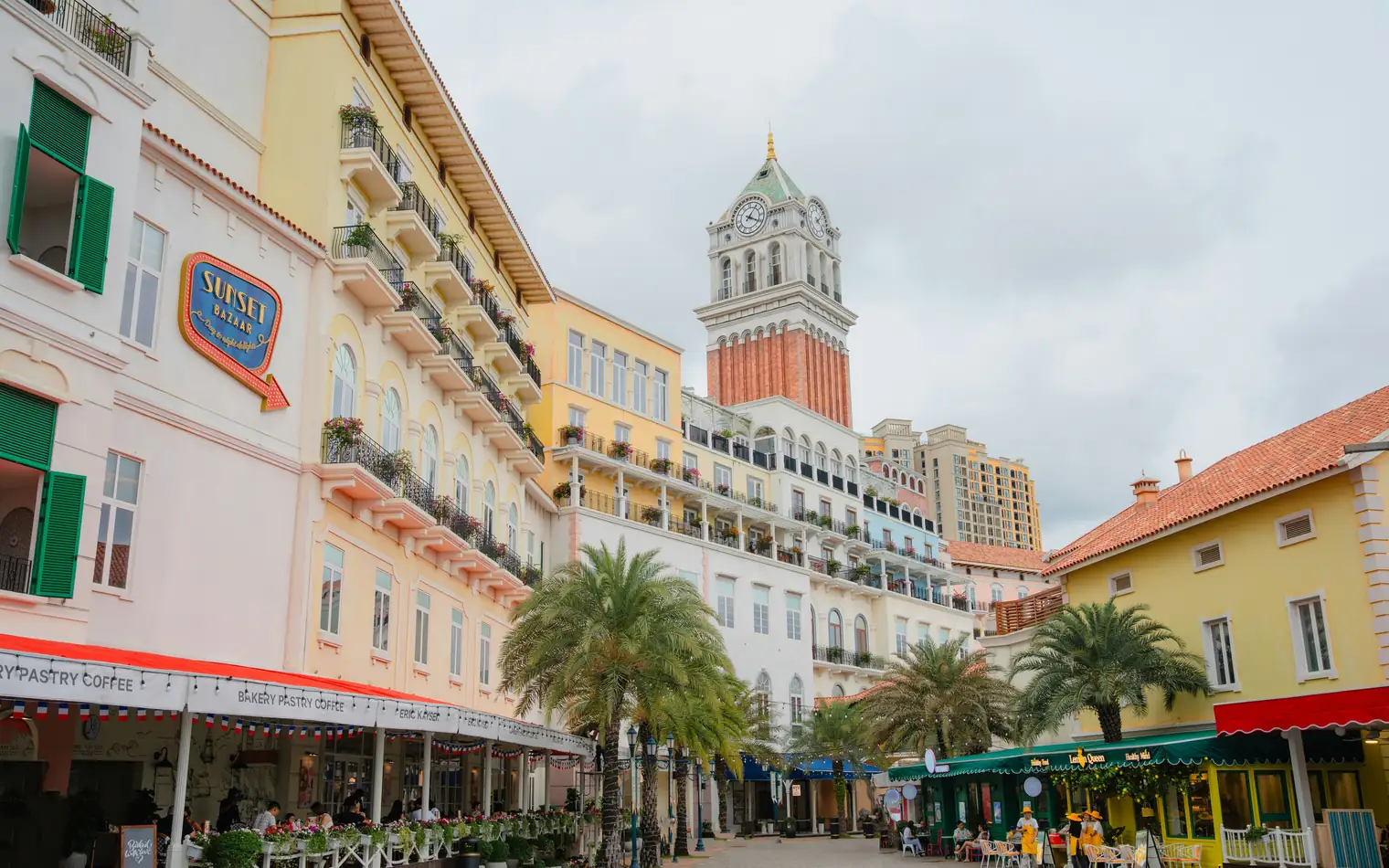
Duong Dong is the main town and the practical choice: air-conditioned cafes, banks, supermarkets, the night market, and the shortest ride to anything you need in person. Long Beach (Bai Truong), running south from town along the west coast, is where most of the resort cafes and long-stay apartments sit — the highest density of places with a plug socket and a view. Ong Lang, further north, is quieter and greener, with homestays instead of hotels and correspondingly homemade internet. An Thoi and Sunset Town in the far south are the newest build-out, with photogenic cafes that open late.
Dedicated coworking does exist, but the handful of spaces open and close faster than any list can track. Walk in, run a speed test on your own laptop at the hour you actually work, and ask what happens when the power goes.
What island Wi-Fi does at peak hour
The failures repeat, and none of them are exotic:
- Shared lines. "High-speed fibre" in a listing means a router exists. It says nothing about the fourteen other guests on it at 20:00.
- Upload, not download. A speed test can show a healthy download while the upload is too thin to carry your camera. A video call is an upload problem first.
- Weather and power. The southwest monsoon runs roughly May to October, with the heaviest rain in the middle of it; the dry season is roughly November to April. A storm that takes out the mains takes out the router, and the router comes back slowly.
What the measurements actually say
Vietnam's mobile networks are strong, and that is the useful part. Opensignal's August 2026 Vietnam report, built on measurements from April to June 2026, has Viettel Mobile as the most-awarded operator with MobiFone close behind, and a May 2026 regional comparison put Vietnam top in five of eight measures across the largest ASEAN markets.
Note what that is not: a promise about the bay you are sitting in. National medians are background. The honest read is that mobile data in a populated Vietnamese coastal town is a serious connection rather than a last resort.
Run two routes, not one
| Route | Good for | Weak spot |
|---|---|---|
| Resort or cafe Wi-Fi | Big uploads, backups, long focused sessions | Shared, and dies with the building's power |
| Your phone as a hotspot | Calls, deadlines, anything with witnesses | Uses your data allowance and your battery |
| A Vietnamese SIM bought locally | Long stays and local calls | A counter, your passport, an unfamiliar top-up app |
A VamosData eSIM for Vietnam installs as a second profile, so your usual number stays put for bank codes and messages while the travel line carries the work. Which network it attaches to is a roaming matter and can change, so treat it as a genuinely independent second route rather than a specific tower. Plan sizes and prices live on destinations.
Making a hotspot hold a client call
- Plug the phone in before the call, not when the battery warning lands.
- Park the phone where the signal is — a window ledge, a balcony rail — and sit near it. The laptop only needs to reach the phone.
- Kill background sync first. Photo backup will happily eat a tethered line.
- Drop your camera when it wobbles. Audio costs a fraction of video, and staying audible beats looking present.
- Size the plan for a working month, not a holiday week — our day-by-day data breakdown puts video calls at the heavy end.
Before you fly
- Check your handset supports eSIM on the device checker, and that it is carrier-unlocked.
- Pick a Vietnam plan from destinations and install it at home over Wi-Fi, with the iOS or Android guide.
- Turn data roaming on for your travel eSIM, and off for your home SIM.
- Practise the personal hotspot once, laptop paired, before you need it.
- Ask your accommodation in writing what the connection is and what backs up the router.
- Check whether your route needs a digital arrival form anywhere on the way.
Working from Phu Quoc is not about finding the one cafe with flawless fibre. It is about assuming the fibre will fail during the week you have a deadline, keeping a charged second route in your pocket, and spending the saved panic on the water. For the same story one sea away, read our Koh Phangan and Koh Tao remote-work guide.