Turkey stretches from the minarets of Istanbul to cave towns in Cappadocia and a Mediterranean coast lined with ancient cities, and it does all three on a budget that goes much further than in most of Europe. Distances are big, though, so the trip that works is the one that picks two or three regions and connects them sensibly — usually with a domestic flight or two. Here's how to plan that, plus the entry rules and the connectivity details worth sorting out before you fly.
W skrócie
- Currency
- Turkish lira (TRY) — prices change often with inflation
- Language
- Turkish; English is common in tourist areas
- Plugs
- Type F (Type C fits too), 230V
- Time zone
- TRT (UTC+3) all year
- Best time
- April–June and September–October
- Recommended trip
- 10–14 days
- Entry
- Visa-free for many passports (90 days in 180); e-Visa for othersmoże się zmienić
Why visit
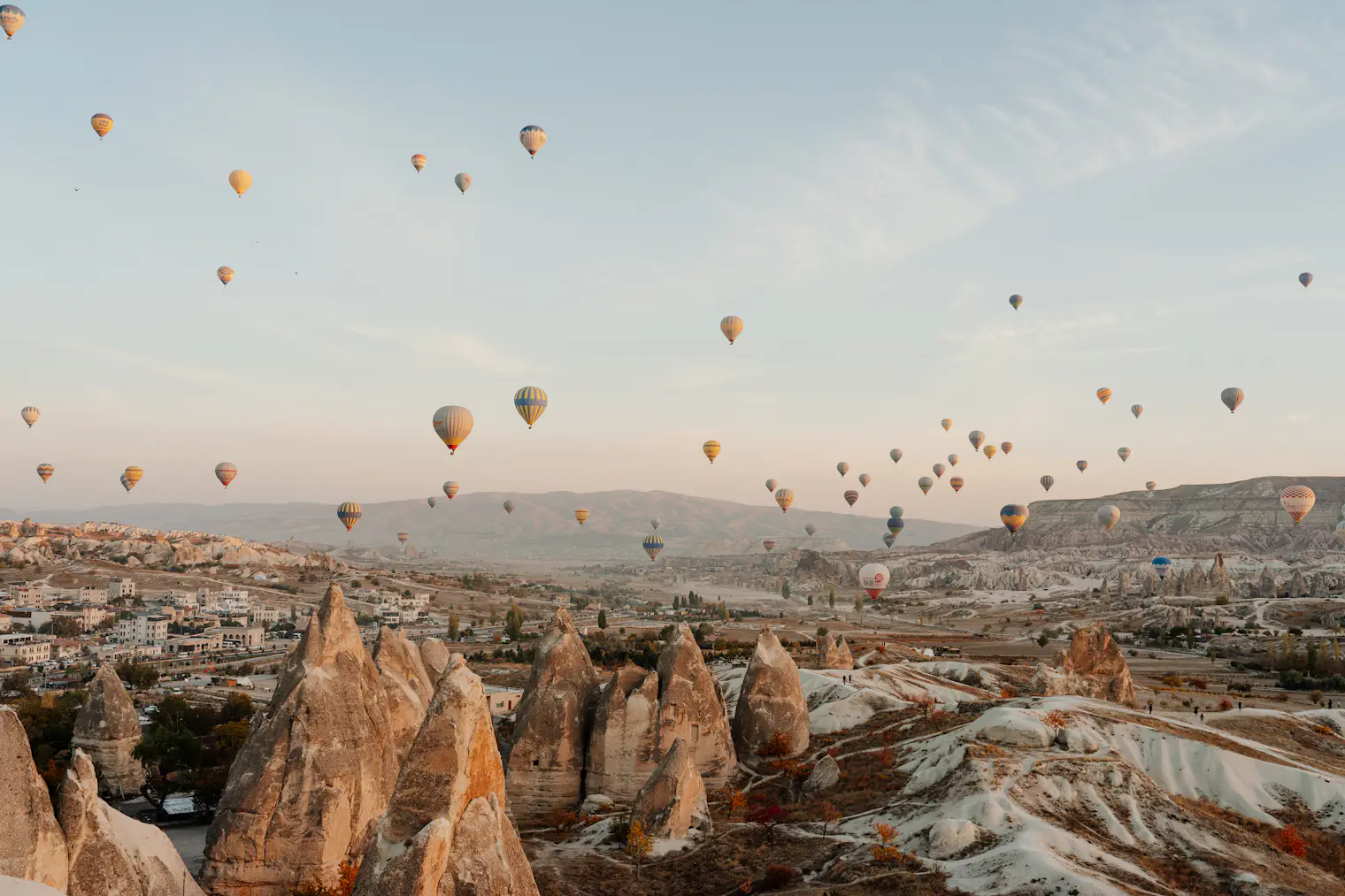
Few countries pack this much variety into one trip. Istanbul alone could fill a week: Byzantine churches and Ottoman mosques, bazaars that have traded for centuries, and ferries crossing between Europe and Asia for the price of a bus ride. An hour's flight away, Cappadocia's valleys of soft volcanic rock are carved into churches, homes and hotels, with balloons drifting over them at dawn.
Then there's the coast. The Aegean and Mediterranean shores mix turquoise coves and old harbour towns with some of the best-preserved ancient sites anywhere — Ephesus above all. It suits history lovers, food lovers and beach lovers equally, and most trips end up being a mix of all three.
The trade-offs are scale and summer heat. Turkey is big, travel between regions takes planning, and July and August can be punishing inland. Go in spring or autumn, choose your regions, and it's one of the most rewarding trips in the region.
Best places to visit
Istanbul
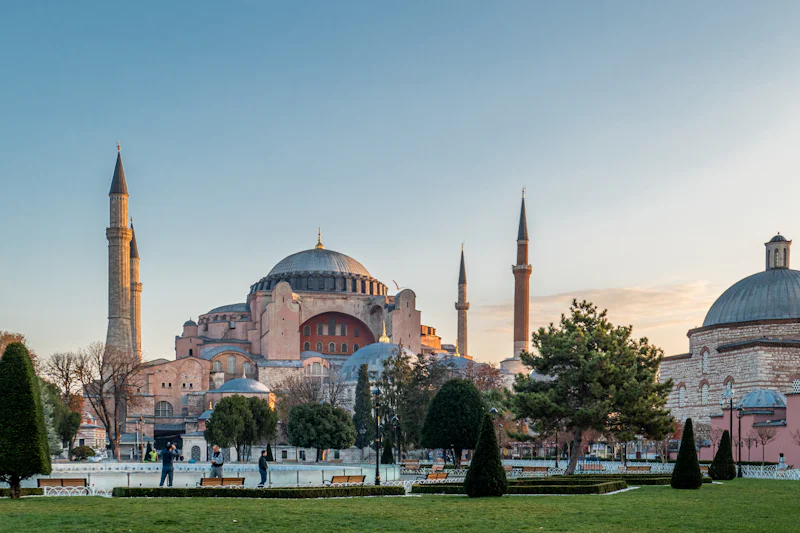
Hagia Sophia, the Blue Mosque, the Grand Bazaar and a Bosphorus ferry — the old city around Sultanahmet, and livelier neighbourhoods across the Golden Horn and on the Asian side.
Cappadocia
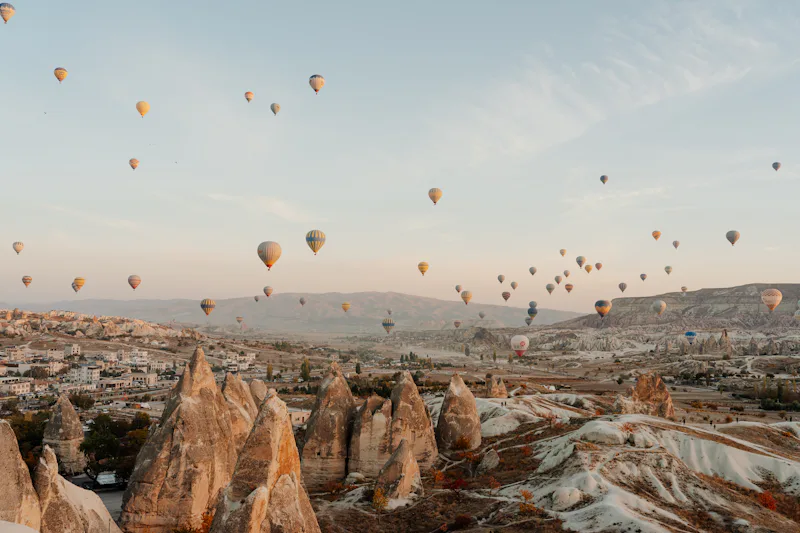
Fairy chimneys, rock-cut churches and cave hotels, with valley walks between them and the famous sunrise balloon flights overhead.
Antalya and the Turquoise Coast
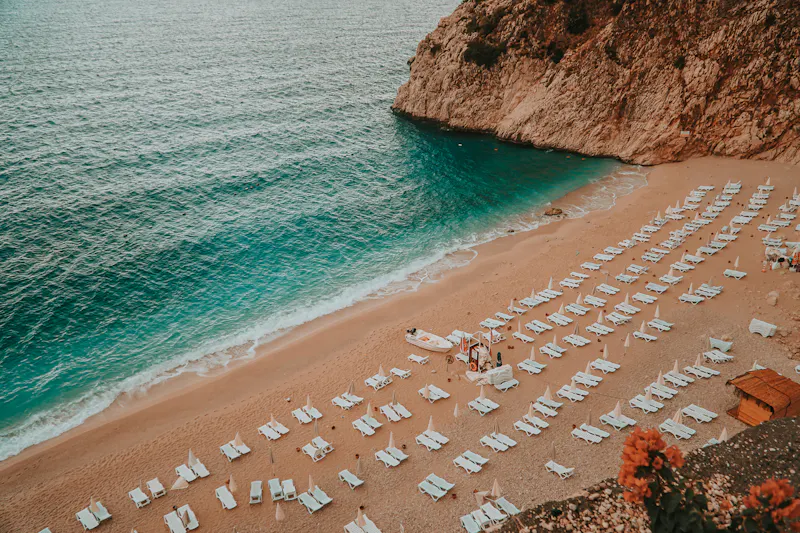
Antalya's old town and beaches, then west to Kaş, Kalkan and Kaputaş beach — coves, boat trips and ancient Lycian ruins along the shore.
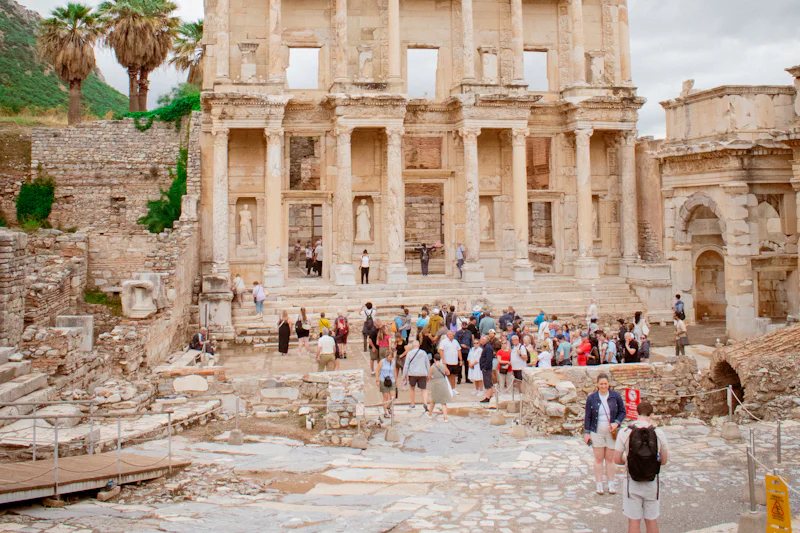
Ephesus
One of the best-preserved ancient cities in the Mediterranean, with the Library of Celsus at its heart. Base yourself in Selçuk, next to the site.
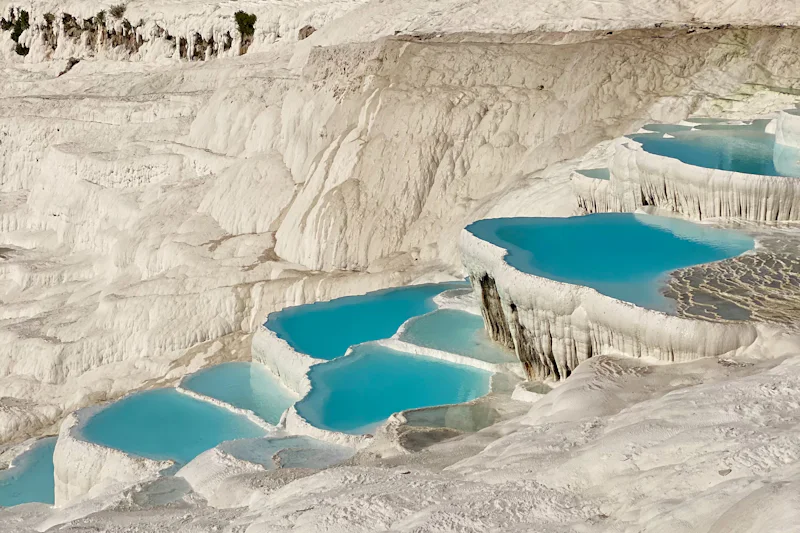
Pamukkale
White travertine terraces full of warm, shallow pools, with the ruins of Hierapolis on the hill above. An easy add-on between Ephesus and the coast.
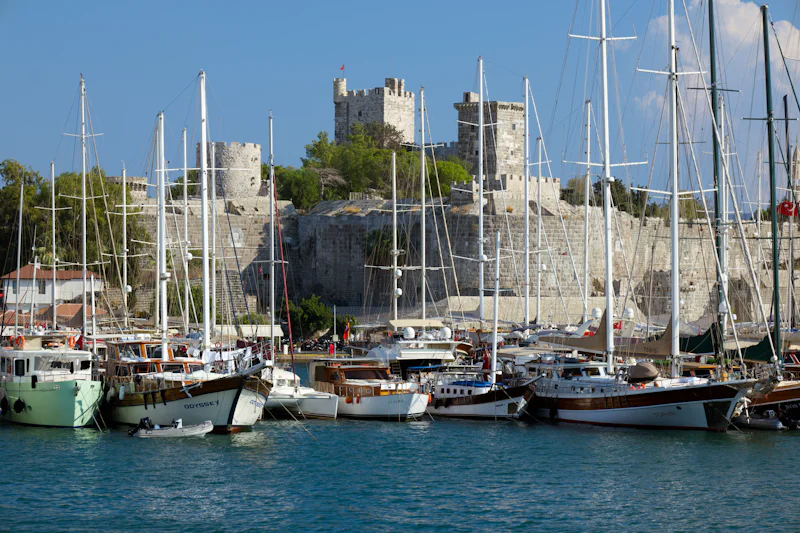
Bodrum
A whitewashed harbour town under the Castle of St Peter, with beaches, nightlife and boat trips around the peninsula.
For a first trip, Istanbul and Cappadocia are the non-negotiables; the question is which stretch of coast to add. Ephesus and Pamukkale make a natural pair for history, the Turquoise Coast is the pick for swimming and boat days, and Bodrum is the most sociable.
Getting there
Istanbul is the main gateway, with two international airports: Istanbul Airport on the European side and Sabiha Gökçen on the Asian side. Check which one your flight uses, because they are far apart. Many visitors also fly straight into the coast — Antalya, Dalaman, Bodrum or Izmir — especially in summer.
Cappadocia is reached via the airports at Kayseri or Nevşehir, usually on a short domestic flight from Istanbul. Planning an open-jaw route — arriving in Istanbul and leaving from a coastal airport, or the reverse — saves a long backtrack. Book domestic flights early for summer and holiday weekends, when the most convenient departures fill up, and leave a generous buffer between a domestic connection and your flight home.
When to go
- Best overall
- May or late September
- Best for beaches
- June and September
- Best on a budget
- November to March, outside holiday weeks
| Pora roku | Pogoda | Tłumy | Ceny | Najlepsze na |
|---|---|---|---|---|
| Spring (April–June) | Warm and mostly dry, sea warming up by June | Średnie | Średnie | Istanbul, Cappadocia, ancient sites |
| Summer (July–August) | Hot on the coast, extreme heat inland | Duże | Wysokie | Beaches, boat trips, sailing |
| Autumn (September–October) | Warm days, sea still warm, cooler nights | Średnie | Średnie | Everything — the best all-round season |
| Winter (November–March) | Cool and wet on the coast, cold and snowy in Cappadocia | Małe | Niskie | Istanbul, snowy Cappadocia, quiet sites |
Spring and autumn are the sweet spots: warm enough for the coast, comfortable for walking around Istanbul and the ancient sites, and without the peak-summer crowds. In July and August the coast is at its liveliest, but inland sites like Ephesus and Pamukkale are best visited early in the morning, and extreme heat and wildfires are a recurring summer risk. Winter is quiet and cheap; Istanbul is atmospheric, and Cappadocia under snow is spectacular if you dress for it.
How many days do you need?
4–5 days
Istanbul only, at a relaxed pace — or three days in Istanbul plus a quick Cappadocia trip by plane.
7 days
Istanbul and Cappadocia, with time to breathe in both.
10–12 days
Istanbul, Cappadocia, then Ephesus and Pamukkale or a stretch of the Turquoise Coast.
2 weeks
All of the above, ending with several days on the coast.
How much does Turkey cost?
Per person, per day — 2026 estimates, in euros because lira prices move fast
Budget
15–30 €
na osobę dziennie
- Nocleg
- 8–18 €
- Jedzenie
- 5 €
- Transport
- 3 €
- Atrakcje
- 2–5 €
Hostels and simple pensions, street food and lokantas, public transport and free sights.
Mid-range
38–75 €
na osobę dziennie
- Nocleg
- 20–63 €
- Jedzenie
- 13 €
- Transport
- 3–5 €
- Atrakcje
- 5–10 €
Boutique hotels and guesthouses, restaurants, buses and the odd flight, tours and museum entries.
Comfort
88–175 €
na osobę dziennie
- Nocleg
- 63–200 €
- Jedzenie
- 25 €
- Transport
- 10–20 €
- Atrakcje
- 25–50 €
Upscale hotels, fine dining, private transfers and guides, a balloon flight.
For everyday prices: a meal at an inexpensive restaurant runs about €4.50–14.50, and a single local transport ticket €0.55–1.30.
Orientacyjne szacunki w EUR, nie ceny na żywo. Dane mobilne nie są wliczone – zobacz aktualne plany eSIM
The big variables are where you sleep and which extras you add. Cave hotels in Cappadocia and boutique hotels in Istanbul's old city cost far more than pensions a few streets away, and a sunrise balloon flight or a private gulet day will be the largest single line of most budgets. Eating at lokantas — canteen-style restaurants with ready-made dishes — is one of the best ways to eat well for little.
Itineraries
Both routes use one domestic flight to avoid long overland journeys, and keep Istanbul at the start so you can adjust the rest to the weather.
7 days — Istanbul and Cappadocia7 dni
The classic first trip: three days of city, then valleys and balloons.
Dzień 1Istanbul — Sultanahmet
- Rano
- Hagia Sophia and the Blue Mosque
- Po południu
- Basilica Cistern and Topkapı Palace
- Wieczorem
- Dinner with a view of the old city
- Nocleg
- Istanbul
Dzień 2Istanbul — bazaars and the Bosphorus
- Rano
- Grand Bazaar and Spice Bazaar
- Po południu
- Bosphorus ferry
- Wieczorem
- Karaköy or Kadıköy for dinner
- Nocleg
- Istanbul
Dzień 3Istanbul — Beyoğlu
- Rano
- Galata Tower and the streets around it
- Po południu
- İstiklal Avenue and a hammam
- Nocleg
- Istanbul
Dzień 4–6Cappadocia
- Rano
- Flight to Kayseri or Nevşehir on day 4
- Po południu
- Valley walks around Göreme, underground cities and rock churches
- Nocleg
- Göreme or Uçhisar
- Nie przegap
- A sunrise balloon flight, if the weather allows
Dzień 7Back to Istanbul
- Rano
- Flight back for your onward connection
12 days — Istanbul, Cappadocia, Ephesus, Pamukkale and the coast12 dni
The full loop, ending by the sea.
Dzień 1–3Istanbul
- Po południu
- The old city, the bazaars and the Bosphorus
- Nocleg
- Istanbul
Dzień 4–6Cappadocia
- Rano
- Flight to Kayseri or Nevşehir
- Po południu
- Valleys, rock churches and underground cities
- Nocleg
- Göreme
- Nie przegap
- Sunrise balloons
Dzień 7–8Ephesus
- Rano
- Flight to Izmir, then on to Selçuk
- Po południu
- Ephesus, early or late in the day to avoid the heat
- Nocleg
- Selçuk
Dzień 9Pamukkale
- Rano
- Travel to Pamukkale
- Po południu
- The travertines and Hierapolis, staying for sunset
- Nocleg
- Pamukkale
Dzień 10–12Turquoise Coast
- Rano
- Onward to the coast around Fethiye, Kaş or Antalya
- Po południu
- Beaches, coves and a boat day
- Nocleg
- Kaş or Antalya
- Nie przegap
- A swim at Kaputaş beach
Getting around
| Trasa | Najlepsza opcja |
|---|---|
| Between distant regions (Istanbul ↔ Cappadocia, the coast) | Domestic flights — the biggest time-saver |
| Shorter hops between towns | Long-distance coaches, comfortable and frequent |
| Istanbul ↔ Ankara ↔ Konya | High-speed trains |
| Getting around Istanbul | Tram, metro and ferries with an Istanbulkart |
| Izmir ↔ Selçuk (for Ephesus) | Regional train or bus |
| Along the coast | Buses between towns, or a rental car for the coves |
- Use registered taxis only, and make sure the meter is running.
Inside Istanbul, the Istanbulkart — the rechargeable transit card used on trams, metro, buses and ferries — is the simplest way to move around, and the ferries are a sightseeing trip in their own right. Between regions, flying saves days: Istanbul to Cappadocia is a short flight against a long day on the road. Coaches are the backbone of shorter routes and are generally comfortable, with seat service on the longer lines. A rental car is worth it only on the coast, where the best coves are hard to reach otherwise.
Making the most of Istanbul
Istanbul rewards planning by neighbourhood rather than by sight. The historic peninsula around Sultanahmet holds the headline monuments — Hagia Sophia, the Blue Mosque, Topkapı Palace and the Basilica Cistern — all within walking distance of each other, so give it a full day and start early, before the tour groups arrive.
Across the Golden Horn, Karaköy and Beyoğlu are where the city eats, drinks and goes out: Galata Tower, the long pedestrian street of İstiklal Avenue, and side streets full of cafés and meyhanes, the taverns where dinner stretches over many small plates. Cross the Bosphorus by ferry to Kadıköy on the Asian side for a market neighbourhood that feels far less touristy, and some of the best food in the city.
The water is the city's other highlight. Commuter ferries criss-cross the Bosphorus all day and cost very little with an Istanbulkart; a longer cruise up the strait passes Ottoman palaces, waterside mansions and the fortress of Rumeli Hisarı. Even a short crossing at sunset, with a tea from the ferry's kiosk, is one of the best-value experiences in Turkey.
Allow at least three full days. Istanbul is big and its traffic is notorious, so group sights by area, use trams, metro and ferries rather than taxis where you can, and leave room for an unplanned afternoon in a café or hammam.
Cappadocia beyond the balloons
The balloons get the photos, but most of Cappadocia's best moments are on foot. The valleys around Göreme — Rose, Red, Love and Pigeon valleys among them — are linked by trails you can walk without a guide, past rock-cut chapels and dovecotes, and are at their best in the late afternoon light.
Göreme Open-Air Museum
A cluster of rock-cut churches and monasteries with painted interiors, a short walk from Göreme village. Go early to beat the tour groups.
Underground cities
Derinkuyu and Kaymaklı descend several levels into the rock, with tunnels, chapels and stables — not for the claustrophobic.
Valley hikes
Rose and Red valleys at sunset, Love Valley for the strangest rock pillars, and Pigeon Valley between Göreme and Uçhisar.
Uçhisar Castle
A rock citadel at the highest point of the area, with views across the valleys.
Watching the balloons
If you don't fly, watch the launch at sunrise from a viewpoint above Göreme — it's free and nearly as memorable.
Choosing your stretch of coast
Turkey's coastline is long enough that "the coast" means very different trips. The Aegean side around Bodrum and Izmir is closer to Ephesus and has a livelier resort and sailing scene. Further south, the Turquoise Coast from Fethiye through Kaş to Antalya is greener and more dramatic, with coves, Lycian ruins and some of the clearest water in the Mediterranean.
If you want one base, Kaş suits slow travel and boat days; Antalya has the most flights and the biggest choice of hotels; Fethiye sits between the two, close to Ölüdeniz and the start of the Lycian Way walking trail. Boat trips — a day out on a traditional wooden gulet, swimming in coves that are hard to reach by road — are worth building into any coastal stay.
Where to stay
Sultanahmet (Istanbul)
Walk to the big sights; quieter at night.
Karaköy and Beyoğlu (Istanbul)
Cafés, restaurants and nightlife, with easy tram and ferry links to the old city.
Göreme or Uçhisar (Cappadocia)
Cave hotels in the middle of the scenery; Göreme for convenience, Uçhisar for views.
Kaş (Turquoise Coast)
A small harbour town with a relaxed feel, close to coves, Kaputaş beach and boat trips.
Things to know before you go
Carry some cash
Cards are widely accepted in cities and hotels, but small shops, markets and taxis often prefer lira. Withdraw from bank ATMs rather than exchange kiosks.
Visiting mosques
Dress modestly — shoulders and knees covered, and a scarf for women's hair — take your shoes off at the entrance, and avoid visiting during prayer times.
Bargaining is normal in bazaars
Not in shops with price tags, but expected at bazaar stalls. Start well below the asking price and keep it friendly.
Balloon flights depend on the wind
Flights are often cancelled in poor weather, so plan at least two mornings in Cappadocia if a balloon is the point of the trip.
Beat the heat
In summer, visit Ephesus, Pamukkale and other exposed sites early in the morning, and carry water.
Ramadan changes the rhythm
Ramadan's dates shift each year. Restaurants in tourist areas generally stay open, but some places keep shorter hours, and evenings come alive after sunset. Eating discreetly in public in conservative areas is a courteous touch.
Pack for the season
Light clothes for the coast, layers for Cappadocia's cool mornings, comfortable shoes, and a scarf for mosque visits.
Visa and entry
Whether you need a visa depends entirely on your passport. Many nationalities can visit visa-free for up to 90 days in any 180-day period; others need a visa, which for tourism can often be obtained online through Turkey's e-Visa system.
- Use only the official e-Visa site, evisa.gov.tr — the Turkish authorities warn that other sites offering e-Visas are not official.
- Your passport generally needs to be valid for at least 60 days beyond your permitted stay; some nationalities face stricter rules (UK citizens need at least 150 days of validity from arrival).
- An e-Visa covers tourism and business only — work and study need a visa from a Turkish embassy or consulate.
Oficjalne źródła: Turkish Ministry of Foreign Affairs — visa information for foreigners · Official Turkish e-Visa application · UK FCDO — Turkey entry requirements
Dane mobilne i eSIM
1. Internet i łączność
Plany eSIM: dostępne
Dostępne też w: Bliski Wschód
- Turkey isn't part of the EU's roam-like-at-home rules, so a mobile plan from an EU country usually charges roaming there. Check your operator's terms before you rely on it.
- Hotel and café Wi-Fi is easy to find in cities and resorts, but you'll lean on mobile data for maps, ride-hailing and translation — especially in Istanbul's backstreets and between towns.
- Signal can thin out in remote valleys and along empty stretches of coast, so download offline maps before road trips and hikes.
- A VamosData eSIM installed at home over your own Wi-Fi is online when you land, and most plans only start counting once it first connects in Turkey.
2. SIM czy eSIM
| eSIM VamosData | Lokalna karta SIM | |
|---|---|---|
| Kiedy ją konfigurujesz | W domu, przed wylotem – online zaraz po lądowaniu | Po przylocie, w punkcie na lotnisku lub w sklepie |
| Dokument i rejestracja | Nic – wystarczy adres e-mail | Często paszport i rejestracja, zależnie od kraju |
| Twój numer | Twoja karta SIM z domu zostaje w telefonie, więc WhatsApp działa na Twoim numerze | Zwykle zastępuje Twoją kartę SIM, chyba że telefon obsługuje dwie |
| Połączenia i SMS | Tylko dane – dzwoń przez WhatsApp, FaceTime i podobne aplikacje | Lokalny numer z połączeniami i SMS |
| Doładowania | Online, z dowolnego miejsca | W lokalnych sklepach lub w aplikacji operatora |
| Wymagany telefon | Odblokowany telefon obsługujący eSIM – sprawdź swój | Każdy odblokowany telefon z gniazdem SIM |
Lokalne karty SIM na miejscu
- Turkey registers phones by IMEI: a phone brought from abroad can be used on Turkish networks for 120 days without registration, after which it is cut off unless registered. That matters for long stays with a local SIM — short trips are well inside the limit.
3. Porównanie dostawców eSIM
| Dostawca | W porównaniu z VamosData |
|---|---|
| Yesim | średnio ok. 20% drożejw 4 planach o tej samej ilości danych i ważności |
Porównanie z wymienionymi dostawcami, dla planów o tej samej ilości danych i ważności, według strony każdego dostawcy z dnia 9 października 2026. Wartości procentowe są orientacyjne, a ceny często się zmieniają. Źródła: Yesim
4. Ile danych potrzebujesz
| Jak korzystasz z telefonu | 7 dni | 14 dni | 21 dni |
|---|---|---|---|
| MałoMapy i wiadomości, poniżej godziny dziennie | ≈ 1 GB | ≈ 2 GB | ≈ 3 GB |
| TypowoDo tego media społecznościowe, 1–3 godziny dziennie | ≈ 6 GB | ≈ 15 GB | ≈ 20 GB |
| DużoDo tego streaming wideo, 3–5 godzin dziennie | ≈ 25 GB | ≈ 50 GB | ≈ 70 GB |
Szacunki z tego samego modelu co nasza wyszukiwarka planów, z marginesem bezpieczeństwa. Hotspot i rozmowy wideo zużywają więcej. Znajdź odpowiedni plan →
What to eat
Turkish breakfast
Cheese, olives, tomatoes, cucumbers, eggs, honey, bread and endless tea — a meal worth taking slowly.
Kebabs, beyond the döner
Adana and urfa kebabs, İskender with yoghurt and butter, and testi kebap cooked in a sealed clay pot in Cappadocia.
Meze
Small plates of dips, salads, stuffed vine leaves and seafood, best shared over a long dinner.
Pide and lahmacun
Boat-shaped flatbreads with toppings, and thin, crisp lahmacun rolled up with herbs and lemon.
Street food
Simit (sesame bread rings), balık ekmek (fish sandwiches) by the water in Istanbul, and roasted chestnuts and corn.
Sweets and tea
Baklava, künefe and Turkish delight, with tea served in tulip glasses or a thick Turkish coffee.
Culture and etiquette
Hospitality is a big part of Turkish life: you'll be offered tea in shops and homes, and accepting a glass is a friendly gesture rather than a commitment to buy. Greetings are warm, and a handshake is the norm when meeting someone.
Dress is relaxed in Istanbul and the resorts, but more conservative in rural areas and always at mosques. Public displays of affection are more restrained outside the big cities and beach towns.
Money is easy once you know the pattern. Prices in lira change frequently with inflation, so menus and price lists are updated often, and some tourist businesses quote in euros. Pay in lira where you can — paying in euros or dollars usually comes at a worse rate — and decline dynamic currency conversion when a card terminal offers to charge you in your home currency.
Tipping is customary but modest: around 5–10% in restaurants if service isn't included, and rounding up for taxis. A few words of Turkish go a long way — "merhaba" (hello), "teşekkür ederim" (thank you) and "lütfen" (please) are always appreciated.