Siargao is a teardrop of coconut palm and reef off the northeast tip of Mindanao, and in a decade it has gone from a surfers' rumour to one of the most wanted islands in the Philippines. It also rewards planning: its seasons run backwards from the national rule of thumb, its flight map has been restless, and getting a local SIM involves more paperwork than you'd expect.
When to go: Siargao ignores the national dry season
The standard advice for the Philippines — go between November and April — is a poor fit for Siargao. The island faces the Pacific and falls into the climate type with no pronounced dry season, its heaviest rain typically arriving December to February, when the northeast amihan blows straight onto the coast. During the habagat months Mindanao shelters it instead, so its calmest, sunniest weather lands when much of the country is having its wettest.
| Window | What it's usually like |
|---|---|
| June–September | Generally the driest and calmest — the best odds for island hopping and lagoon trips |
| September–November | Peak surf season, when Pacific groundswells reach Cloud 9 at their biggest |
| March–May | Smaller, friendlier waves; the classic window for learning to surf |
| December–February | Wettest and windiest, with more washed-out days and choppier crossings |
These are tendencies, not guarantees — any month can hand you a week of rain. Siargao's exposed position also makes tropical storms a real consideration, especially through the July-to-October peak of typhoon season, so insurance covering weather disruption is worth the line item.
What to see and do
| Spot | What it is |
|---|---|
| Cloud 9, General Luna | The reef break and boardwalk that made the island's name; good watching even if you don't surf |
| Sugba Lagoon | Jade-green water ringed by karst, reached by boat from Del Carmen — kayaks and a diving platform |
| Magpupungko Rock Pools | Tidal pools that only appear at low tide, so check the tide table before committing to the drive |
| Naked, Daku and Guyam islands | The classic three-island hopping day trip out of General Luna |
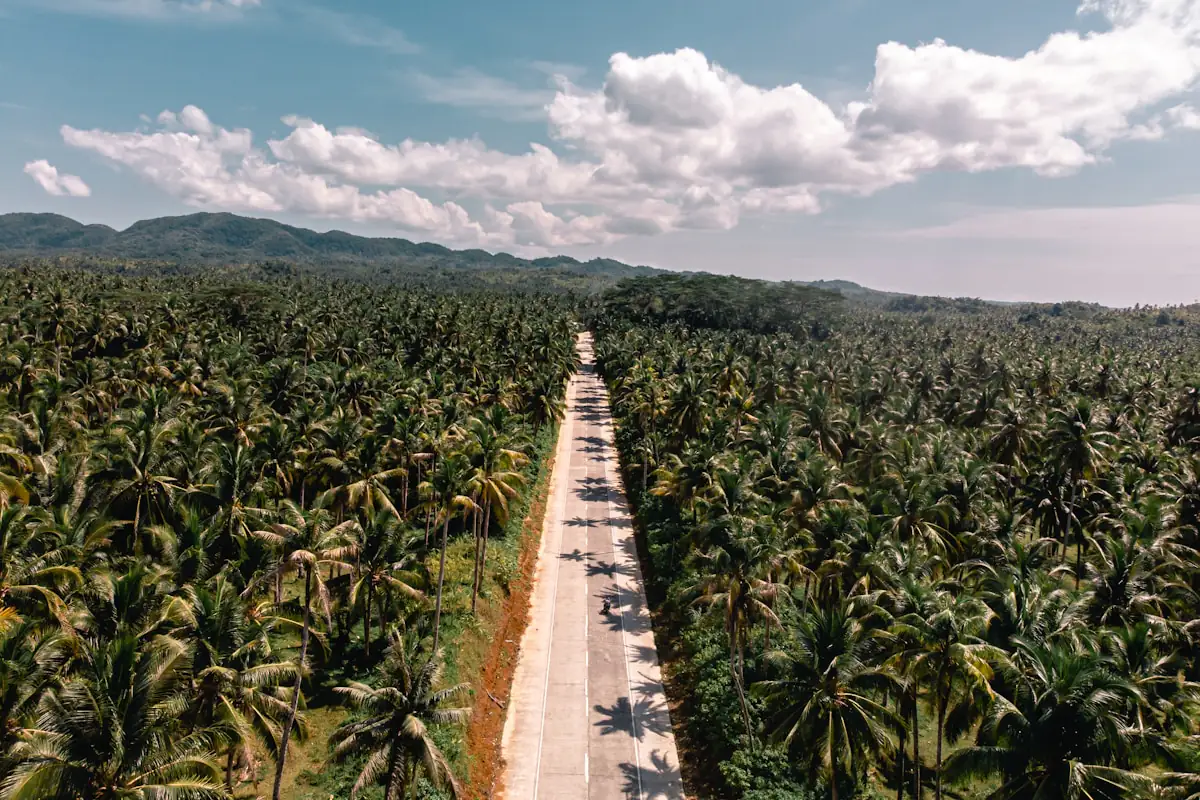
| The coconut road and Maasin River | Palm forest to the horizon, plus the much-photographed rope swing |
| Pacifico and the north coast | Quieter breaks and near-empty beaches, an hour or so from the main strip |
How to get there
Siargao's airport is Sayak (IAO), in Del Carmen, about an hour by road from General Luna where most visitors stay. It's served from domestic hubs rather than Manila directly — Cebu is the usual connection, with Clark and Davao coming and going from the schedules. That route map has churned in recent years, including direct Manila NAIA service ending, so check live schedules yourself rather than trusting an older guide, and leave a real buffer on the connecting leg.
The alternative is the sea route: reach Surigao City on the Mindanao mainland, take a fastcraft across to Dapa port — roughly an hour and a half — then a van or tricycle to General Luna. Slower and weather-dependent, but it's the fallback when flights are full or cancelled.
Getting around and practical tips
- Rent a scooter if you're confident on one — it's how most people cover the island. The main loop is paved and easy; some northern and inland stretches are not.
- Otherwise use tricycles or habal-habal, plentiful around General Luna and negotiable for longer runs.
- Bring more cash than you think. ATMs are few and sometimes out of money by the weekend, and plenty of places — boat operators, the small entry fees at lagoons and viewpoints — take cash only.
- Reef shoes and reef-safe sunscreen earn their space — a lot of what you'll walk on is coral rock.
- Expect the occasional power cut — keep a power bank charged so a brownout doesn't cost you your phone too.
Which networks work on Siargao
The Philippines has three mobile operators: Globe, Smart and DITO. Around General Luna, Cloud 9 and the main road, Globe and Smart both perform reasonably, and longer-staying travellers tend to rate Smart as the more dependable once you leave the tourist strip. DITO's build-out has focused on bigger cities and is generally reported as thin here. Wherever you are, signal drops off on the remote north coast and inland — that's geography, and no SIM changes it.
Buying a local SIM is possible but not friction-free. Every Philippine SIM must be registered under the country's SIM Registration Act, and tourists are typically asked for a passport, a local address and an onward ticket, with tourist registrations usually capped near 30 days before the number goes quiet. It's the same passport-counter routine as in other destinations — doable, but it costs you an errand on day one.
Staying connected: why a VamosData eSIM suits Siargao
That registration requirement applies to Philippine SIMs sold locally. A VamosData eSIM roams onto those same local networks as a foreign subscriber instead — no registration desk, no local-address form, no 30-day cutoff to plan around. You install it at home over your own Wi-Fi and land already connected.
That matters more here than in a city. The trip runs on things that need data: tide tables for Magpupungko, swell forecasts, messaging a boat operator, calling a habal-habal back from an empty beach. Accommodation Wi-Fi exists, but it's rarely where you need it.
Check your handset on the device checker, pick a Philippines plan on destinations, and install it before you leave using the iOS or Android guide. Most plans only start counting once your VamosData eSIM first connects to a network at your destination, so setting it up days early costs you nothing — and one fewer errand on arrival is worth a lot on an island you came to switch off on.