You planned the flight, the transfer and the person meeting you at arrivals. What nobody plans for is the ninety minutes between the aircraft door and the exit — and since Europe's Entry/Exit System became fully operational on 10 April 2026, that stretch has become the least predictable part of the trip. The queue itself you can't do much about. What happens on your phone while you're standing in it is entirely up to you.
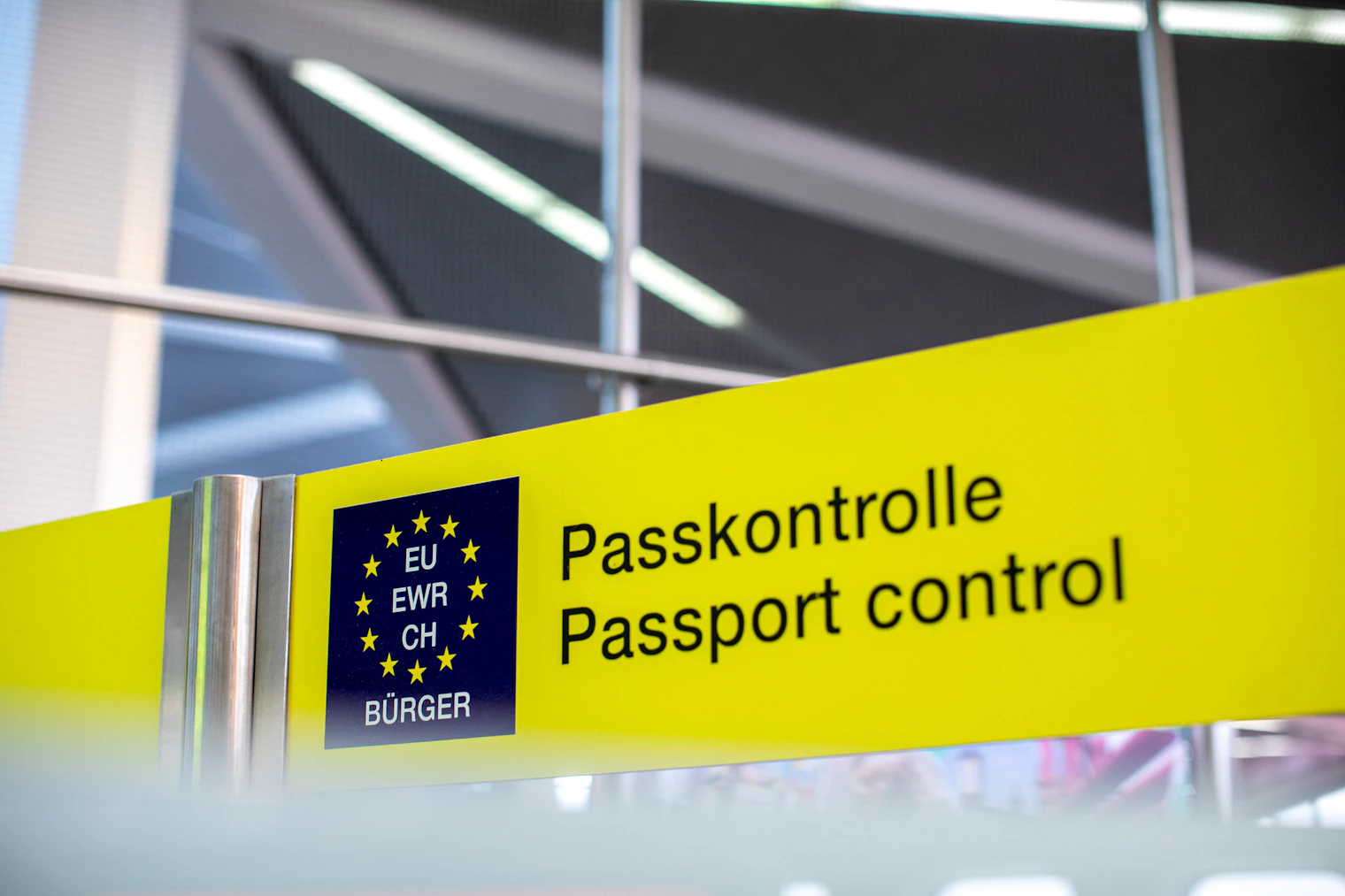
What actually changed at the border
The Entry/Exit System (EES) replaces the passport stamp with a digital record. For non-EU nationals travelling to the Schengen area on a short stay, the border now registers your facial image, your fingerprints and the data from your travel document, on entry and on exit, across 29 European countries. Biometrics are taken on the first crossing and reused after that, so the first trip is the slow one.
The European Commission puts the average registration at around 70 seconds. That sounds harmless until you multiply it by a full A380 and a handful of border desks.
What it costs at the kerb
The numbers reported during the rollout were not marginal. In December 2025, midway through the phased introduction, ACI Europe — the airports' own trade body — said border control processing times had risen by up to 70%, with peak waits of up to three hours, and named France, Germany, Greece, Iceland, Italy, Portugal and Spain as especially affected.
Portugal went further: after a European Commission inspection found serious deficiencies and waits reported at up to seven hours, Lisbon airport suspended the new checks for three months before resuming them.
By July 2026, with the system fully live, figures compiled by the Financial Times from Qsensor data showed the pattern settling rather than disappearing: average waits at Frankfurt around 120 minutes against 60 a year earlier, and peak waits at Amsterdam Schiphol up from 80 to 120 minutes. Several airports had been switching fingerprint capture off at the busiest hours as a stopgap — a relaxation due to end in September 2026, which makes autumn arrivals something to plan for rather than assume.
Check your own arrival airport's current advice before you fly; conditions differ enormously by terminal, hour and season.
Why this is a connectivity problem
Here's the part that catches people out. The border queue sits before passport control, which means it sits before almost everything you would normally use to get online:
- The SIM counter is on the other side. Arrivals-hall phone shops are landside. You reach them after the queue, not during it.
- Airport Wi-Fi is patchy in border halls, and where it exists the captive portal frequently wants to verify you by SMS or email first — a loop that needs the connection you're queuing to go and buy.
- Your home roaming may or may not help. Within the EU/EEA, "roam like at home" rules generally travel with EU tariffs, subject to fair-use limits that vary by operator. Arriving from outside that zone, you're on international rates unless you've checked otherwise.
And two hours is long enough for real things to go wrong quietly. The friend at arrivals doesn't know if you landed. A tight connection gets rebooked onto a later flight and the airline texts a link you can't open. The ride you booked waits its fifteen minutes and leaves. None of that is caused by the border check — it's caused by being unreachable during it.
Arrive already connected
You can't shorten the queue. You can make it a queue you're merely standing in rather than one you're stranded in, and the whole fix happens at home:
- Confirm your phone supports eSIM with the device checker.
- Choose a plan for where you're landing on destinations.
- Install it before you fly, over your own Wi-Fi, following the iOS or Android guide. Installing doesn't spend the plan.
Then, the moment the wheels touch down:
- Turn off airplane mode and set mobile data to your VamosData line.
- Switch data roaming on for that line — a VamosData eSIM connects through a local partner network, so the phone counts it as roaming. The plan is prepaid, so this doesn't create a bill.
- Leave your home line on for calls and bank codes, with its data roaming off.
- On iPhone, turn off Allow Mobile Data Switching so nothing falls back to your home carrier.
That's it. You send "landed, in the queue, see you in an hour" from somewhere near the back of it, and the ninety minutes become boring instead of expensive. Our first 30 minutes in a new country piece covers the wider arrival routine.
Before you fly to Schengen
- VamosData eSIM installed and labelled at home.
- Offline map of the destination city downloaded.
- Passport valid and travel documents to hand — EES rules on eligibility and stay limits are set by the authorities, so check official guidance, not a blog.
- Whoever is meeting you warned, in advance, that arrivals may take far longer than the flight tracker suggests.
- Power bank charged, in the cabin bag. Two hours of standing and refreshing is exactly how a phone dies before you need it.
The border check is here to stay, and it will get faster as second crossings replace first ones. Until then, treat the queue as part of the journey — and make sure it's the only part you're waiting on.